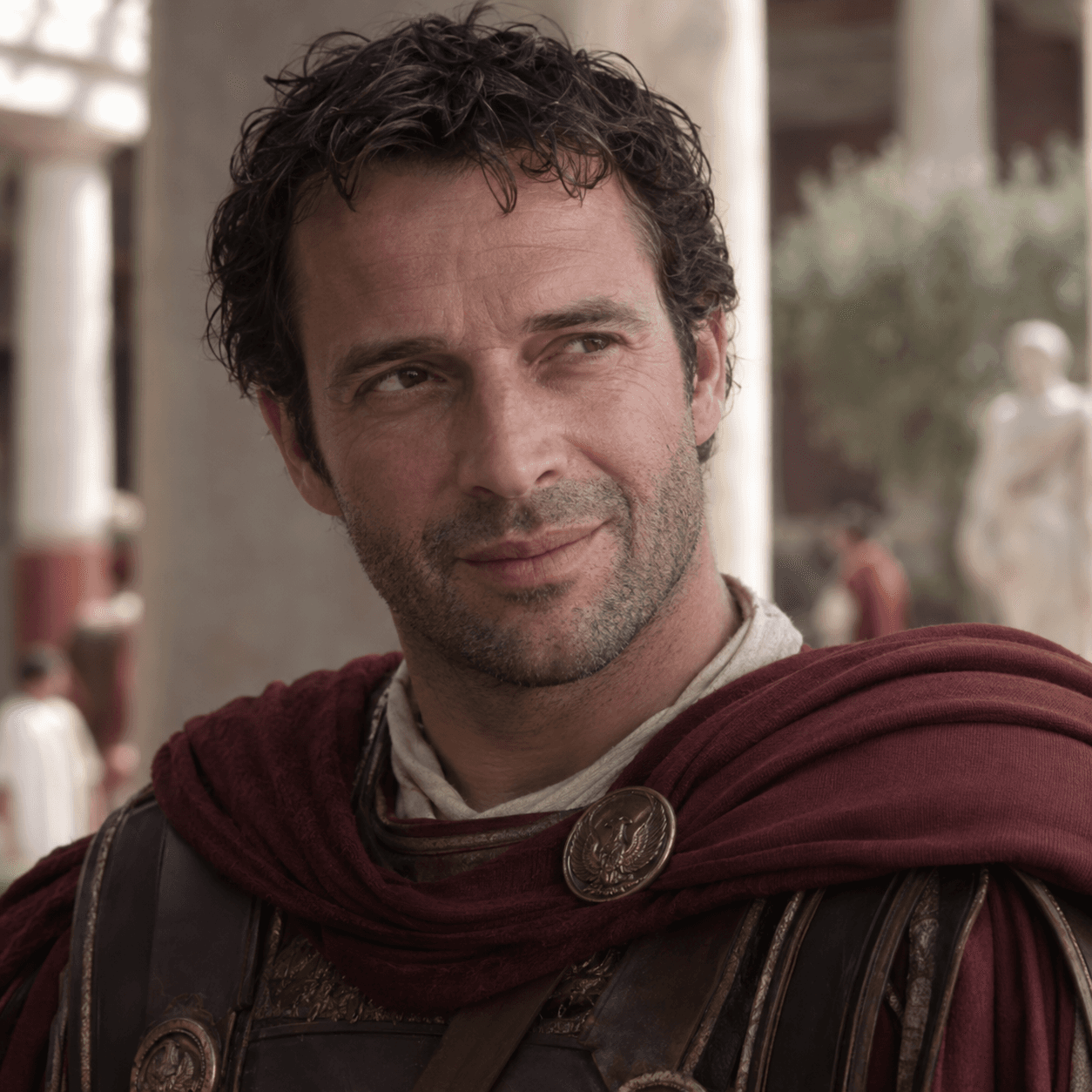
1993 - 2008
Sharpe is a sixteen-film run of ITV military-historical drama that first aired in 1993 and ran through 1997, then came back for two revival films in 2006 (Sharpe's Challenge) and 2008 (Sharpe's Peril). Each instalment is a ninety- to hundred-minute standalone feature, which means the full series plays less like a weekly drama and more like a sprawling film cycle about one soldier's war. The source material is Bernard Cornwell's Sharpe novels, which Cornwell has been writing in deliberately scrambled chronological order since 1981. ITV then rearranged them again for the screen.
The setting is the Peninsular War, the brutal 1809 to 1814 campaign fought across Portugal and Spain against Napoleon's armies. Our man is Richard Sharpe, a rough Yorkshire-born rifleman who does something almost nobody did in the British Army of that era. He gets promoted from the ranks. Not purchased in. Not born into a commission. Earned, with a blade in the dirt, under Wellington's eye. The revival films then drag him off to India for two last campaigns, which is a neat historical loop given that is where Cornwell's timeline begins for the character.
Sean Bean is the show, full stop. Before Boromir, before Ned Stark, before his career pivoted into American television with Legends and Snowpiercer, there was Sharpe. For a generation of UK viewers, and I count myself among them, this is the role that made him. Bean plays the class outsider with total conviction. A Yorkshireman in a Yorkshireman's accent, which at the time was nearly unheard of for a lead officer in a costume drama, and a big part of why the series landed with a certain kind of British viewer and never really lost them.
The ensemble around him is where the series earns its repeat-watch loyalty:
Supporting them is the Chosen Men detachment, the small group of Baker-rifle specialists Sharpe commands. Jason Salkey as Harris, John Tams as Daniel Hagman, Michael Mears as Cooper, Lyndon Davies as Perkins, Paul Trussell as Tongue, Michael Cochrane turning up as the insufferable Sir Henry Simmerson. Tams, worth flagging, also wrote and performed much of the folk music that stitches the films together, and I would argue that music is a bigger part of the show's atmosphere than you might assume going in.
Lyndon Davies
Rifleman Perkins
Abigail Cruttenden
Jane Gibbons
Michael Mears
Rifleman Cooper
Sean Bean
Major Richard Sharpe
Michael Cochrane
Sir Henry Simmerson
Hugh Fraser
Arthur Wellesley, Duke of Wellington
Jason Salkey
Rifleman Harris
Assumpta Serna
Teresa Moreno / La Aguja
Underneath the gunpowder and the sabre fights, Sharpe is a class story. A man from the wrong background, in the wrong accent, is tolerated rather than welcomed by the officer class he keeps getting promoted into. His competence is the thing that keeps him alive and the thing that makes him an irritant. Every superior he answers to is working out whether to use him, block him, or pretend he is not there. Every sneer from a better-born officer is a reminder that his uniform is the only thing protecting him from being sent back to where Wellington found him.
That is the engine of the whole run. The French are the external enemy. The British officer class is the internal one. Sharpe is squeezed between both and survives on a mix of cunning, stubbornness and a willingness to do things an officer from the right schools would not touch. It is a specifically British kind of anti-hero. Not an American outlaw, not a gangland patriarch in the mould of Peaky Blinders. An insubordinate Yorkshireman with a Baker rifle and a grudge.
Loyalty runs the other way too. Sharpe's crew are his family in the way only soldiers can be, and the series keeps returning to that bond as the one thing that is not up for negotiation. Harper, in particular, is the emotional spine of the thing.
The location story is the part most British TV dramas could only dream about. For most of its original run ITV shot Sharpe in Crimea, years before the 2014 annexation and the 2022 invasion changed what Crimea even means on a map. The terrain, standing in for Portugal and Spain, was genuinely vast and unlike anything a British TV production could have staged at home for the same money. Wide-open skies and genuinely empty country, and a sense of scale that is vanishingly rare in 1990s television. The revival films then shifted to India, which brought a different palette but kept the same location-shooting ethos.
Battle staging is its other trick. On a TV budget you cannot fake Waterloo, so the show leans into the small-unit action the Chosen Men are built for. You get skirmishes and ambushes. You get night actions. And you get the slow mechanical business of loading and firing the Baker rifle at close range. It plays closer in feel to a company of soldiers getting a job done than to a lavish pitched-battle set piece. That is a feature, not a limitation, and it is why military-history fans have stuck with the series for thirty-odd years.
Television shot on horseback across a Ukrainian plain. Not the kind of thing that could be made today.
Sharpe was a ratings hit in the UK and a quietly enormous export. It travelled across the Commonwealth and Europe and the US, where it developed the kind of dedicated military-drama fanbase that also turned up for Band of Brothers and Generation Kill a decade later. Sean Bean won a BAFTA nomination for the role, and the character became the part his career was identified with until Game of Thrones replaced it in the public imagination.
The long tail of the show is its audience. Sharpe has one of the most loyal fanbases in British television, male-skewing and military-literate. The novels continue. Cornwell still writes Sharpe stories. A whole cottage industry of Napoleonic reenactors and wargamers and history readers treats the series as canon. That audience has never really gone anywhere, and the show's online presence, for better and worse, reflects it.
As historical drama it sits alongside Vikings, The Last Kingdom, Rome and Wolf Hall as one of the genre entries that actually respects its period. Not perfect history, but history taken seriously, by people who have read the books.
Sean Bean in the role he was born to play. A class-outsider hero you can root for without having to forgive anything. A villain, in Postlethwaite's Hakeswill, that any costume drama would sell a kidney for. Crimean locations that television could not afford today even if the politics allowed it. And a source in Bernard Cornwell's novels that keeps the military history honest while still leaving room for the occasional romance, betrayal, and drunken sergeants' mess punch-up.
Sharpe is not flashy. It does not try to be prestige television in the modern HBO sense. It is a solid, confident, thirty-year run of one man's war, told by people who cared about getting the rifle drill right. If you enjoy historical drama done with this level of respect for the genre, it earns its place on my shelf.
John Tams
Rifleman Daniel Hagman
Paul Trussell
Rifleman Tongue
Daragh O'Malley
Sergeant Patrick Harper
Pete Postlethwaite
Sergeant Obadiah Hakeswill