2015 - 2024

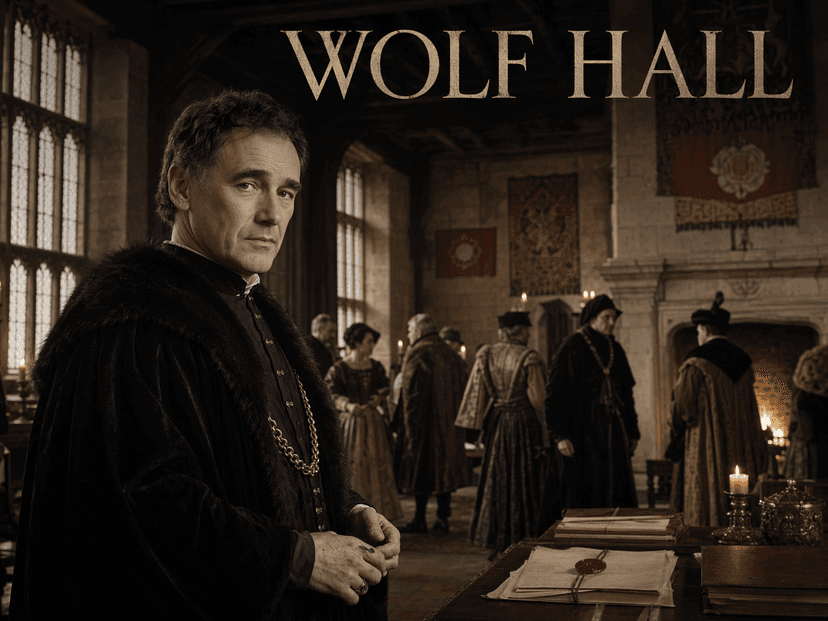
Wolf Hall is a BBC Two historical drama adapted from Hilary Mantel's Booker-winning trilogy of novels about Thomas Cromwell, chief minister to Henry VIII. The first series aired in 2015 and covered Mantel's first two books: Wolf Hall (2009) and Bring Up the Bodies (2012). The second series, subtitled The Mirror and the Light, arrived in November 2024 on BBC One and PBS Masterpiece, adapting the final novel. Peter Kosminsky directed both series. Peter Straughan, later an Oscar winner for Conclave, wrote both.
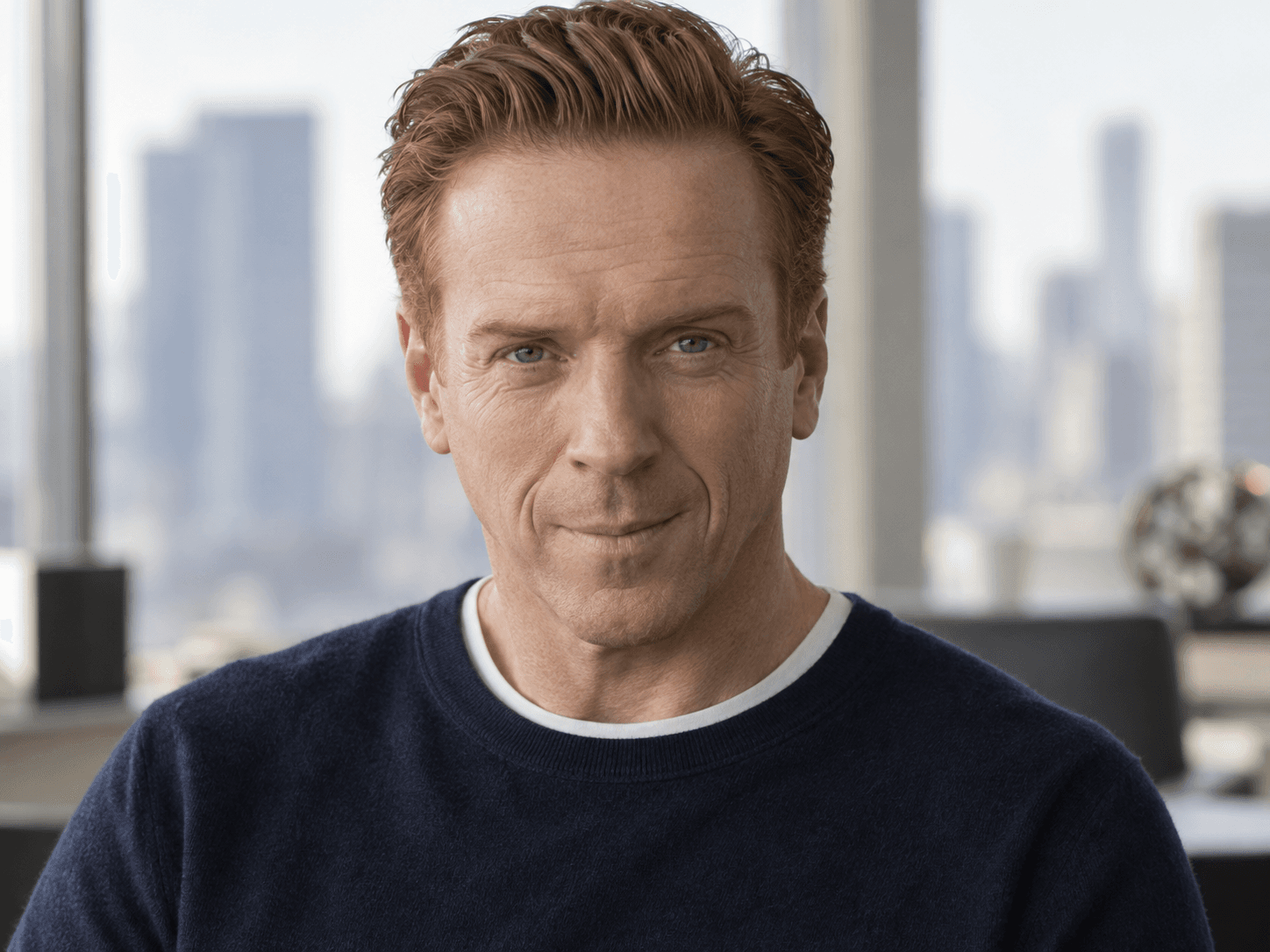
Mark Rylance plays Cromwell, a blacksmith's son from Putney who rose to become the most powerful commoner in Tudor England. Damian Lewis plays Henry VIII. You will not recognise either of them at first. Kosminsky and Straughan strip away the Holbein caricature and the Charles Laughton bluster. What remains is a dangerous, intelligent king slowly becoming a tyrant, and a fixer watching it all happen.
This is not The Tudors. There is no horse-riding, no corridor ranting, no score swelling to tell you what to feel. It is closer to a John le Carre novel in doublets.
Rylance does the hardest thing an actor can do. He plays a man who is thinking all the time and rarely says what he is thinking. The novels are written in close-third Cromwell POV, so much of the book is interior. The show somehow finds a visual language for that silence. He won the BAFTA for it in 2015 and he deserved it.
Claire Foy is Anne Boleyn in S1. This is her pre-Crown performance, the one that got her the role that made her famous, and it is electric. Damian Lewis takes Henry from charming monarch to something colder and more frightening across the run without ever pushing it. Jonathan Pryce plays Cardinal Wolsey as a mentor figure whose political ruin casts the whole shadow of the series.
The supporting bench is absurdly deep:
The 2024 series brings a new bench alongside the returning leads. Timothy Spall is Thomas Howard, Duke of Norfolk. Harriet Walter is Margaret Pole. Kate Phillips plays Jane Rochford this time around. Lydia Leonard appears as Anne Boleyn in flashback and memory. Bella Ramsey, fresh off , plays Jane Seymour. Harry Melling is the Duke of Buckingham. Jonathan Pryce comes back as Wolsey's ghost, which tells you everything about how the book and the adaptation handle grief.
Anton Lesser
Sir Thomas More
Bella Ramsey
Jane Seymour (S2)
Charity Wakefield
Mary Boleyn
Claire Foy
Anne Boleyn (S1)
Damian Lewis
King Henry VIII
Harriet Walter
Margaret Pole (S2)
Harry Melling
Duke of Buckingham (S2)
Hilary Mantel
Author (source novels)
Kosminsky made a decision on series one that set the whole look of Wolf Hall apart from every other period drama on television. He filmed scenes by actual candlelight. Not with modern lighting rigs disguised as candles. Real candles, long exposures, no boosted gain.
The effect is extraordinary. Faces emerge out of darkness. A conversation in Austin Friars becomes a painting by Georges de La Tour. There is a sense of being in the room at the edge of what a sixteenth-century person could actually see. Modern television tends to light Tudor interiors like a hotel lobby. Wolf Hall is having none of it.
It is the first period drama I can think of that looks like the period actually looked.
Pair that with Debbie Wiseman's restrained score, and long takes in which two men sit across a table and one of them loses everything without raising his voice, and you get a visual register that feels closer to European arthouse than Sunday-night heritage TV. Some viewers bounce off it for that reason. They want more. The show knows exactly what it is refusing, and I admire it for the refusal.
On the surface Wolf Hall is the story of Henry VIII's break with Rome, the fall of Anne Boleyn, and the machinery Cromwell built to make it happen. The surface is good. The substance underneath is better.
The trilogy is about class. Cromwell is a Putney blacksmith's son in a court of hereditary nobles, and the nobles never let him forget it. The Duke of Norfolk would happily see him dead on the basis of birth alone. Mantel's argument, delivered patiently over three volumes, is that the violence of Tudor politics was in part the violence of old blood trying to reject new blood from the body of the state. The show puts it in almost every scene. Watch who sits and who stands. Watch whose knee bends and whose does not.
It is also about memory. Wolsey's ghost, and all the dead that a sixteenth-century man carried with him unremarked. The 2024 series, shot after Mantel had died, leans into this hard. There is a reason the final volume is called The Mirror and the Light.
And it is about the cost of service to a man who can kill you for any reason, or none at all. Henry and Cromwell are close throughout. That closeness is not protection. It is the opposite.
The 2015 series won the BAFTA for Best Drama. Rylance won Best Actor. It was nominated for eight Emmys and won a Golden Globe. Critics in the UK treated it as the benchmark against which future BBC drama would be judged, and for most of the decade since they were right to.
The nine-year wait between S1 and S2 came down to Mantel. The Mirror and the Light did not arrive as a novel until 2020. By the time the adaptation began shooting, Mantel had died. The 2024 series is therefore a posthumous completion of a trilogy she never got to see finished on screen. That fact gives the second series a specific weight. Kosminsky, Straughan, Rylance and Lewis were finishing someone else's great work in her absence, and they knew it.
If you want to see what prestige British television can do when it is not chasing a streaming algorithm, this is it. Compare its patience to the forward momentum of Peaky Blinders. It has the ensemble scale of Rome but none of the battlefield scope. The medieval sword-and-mud of The Last Kingdom and Vikings looks like another genre entirely next to it. Slow Horses is the closest modern peer for sheer quality of dialogue, even if the setting could not be further away.
It works because three world-class artists agreed to trust the audience. Kosminsky trusts you to sit with a candle-lit silence. Straughan gives you conversations where nobody says the thing they mean, and expects you to keep up. Rylance will sometimes go a full minute without speaking, and the camera does not cut away. Almost no modern show asks this of a viewer. Almost no modern show earns it.
The anti-More reading is the best example. Robert Bolt canonised Thomas More in 1960 as a saint of conscience. Mantel looked at the historical record, saw a man who authorised executions for translating the Bible into English, and wrote a More who is cold, brilliant, and genuinely terrifying. Anton Lesser plays him that way without apology. This is a political intervention in how the English remember the Reformation, and it lands because the show commits.
Seven episodes of series one. Six of series two. No filler. If you can meet the show on its own terms, it rewards you more than any British drama in years.
Jack Lowden
Thomas Wyatt
Jessica Raine
Lady Jane Rochford (S1)
Joanne Whalley
Catherine of Aragon
Jonathan Pryce
Cardinal Wolsey
Kate Phillips
Jane Seymour / Jane Rochford
Lilit Lesser
Mary (S2)
Lydia Leonard
Anne Boleyn (S2, flashback)
Mark Rylance
Thomas Cromwell
Peter Kosminsky
Director
Peter Straughan
Writer
Thomas Brodie-Sangster
Rafe Sadler
Timothy Spall
Thomas Howard, Duke of Norfolk (S2)