2020 - 2020
Peacock launched in July 2020 and Brave New World was the flagship. Nine episodes. A glossy, expensive, ambitious bet that NBCUniversal could plant a prestige sci-fi flag alongside HBO Max and Apple TV+ on the same weekend they opened the doors. The show lasted one season. By 2021 it was quietly cancelled, and it has since drifted into that specific streaming-era category of "cult-appreciated, not quite good enough."
Developed by David Wiener, who had already proved his sci-fi instincts on Homecoming and would later run Halo and Fallout, the series adapts Aldous Huxley's 1932 novel of the same name. Huxley's book sits in the foundational trio of 20th-century dystopian fiction with 1984 and We, and every adaptation of it has to contend with the fact that its most provocative ideas, engineered happiness, chemical compliance, sex as distraction, family as taboo, have been half-absorbed into the culture it warned about.
The action is split between two worlds. New London is the World State capital, a gleaming technological utopia organised by a rigid genetic caste system: Alpha-Pluses on top, Betas, Gammas, Deltas, Epsilons on the bottom. Citizens take soma to regulate mood. Monogamy is forbidden. Privacy is suspect. Everyone is wired into a surveillance network that watches and soothes in equal measure. Beyond the perimeter lies the Savage Lands, an alt-America turned into a poverty theme park where "uncivilised" humans still marry, raise kids, and feel grief.
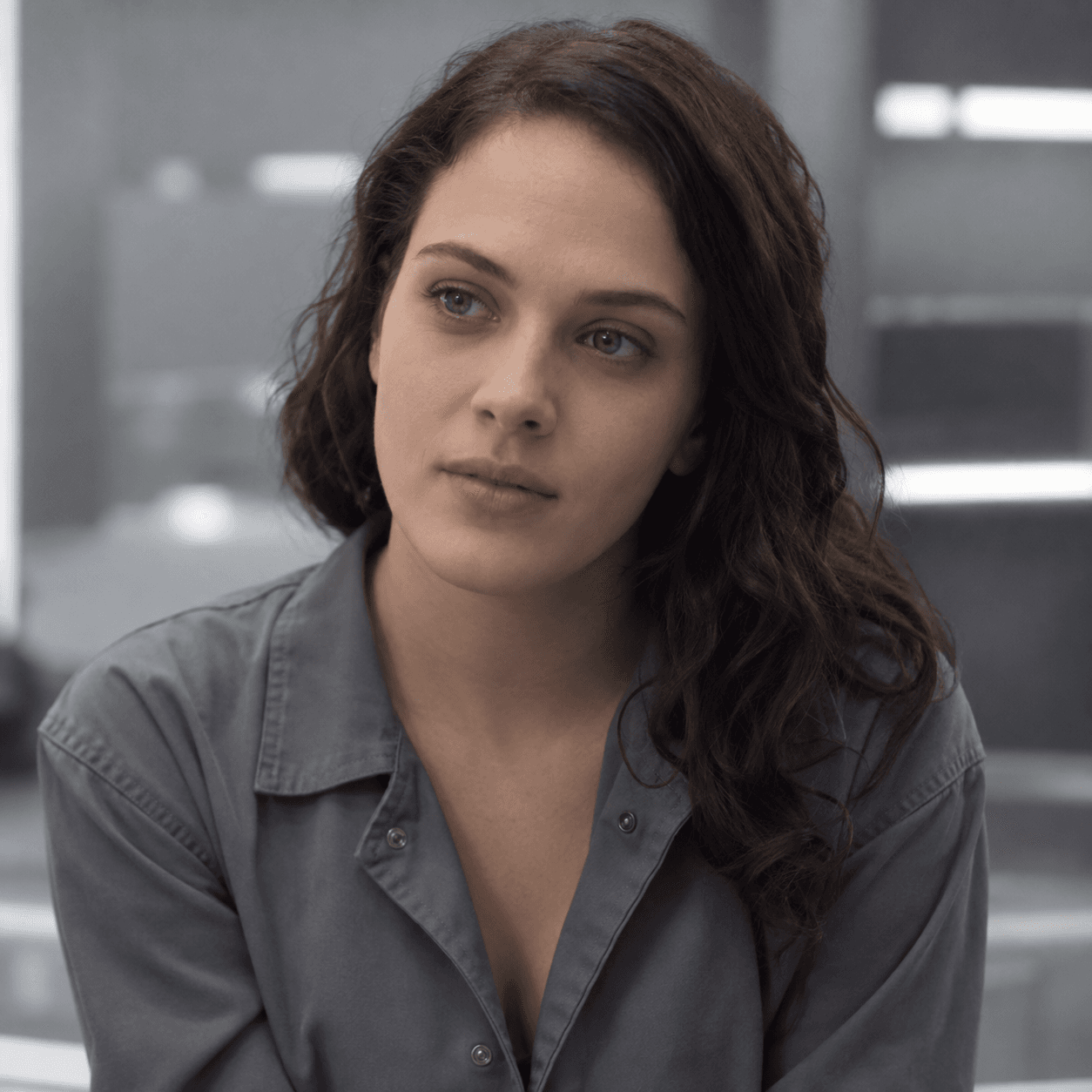
Alpha-Plus psychological conditioner Bernard Marx (Harry Lloyd) and Beta caste-sceptic Lenina Crowne (Jessica Brown Findlay) visit the Savage Lands on a kind of tourist excursion. They come back with John the Savage (Alden Ehrenreich), a young man raised outside the World State by his exiled mother Linda Lysenko (Demi Moore). Once John arrives in New London, his monogamous, familial, emotional wiring starts doing to their utopia exactly what you would expect. Breaking it.
Alden Ehrenreich is the show's anchor. Coming off Solo: A Star Wars Story, he gets John the Savage, which is arguably the hardest of the three central roles. John has to be wide-eyed and dangerous at once, and Ehrenreich mostly pulls it off. He plays the character's bewilderment without ever making him naive, and when the show asks him to carry emotional weight in the back half he does.
Harry Lloyd gives Bernard Marx something genuinely unusual. Bernard is the character with the most internal contradiction, a man who designed the society he's losing faith in, and Lloyd lets that contradiction sit on screen rather than resolving it. Jessica Brown Findlay, best known for Downton Abbey, is Lenina. Her arc is the one that benefits most from the expanded TV runtime. She gets to do things Huxley never wrote for her.
Demi Moore's Linda Lysenko is a late-stage revelation. It is not a huge part but she uses it well, and the decision to cast her specifically, an actress whose own career has been a study in how the culture treats women who age out of being marketable, adds a layer the script itself never quite earns. Sean Bean turns up as a Savage Lands eccentric and does Sean Bean things admirably.
Hannah John-Kamen
Wilhelmina "Helm" Watson
Ed Stoppard
Henry Foster
Kylie Bunbury
Frannie
Sean Bean
The Savage
Joseph Morgan
CJack60
Harry Lloyd
Bernard Marx
Jessica Brown Findlay
Lenina Crowne
Nina Sosanya
Mustafa Mond
The ensemble around them:
Mond is the standout supporting turn. Nina Sosanya plays her without raising her voice once, and she is more frightening than any villain who does.
Every Brave New World adaptation has the same core question. How do you dramatise a society that has engineered unhappiness out of existence without making the drama feel airless? The 2020 show's answer is to lean harder on the sex, the surveillance, and the class anxiety than on the book's pharmaceutical philosophy. It is a reading of Huxley that feels post-Silicon-Valley. The characters are being optimised. The soma is barely the problem. The real problem is that they all live inside a system that can see them thinking.
Where the show gets interesting is the way it positions the Savage Lands as something other than a moral high ground. The novel used the Savage Reservation as a partial rebuke to the World State. Wiener's version is smarter. The Savage Lands are cruel, exploitative, performative, a post-collapse America where actual historical Americana gets re-enacted for New London tourists who want to see what suffering looks like. Neither side wins. That choice is where the adaptation earns its keep.
The production design is the most-praised thing about this show, and rightly. New London is all cool whites, soft lighting, seamless glass, and oppressively well-lit public spaces. The costuming is sharp and specific, clean geometric lines for Alphas, looser fabrics for Betas, and a deliberate colour palette that lets you read rank at a glance. The Savage Lands are its inverse, all dust and neon and forced Americana kitsch.
Wiener's Homecoming fingerprints are all over the visual grammar. Symmetrical framing. Long unbroken holds. Carefully composed wide shots that let you take in the architecture. The drone work over New London is genuinely beautiful. If you watch this show on mute it is easily the strongest sci-fi series Peacock had in its opening lineup.
Gorgeous to look at, sometimes boring to listen to.
That quote gets at the central frustration. The dialogue often feels one draft short of where it needed to be, and the pacing in the middle stretch sags in ways a nine-episode season cannot really afford. When it lands it lands hard. When it doesn't you can feel the machinery.
Critics split. The ambition got real praise. So did the design work, and the performances from Ehrenreich and Sosanya in particular. The script took a proper kicking in several reviews, and the pacing complaints were near universal. Audience reception was warmer than the critical reception but not warm enough to save it. Peacock cancelled the show in 2021 after one season, and it has become a small case study in how hard it is to launch prestige TV on a brand-new platform that is still teaching audiences where to find it.
It sits now in the same quiet category as Counterpart and Foundation: ambitious, visually strong, conceptually fertile sci-fi that never quite got the runway to figure itself out. If you liked the chilly corporate dystopia of Severance, the class-based architecture of Silo, or the parallel-worlds tension of The Man in the High Castle, you will find things to admire here. It is not quite on the level of Westworld season one or Black Mirror at its sharpest, but it is closer than its cancellation suggests. Fans of Snowpiercer and The Expanse will recognise the same appetite for big-idea, social-architecture sci-fi.
Brave New World is a frustrating show to recommend because the right audience for it is small and specific. You need tolerance for slow sci-fi. You need interest in the source novel, or at least the willingness to meet Huxley halfway. You need to accept that a nine-episode season with a shaky middle will never feel like a finished piece of work.
If you have that tolerance, there is a lot here. The three leads are good. The world-building is genuinely distinctive. The ideas are worth the time. And David Wiener's subsequent jobs on Halo and Fallout read, in retrospect, like a development-exec's notes to himself about what he learned here. This was the practice run. You can see the instincts that would pay off later already in motion.
One season is what we got. Taken on its own terms, as a standalone nine-hour adaptation of a 93-year-old novel, it is more interesting than most of what streaming threw at the wall in the summer of 2020. It was cancelled too early. It was under-written in places. And if you like dystopian fiction done with actual care, it is worth a weekend.
Alden Ehrenreich
John the Savage
Demi Moore
Linda Lysenko
Joe Martin
Conditioner Caste