Dexter: The Man Behind the Smile
Updated

I recently rewatched all eight seasons of Dexter, as well as the spin-offs available so far. The original remains a great show. This review is about that 2006–2013 run: Dexter Morgan in Miami, working in a police department that would very much like to arrest the sort of person he is.
The premise is outrageous, but the ordinary parts of his life make it work. Michael C. Hall plays a blood-spatter analyst who kills people in his spare time, following rules taught to him by his adoptive father. He also has colleagues to get along with, a sister who wants his attention and a relationship that requires rather more than turning up with a plausible excuse.
That clash is still enormously watchable. A crime scene can be a professional problem, a private opportunity and a social engagement Dexter doesn't know how to handle, all at once. The show gets a remarkable amount of mileage from letting us hear what he thinks while everybody else has to make do with his face.
A helpful colleague, apparently
Hall's narration is essential. Dexter describes other people as though he is studying a species he hasn't quite mastered, yet he can be very funny about them. The matter-of-fact delivery lets an appalling thought arrive with the timing of an office complaint.
Then somebody speaks to him and the public version switches on. A smile, a suitable response, perhaps a box of doughnuts. Hall makes those adjustments small enough to pass for normal behaviour while letting us notice the work involved. Dexter isn't just hiding evidence. He is constantly deciding what an ordinary person would say next.
That is a more interesting performance than simply giving a killer charm. His explanations about himself don't always settle what we see. He claims detachment, but there are attachments and reactions that complicate the neat account he gives in his own head.
The show lets you enjoy his company without needing to accept every excuse he makes. I like that uneasy intimacy. We are closer to him than the people in the room, and that isn't always a comfortable advantage.
Harry's rules
The Code is what gives Dexter's private life a structure. His adoptive father Harry, played by James Remar, has taught him to direct his violence towards killers and avoid getting caught. To Dexter, those instructions are a way of living. To the viewer, they raise questions almost as soon as they provide an explanation.
A rulebook doesn't turn an appetite into a public service. Dexter can tell himself he is doing something necessary, but he also wants to do it. The tension between those motives is much more interesting than a straightforward vigilante fantasy.
His job adds another complication. He has access to evidence, investigations and the people trying to solve crimes. The police work and his private activity cannot stay in separate boxes just because he would prefer them to.
Jeff Lindsay's Darkly Dreaming Dexter supplied the original character and the basis for the television adaptation, developed by James Manos Jr. The series takes its own route. What matters on screen is how often Dexter's carefully arranged rules meet a person or a situation that refuses to fit.
Good actors make dangerous company
The changing guest cast keeps the central idea from becoming a weekly routine. Dexter encounters people who challenge a different part of his understanding of himself, and the best performances make those encounters worth more than the question of who will get caught.
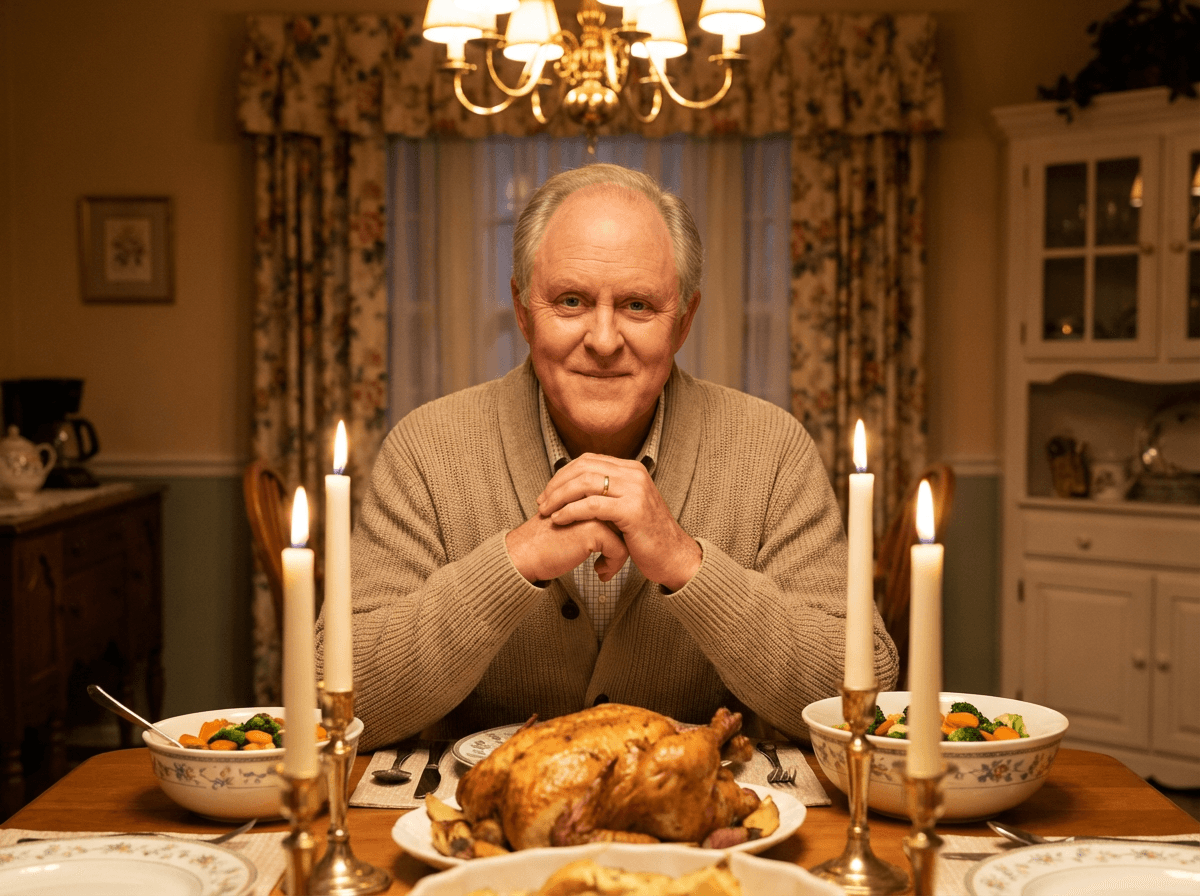
John Lithgow is outstanding in season four. He has an extraordinary ability to make an ordinary pause uncomfortable. The performance doesn't need a constant display of menace; an apparently everyday conversation can be enough. His presence is a major reason that stretch of the series is so gripping.
Jimmy Smits brings confidence and warmth to Miguel Prado, while later guest performers include Edward James Olmos and Colin Hanks. They give the seasons different textures rather than merely supplying Dexter with another obstacle.
The attraction is watching Hall respond to somebody who can hold the screen opposite him. A long-running thriller needs more than a supply of increasingly elaborate crimes. These actors make the conversations and shifts in trust matter as well.
Miami in daylight
The sunshine is one of Dexter's best choices. It doesn't place everything unpleasant in a conveniently sinister world. The city is bright, busy and full of people getting on with their lives. Dexter can look like a man enjoying a perfectly decent day.
That contrast carries into the opening credits. Breakfast, shaving and getting dressed become faintly threatening through the attention paid to small physical details. Nothing needs to announce what sort of person is leaving the flat. The ordinary routine is already doing the joke.
The marina, pale buildings and crowded police workplace give the series a sense of everyday life outside its darker business. I enjoy being in that setting. It makes the private ritual feel stranger than it would in a show where every street was permanently dark and every room looked like a crime scene waiting to happen.
It also gives the humour room to breathe. Dexter can be grim, but it isn't an eight-season exercise in looking miserable. The dry narration and workplace friction are part of what makes it so easy to keep watching.
Debra won't let him live entirely in his head
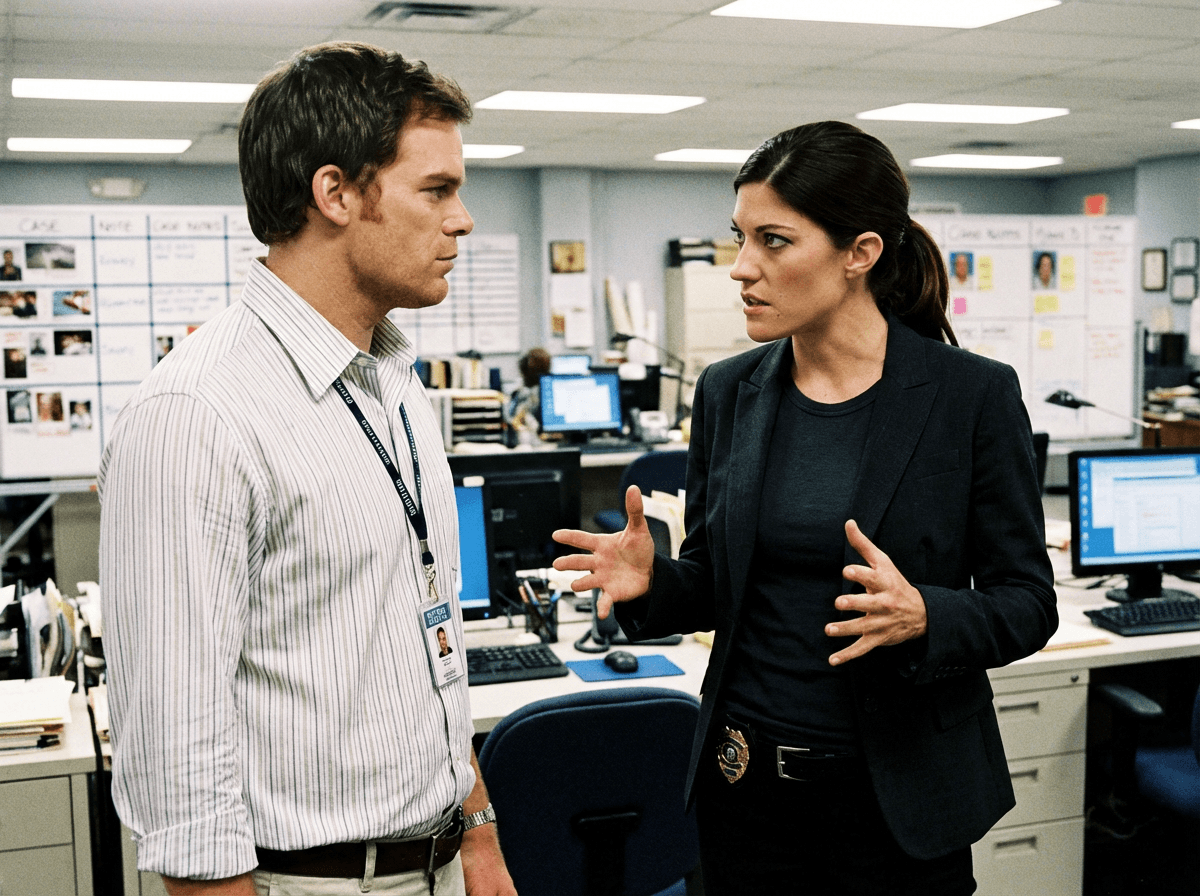
Jennifer Carpenter is an excellent counterweight to Hall. Debra Morgan tends to say what she feels, often before she has found a diplomatic way to phrase it. Dexter has the opposite problem. Their conversations make his concealment feel like a family difficulty as well as a criminal one.
Carpenter gives Debra enough vulnerability that the bluntness doesn't become a single joke. She wants to be taken seriously, she wants things from her brother, and she doesn't conveniently stop needing him because he has something else planned.
Julie Benz brings warmth and caution to Rita Bennett. Her relationship with Dexter asks him to be present in ordinary ways that he can't solve through professional expertise. Those scenes would be much weaker if Rita existed only to be fooled.
And Erik King's Doakes is a pleasure of an entirely different kind. He finds Dexter unsettling and isn't interested in pretending otherwise. Watching Hall's carefully managed friendliness run into King's open suspicion produces some of the show's best tension. Dexter may have practised being agreeable. Doakes is not obliged to cooperate.
Returning to the original
The rewatch reinforced how much I enjoy this particular combination: Hall's performance, the Miami setting, Debra's energy and the tension between a normal working day and a hidden life. It is the original series I would recommend first, rather than treating the later productions as a shortcut into the character.
The spin-offs have their attractions. New Blood has its moments, and Original Sin, with Christian Slater as Harry, showed promise. Resurrection benefits from the acting and the appeal of returning to this world, though I find its writing uneven. None replaces the original for me.
The eight-season series is a substantial watch in its own right, and the reason I have kept following Dexter beyond it.

Still worth making time for
I would readily recommend Dexter to someone who likes character-led crime television and can get on with its dark premise. Hall makes a difficult central bargain work: Dexter is entertaining company, and the show keeps giving you reasons to question that pleasure. The people around him stop his private account of the world becoming the only one that matters.
There is a good deal of violence and some disturbing material. The appeal isn't simply how far the series can push that. It is the anticipation of an awkward conversation, a colleague noticing something, or a private plan colliding with a perfectly ordinary obligation. That is what keeps the premise alive across a long run.
UK viewing: the original eight seasons are listed on Paramount+ UK, checked September 2026.
For more of Hall in a very different family drama, try Six Feet Under. Breaking Bad is another strong choice for the distance between a man's explanation of himself and the damage he does. The Shield puts its compromised protagonist inside law enforcement, with a much rougher, more confrontational style.
Keep Reading
More Reviews You Might Like
Oz: Before the Golden Age Had a Name
Oz is excellent, brutal ensemble drama: a prison experiment, a remarkable cast and an early glimpse of the television HBO would become known for.
Read review
Sons of Anarchy: Brotherhood, Betrayal and the Pull of Charming
Sons of Anarchy reviewed: Charlie Hunnam, Katey Sagal and Ron Perlman make SAMCRO's tangled loyalties compelling. A spoiler-free look at Kurt Sutter's biker drama.
Read review
The West Wing: Great Company in the Corridors of Power
The West Wing reviewed: Aaron Sorkin's dialogue, Martin Sheen's Bartlet and a superb ensemble make government engrossing, funny television. Spoiler-free.
Read review
Battlestar Galactica: Sometimes You Have to Roll a Hard Six
A spoiler-free Battlestar Galactica review: Starbuck, Adama and an enduring soft spot, with a qualified recommendation for space-opera fans watching today.
Read review