Battlestar Galactica: Sometimes You Have to Roll a Hard Six
Updated
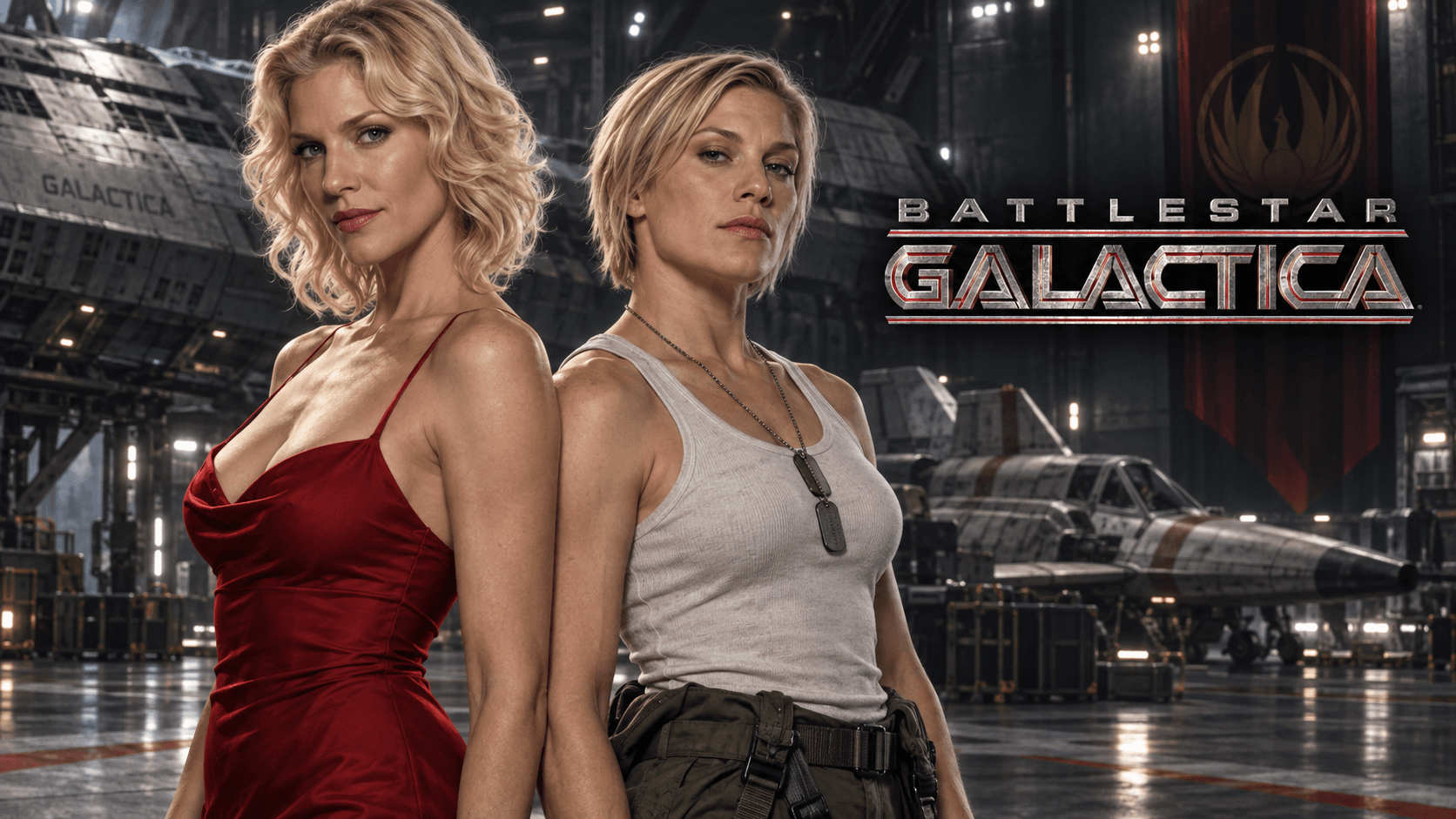
I have a real soft spot for Battlestar Galactica. I loved Starbuck, enjoyed the journey with this exhausted fleet, and Adama gave me a line that has stayed with me ever since. That affection is genuine. So is the qualification: I wouldn't put it ahead of the great dramas of its era for someone choosing what to watch today.
For me, it filled a particular gap. Here was a substantial space opera with an ongoing story, a ship full of people worth following and danger that couldn't be tidied away before next week's adventure. It was exactly the sort of science fiction I wanted. I don't think it has aged as well as the very best television around it, but there is still plenty here for somebody who wants this genre.
This is the reimagined series, beginning with the 2003 miniseries and continuing through four seasons, rather than the 1978 original. Humanity's surviving ships are fleeing the Cylons, protected by an ageing warship under William Adama. Finding somewhere safe would be difficult enough. Keeping the survivors together may be harder.
A fleet that needs more than fuel
The early premise gives everyday problems an unusual weight. Water, fuel, sleep and trained pilots are not background details. There isn't another intact civilisation waiting to supply replacements. When people are worn down, the fleet has to keep going with worn-down people.
That makes the Galactica an involving place to spend time. It feels like a workplace operating long past the point when everybody should have gone home. The arguments are often recognisable even when the circumstances aren't: who has authority, whose information can be trusted, and whether an order that makes sense on paper is survivable in practice.
The possibility that Cylons can look human adds another pressure. Suspicion can do damage without a shot being fired. It is a good foundation for a long story because survival doesn't automatically bring the survivors closer together.
I liked that mixture of a big science-fiction premise and people struggling to get through a shift. The ships and battles get you in the door. The strain on the people gives you a reason to stay.
Starbuck, Adama and some very difficult company
Katee Sackhoff's Kara “Starbuck” Thrace is my favourite. She is an excellent pilot and often a complete liability away from the cockpit. The confidence is appealing because it comes with impatience, poor judgement and an ability to make a bad situation more awkward. Sackhoff makes her fun to watch without smoothing away the rough edges.
Edward James Olmos gives Adama a different kind of force. He doesn't need to sound optimistic to make you want to follow him. There is weariness in the performance as well as authority, which matters when the job is to keep telling frightened people that they have to go out again.
Mary McDonnell makes Laura Roslin a credible counterweight. She and Adama can't always afford the same priorities. Their disagreements are more interesting than a simple contest between a sensible soldier and an obstructive politician. Both have responsibilities the other can't simply take over.
Then there is James Callis as Gaius Baltar, bringing a very welcome measure of vanity and panic to all this resolve. Tricia Helfer's Number Six can unsettle him without appearing to make much effort. Their scenes have a peculiar humour that the series would be poorer without.

“Sometimes you have to roll the hard six.”
Adama's line has a special place in my heart. It is a much better expression of his appeal than a grand speech about leadership.
What I like is the lack of reassurance in it. He isn't promising that courage will make the odds favourable. Sometimes every option is bad, waiting is another choice with consequences, and somebody has to commit. Olmos can make that sound like the conclusion of a tired, experienced man rather than a slogan.
It is also a neat description of the show's best moments. The fleet can't always solve a problem by being clever enough. People have to take risks with incomplete information and live with the decision. When Battlestar makes you feel that responsibility, it can be very good indeed.
The arguments travel with them
The series is interested in what survives of a society after most of its institutions disappear. Civilian government doesn't stop mattering because there is an emergency. Nor does an election make a military problem vanish. Roslin and Adama give those competing demands faces, rather than leaving them as abstract questions.
Faith is woven into this world too. It influences what people believe they are doing and what they are willing to accept. That gives the journey a different flavour from science fiction that treats religion as either an obvious mistake or a piece of background decoration.
Not every discussion has the same urgency as the fleet's immediate problems. The broader mythology asks for more patience, and the series can become absorbed in its mysteries. My strongest attachment is to the people under pressure: the pilot asked to fly, the commander making a call, the civilian asked to trust it. They are what makes the larger ideas matter.
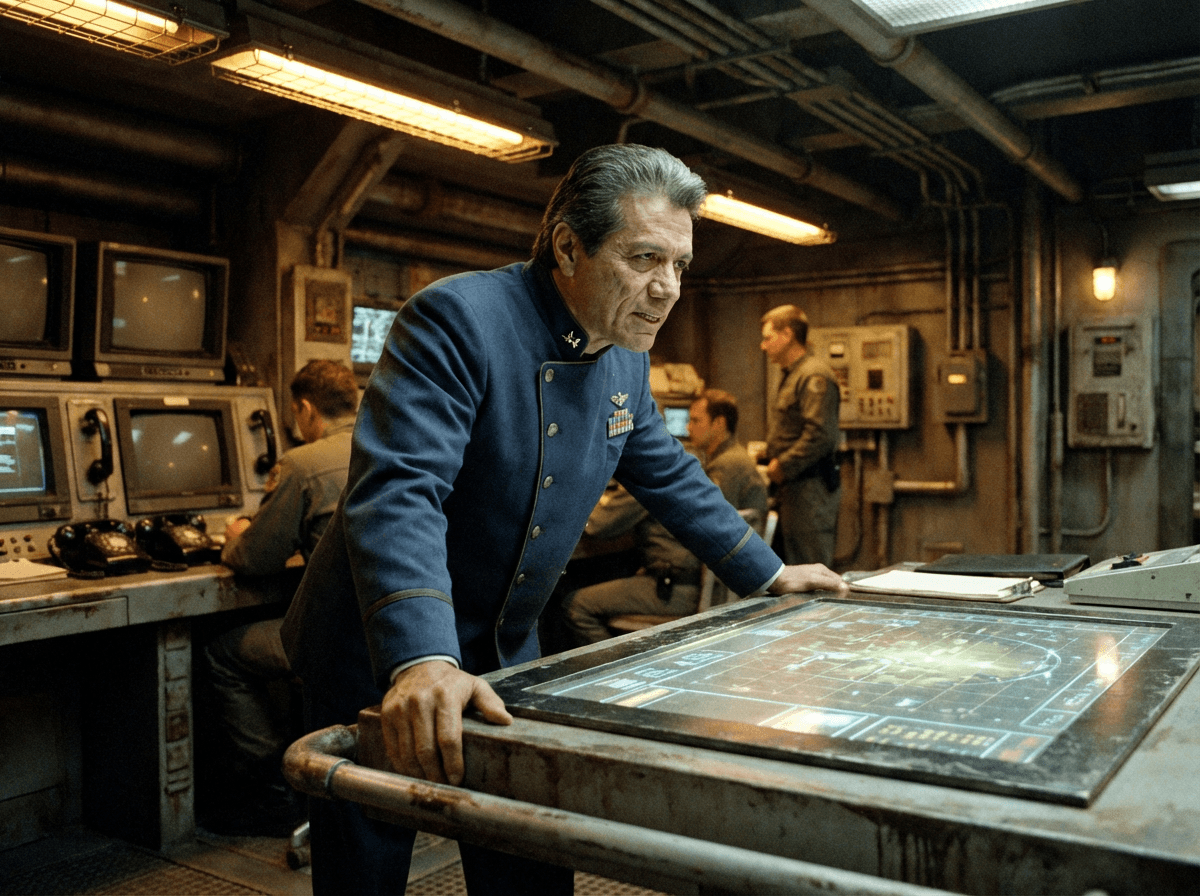
Life aboard the old ship
The Galactica's practical, cramped interiors suit the story. Phone handsets, crowded workspaces and tired faces make it feel less like a gleaming future and more like an old vessel being kept in service because nobody can afford to retire it.
The restless camera work extends that impression into the space battles. Ships don't always wait obligingly in the centre of a perfect composition. The camera seems to search for the action, which gives a fight a useful sense of confusion.
Some effects show their age. I find the physical spaces and performances more persuasive than the claim that everything about the production remains timeless. Bear McCreary's percussion-heavy music helps considerably, giving the fleet an identity beyond the familiar sound of triumphant space adventure. It suits people who are surviving rather than enjoying the voyage.

Is it worth watching now?
For a space-opera fan running short of good options, an extended stay with this cast is an attractive proposition. There is enough continuity for small decisions to accumulate, and enough personality aboard the ship to make a quiet episode worthwhile. I enjoyed following these people over a long journey.
My reservation is the uneven momentum. The immediate demands of keeping the fleet alive can be gripping; the larger mysteries don't always earn the same investment. If you want every strand to be as satisfying as the central performances, the series can test your patience.
Starbuck and Adama are what bring me back to it in memory. Sackhoff's unruly energy and Olmos's weary resolve give the struggle a human scale, even when the story is reaching for something much bigger.
Start with the miniseries
Watch the 2003 miniseries before season one's 33. It establishes the disaster and the people; the regular series begins with the fleet already on the run. The separate packaging can make that less obvious than it should be.
The UK Apple TV listing is a place to check current viewing options. The miniseries may be listed separately; check both and the purchase or subscription terms before paying. Listing checked September 2026.
The Expanse is the natural related choice for a substantial space story with political divisions and practical problems. For All Mankind offers another ensemble working under the pressure of dangerous missions, with an alternate-history setting instead. If the artificial-human questions are the main attraction, Westworld approaches them from a very different direction.
Battlestar remains a good show with a special place in my affections. I'd recommend it to the right viewer, not insist that everybody clear their schedule.
Keep Reading
More Reviews You Might Like
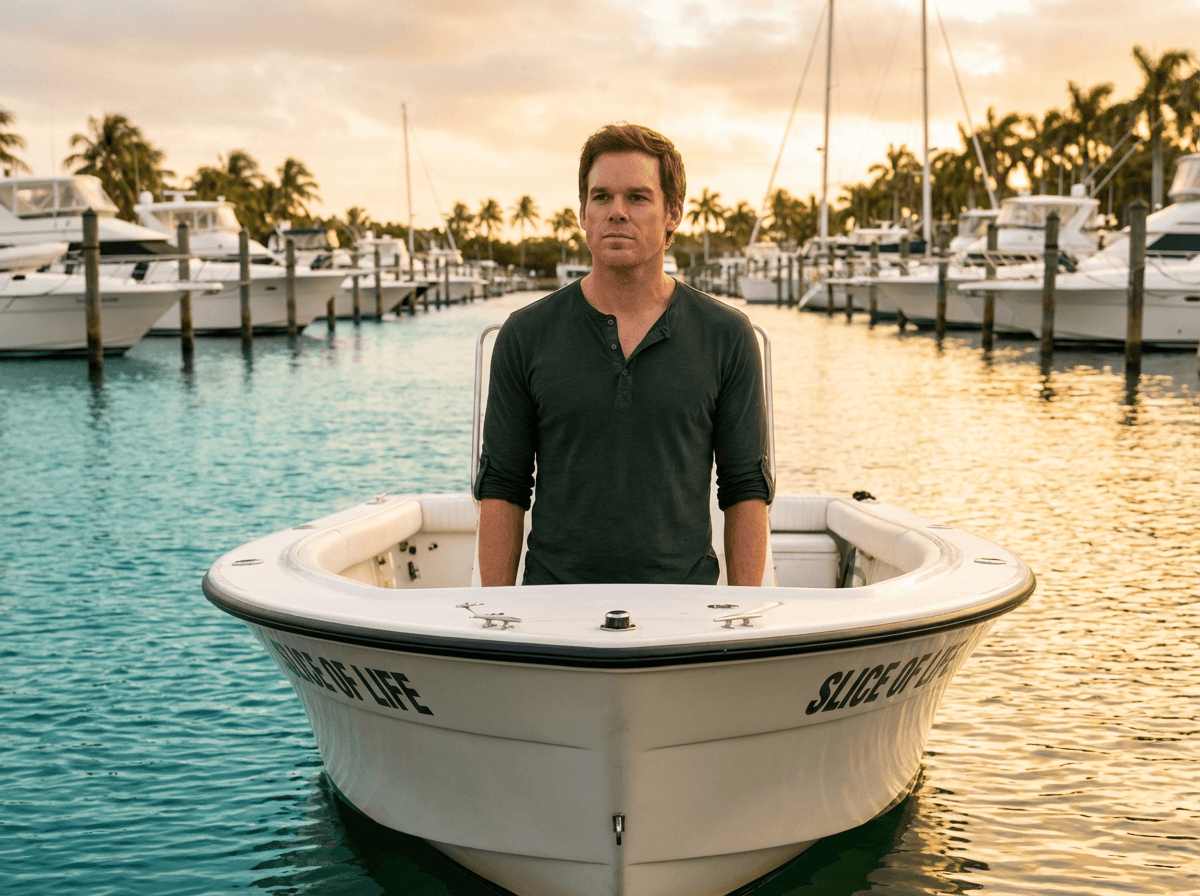
Dexter: The Man Behind the Smile
A spoiler-free review of Dexter’s original eight seasons after a full rewatch: Michael C. Hall, Miami, dark humour and the effort of appearing ordinary.
Read review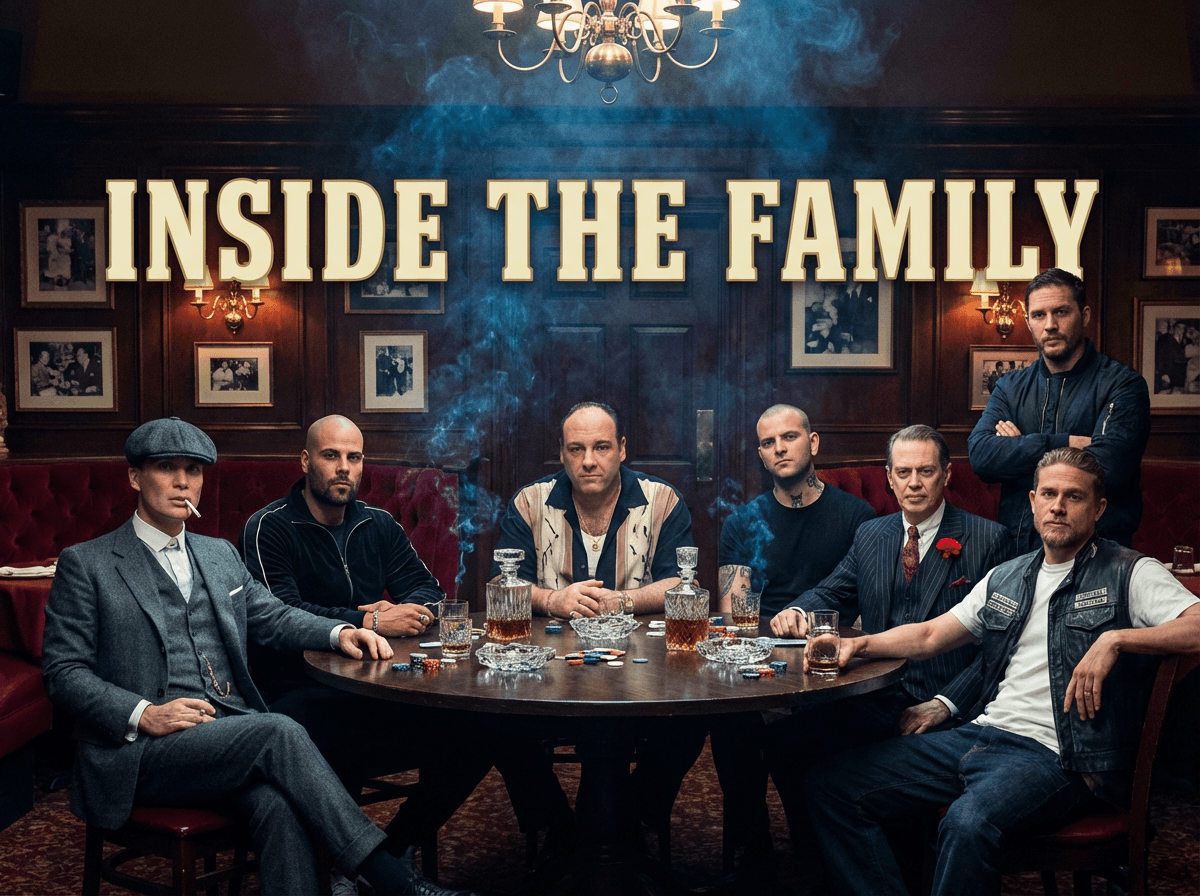
Top 10 Gangster Shows Told From Inside the Family
Ten gangster dramas I recommend for their characters, family loyalties and criminal worlds, from The Sopranos and Gomorrah to Kin and MobLand.
Read review
Severance review: the horror of never leaving work
My spoiler-free Severance review after finishing season two: why its divided lives, performances and unsettling office made me rate it more highly.
Read review
Absentia review: a solid thriller carried by Stana Katic
A spoiler-free Absentia review after all three seasons: Stana Katic carries a solid thriller with a convincing central performance and modest ambitions.
Read review