The West Wing: Great Company in the Corridors of Power
Updated

There are not many dramas that can make an argument about the wording of a speech feel like the most pressing thing in the world. The West Wing does it regularly, usually while three other arguments are travelling down the same corridor.
Aaron Sorkin's series follows the senior staff of a fictional American president, Josiah Bartlet, as they try to get through days that refuse to follow the plan. Policy, press questions, personal mistakes and unexpected emergencies all compete for their attention. Some of the business is momentous. Some of it is the sort of workplace nonsense that can consume an afternoon anywhere.
I find it enormously enjoyable. The writing has pace and wit, the cast make complicated exchanges seem effortless, and the programme takes a refreshing amount of pleasure in people caring about their work. It is idealistic, sometimes excessively so, but that enthusiasm gives it a warmth that a more detached political drama would struggle to match.
You are allowed to care about the job
The great attraction is the staff's investment in what they are doing. They want a proposal to succeed because they believe it will help someone, and because they have spent an unreasonable number of hours trying to make it happen. Losing a vote is both a public setback and a miserable evening at the office.
That mixture keeps the work human. A lofty principle has to survive a meeting with somebody who needs a favour. The best argument in the room does not automatically produce the required votes. A perfectly defensible decision may still be difficult to explain at a lectern with cameras pointed at it.
The show is not neutral about politics. It follows a Democratic administration and is sympathetic to its ambitions. That does not stop it being interesting when you disagree with an argument. The stronger scenes give the disagreement practical consequences and let an opponent have something more substantial to say than a cue for the next speech.
There are occasions when the writing makes a case too easy for its preferred speaker. I enjoy it much more when the staff have to wrestle with a genuinely awkward choice than when a clever answer seems to settle everything. Fortunately, the series has plenty of the former.
The conversation keeps moving
Sorkin writes dialogue that is meant to be performed. People pick up a thought, interrupt it, take offence at a side issue and return to the original problem before anyone has reached their destination. It is heightened speech, but these actors make its rhythm feel like a habit the office has acquired.
The famous walk-and-talks help. Director Thomas Schlamme's moving camera turns the building into a place where business is continually arriving from another direction. Someone joins a conversation at one door and leaves it at another, carrying the next problem away with them. The movement is useful, not merely busy.
What I like most is how readily a serious exchange can become funny without losing its purpose. An exhausted person gets stuck on an irrelevant detail. Someone offers a correction at exactly the wrong moment. An assistant understands the problem more clearly than the person supposedly explaining it. The jokes grow out of the work and the people doing it.
The dialogue can be showy, and on a bad day a character seems to have been waiting all week for the chance to deliver a paragraph. At its best, though, the writing gives you the pleasure of keeping up with a conversation you would happily follow into the next room.

A president who can fill a room
Martin Sheen gives Bartlet the authority the role needs. When he settles into a serious conversation, it is believable that the people around him would stop competing for the next word. He also makes the President fussy, funny and occasionally infuriating. The office has to accommodate the man as well as the office he holds.
That is a much more enjoyable performance than permanent statesmanlike solemnity. Bartlet's intelligence can be reassuring, but it can also become a way of making a small disagreement unnecessarily elaborate. Sheen lets the pleasure of knowing something coexist with the responsibility of actually deciding what to do.
John Spencer, as chief of staff Leo McGarry, gives the operation its steadiness. Leo has to translate a collection of talented, opinionated people into an administration that can function. Spencer can bring a room back to the point without making it feel as though the scene has stopped to introduce the sensible adult.
The two performances are particularly good together. There is a history behind their exchanges, an understanding of when to challenge and when to allow a little room. The series does not have to explain that relationship repeatedly; the actors make it visible in the way they listen to each other.
The briefing room and the bullpen
Allison Janney is superb as press secretary C.J. Cregg. A briefing requires her to sound composed while people try to find the sentence she would rather not say. Janney makes that control convincing, then lets the strain and absurdity of the day show when C.J. is among colleagues. Her comic timing is a major reason the series is such good company.
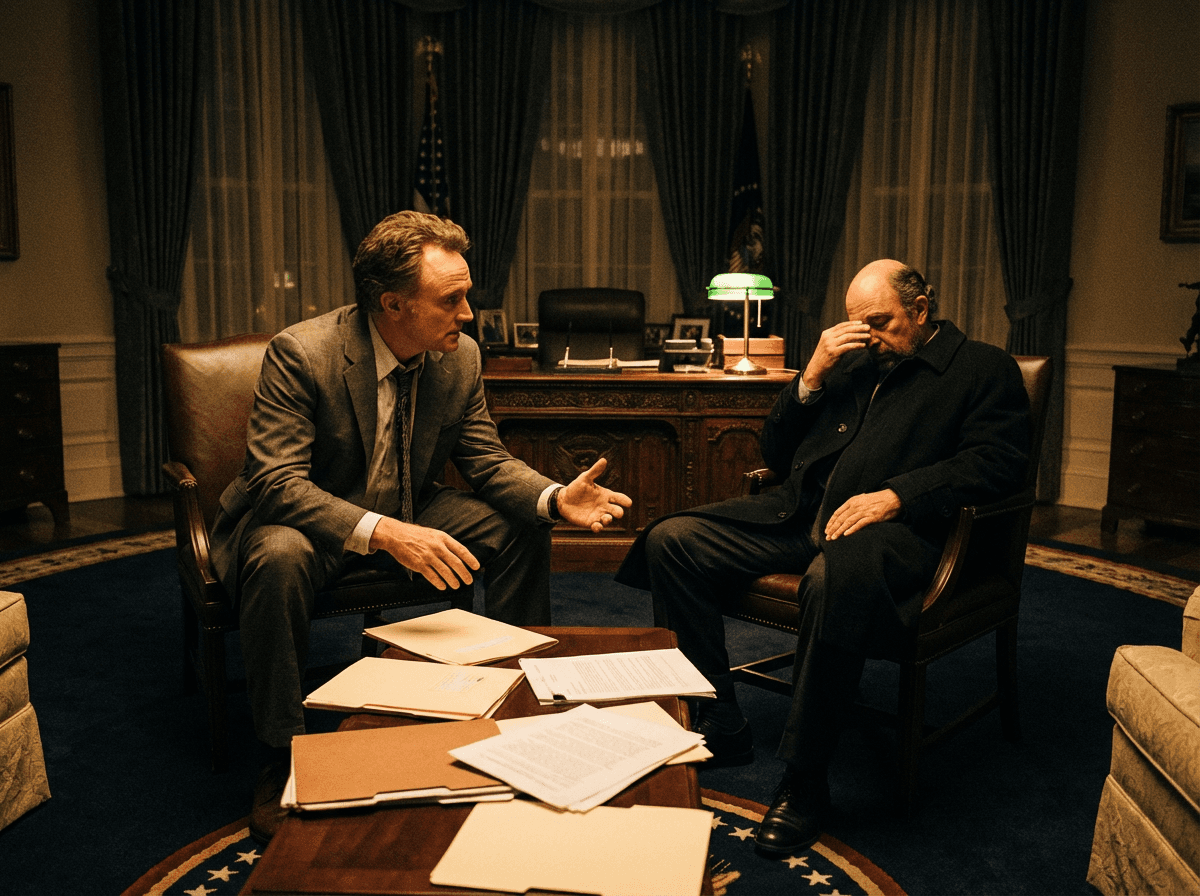
Bradley Whitford plays deputy chief of staff Josh Lyman with restless confidence. Josh can be quick, capable and so certain of the next move that he overlooks the person standing directly in front of him. Whitford is very good at the moment confidence discovers it has miscalculated.
Richard Schiff brings a different rhythm to communications director Toby Ziegler. Toby can make a pause feel like an objection. Schiff gives his dissatisfaction enough intelligence and feeling that it is more than an amusingly gloomy manner.
Then Rob Lowe, as Sam Seaborn, supplies an open enthusiasm for the job that is easy to like. Sam wants language to do something worthwhile. Lowe lets that idealism be attractive without making him immune to embarrassment or poor judgement.
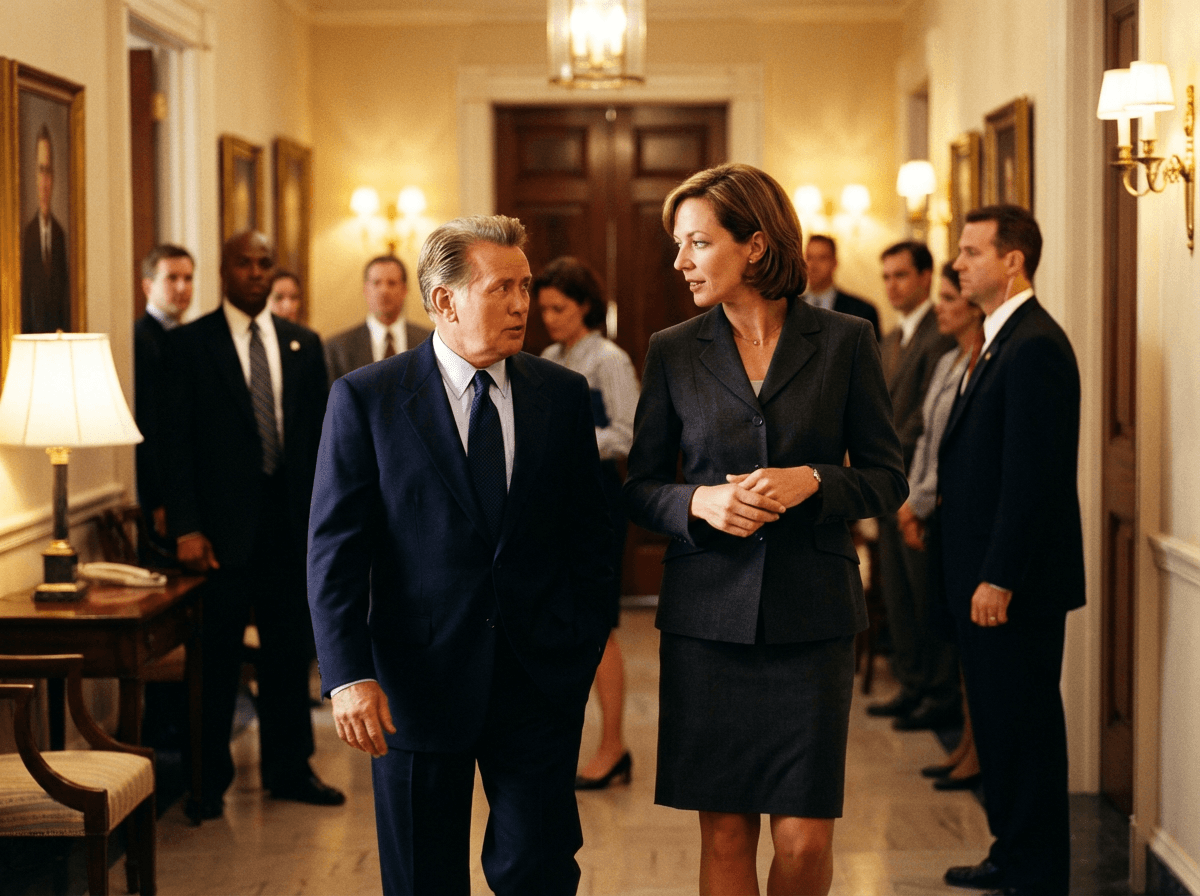
The supporting relationships matter just as much. Janel Moloney's Donna is an essential part of Josh's working day, Dulé Hill gives Charlie Young a directness that cuts through the building's self-importance, and Stockard Channing makes Abbey Bartlet someone with her own views rather than an extension of her husband's office. The ensemble is the reason a relatively small day in this building can be worth an entire episode.
Seven seasons, with a change of rhythm
The first four seasons, with Sorkin leading the writing, are the strongest part of the series for me. The combination of speed, comedy and conviction feels unusually complete. A conversation can start as a minor office irritation and become something affecting without announcing that it is about to become important.
The transition after Sorkin's departure is uneven. The characters are still worth following, but the writing sometimes presses harder for drama and loses some of the earlier lightness. John Wells and the continuing team faced the difficult job of keeping a very recognisable programme alive without simply reproducing its surface mannerisms.
The later campaign material gives the series fresh energy. Jimmy Smits and Alan Alda make strong additions because they bring persuasive, distinct personalities rather than merely another pair of people who speak at speed. The wider setting gives the established cast new circumstances to work against.
Across the run, the reservation is the same as part of the appeal: The West Wing wants public life to matter so much that it can become sentimental about the people conducting it. Occasionally the music and the speech do a little too much insisting. More often, the actors make the feeling land. I would not want the sincerity removed; it is one of the reasons to watch.
An easy show to recommend
The West Wing makes administrative work, verbal arguments and office friendships into absorbing television. It is clever without being cold, and funny without treating every earnest person as a fool. When the writing and cast are working together at their best, I cannot think of much I would change.
You do not need detailed knowledge of American government to begin. The series usually gives a problem a human shape before expecting you to care about its procedural details. There is jargon to pick up, but the more important information is generally clear: what someone wants, why it matters and why the obvious solution will not quite do.
The drama originally aired on NBC from 1999 to 2006, across seven seasons. UK viewers can currently stream it free with adverts on Channel 4, checked on 11 September 2026.
The Newsroom is the natural next stop for more of Sorkin's dialogue and workplace idealism. The Thick of It makes a very funny, much less comforting counterpoint to this view of government. For another detailed ensemble built around professional lives and private frustrations, try Mad Men.
The lasting appeal is the company. These people can make a simple meeting difficult, but they can also make you care about what gets decided in it. By the time Bartlet asks, “What's next?”, I usually want to know too.
Keep Reading
More Reviews You Might Like

Sons of Anarchy: Brotherhood, Betrayal and the Pull of Charming
Sons of Anarchy reviewed: Charlie Hunnam, Katey Sagal and Ron Perlman make SAMCRO's tangled loyalties compelling. A spoiler-free look at Kurt Sutter's biker drama.
Read review
Dexter: The Man Behind the Smile
A spoiler-free review of Dexter’s original eight seasons after a full rewatch: Michael C. Hall, Miami, dark humour and the effort of appearing ordinary.
Read review
Top 10 Gangster Shows Told From Inside the Family
Ten gangster dramas I recommend for their characters, family loyalties and criminal worlds, from The Sopranos and Gomorrah to Kin and MobLand.
Read review
Severance review: the horror of never leaving work
My spoiler-free Severance review after finishing season two: why its divided lives, performances and unsettling office made me rate it more highly.
Read review