Billions: Wall Street Power Games and the Price of Ambition
Updated
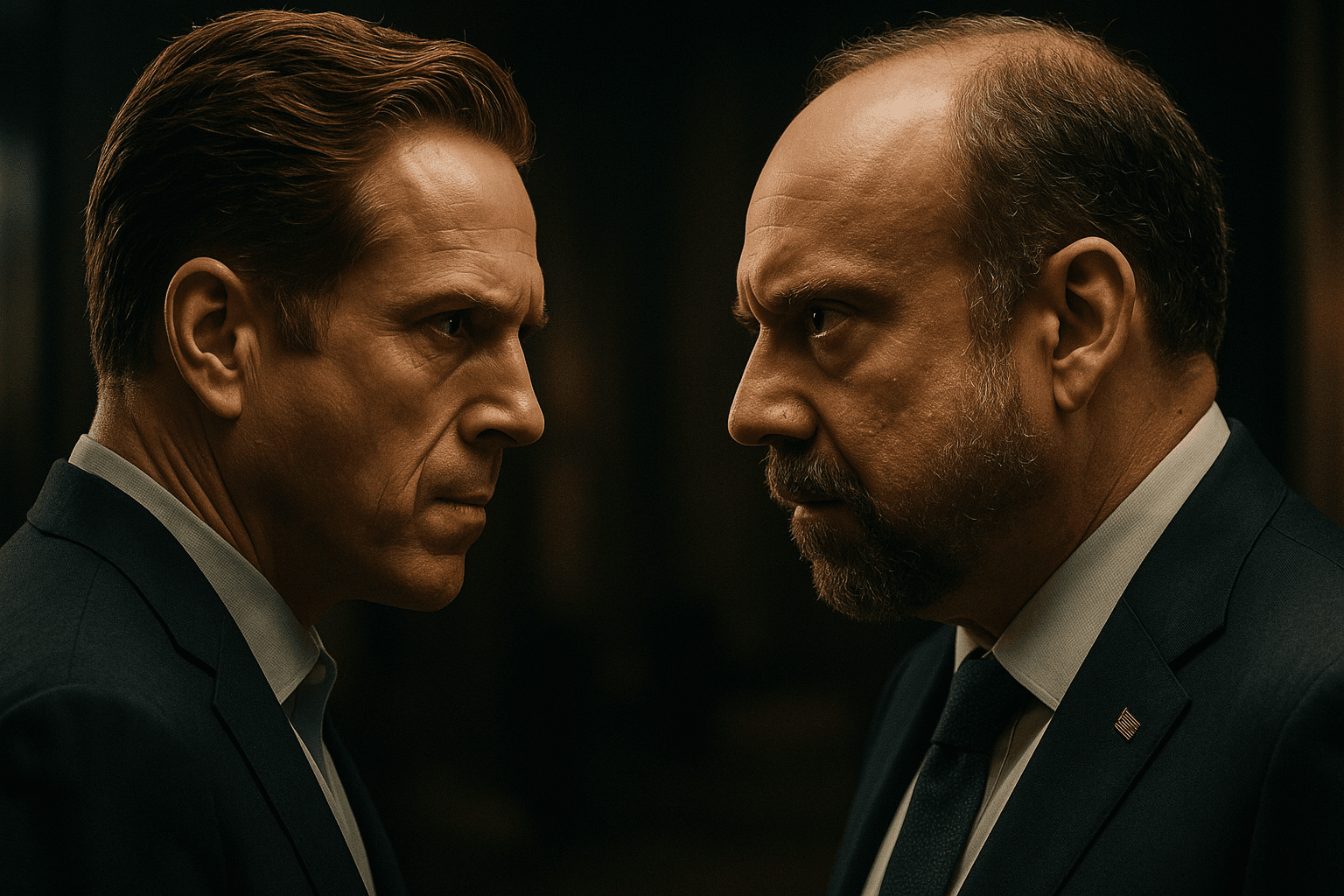
An expensive lunch can be a threat in Billions. So can a favour. A room full of people congratulating each other is usually a good reason to start wondering who is being outmanoeuvred.
I enjoy this show most when it lets two intelligent, deeply competitive men find increasingly elaborate ways to annoy each other. The money gives them resources. Their pride supplies the motive. Somewhere beneath the legal arguments and the investment ideas is a very recognisable desire to beat the person who thinks he is better than you.
Damian Lewis plays Bobby “Axe” Axelrod, the billionaire behind hedge fund Axe Capital. Paul Giamatti is Chuck Rhoades, the U.S. Attorney determined to bring him down. Chuck's wife Wendy works at Axe Capital as its performance coach, which makes a clean division between office hours and home life unlikely from the outset.
Created by Brian Koppelman, David Levien and Andrew Ross Sorkin, Billions ran for seven seasons. There is plenty I recommend in it, especially the energy of its earlier rivalry. I am less enthusiastic about the later habit of making every exchange feel like another demonstration of how clever everyone is. When it relaxes enough to let the actors do the work, it is enormously entertaining.
The pleasure of a very expensive grudge
Axe is good at making wealth look like freedom. Lewis gives him the ease of a man who expects most obstacles to become negotiable once the right person is called. He does not need to dress formally to establish who owns the room.
What makes him interesting is how quickly that ease can tighten when he is challenged. He wants to be seen as the person who earned his place through intelligence and nerve. A rival who refuses to accept his account of himself can matter more than a financial setback.
Chuck has a different story about why he deserves to win. He has the law, a public duty and the vocabulary to make pursuing an enemy sound like a service. Giamatti is excellent at letting irritation show through the respectable language. You can hear the principle being argued and still suspect that the insult is what really hurt.
Neither performance asks me to mistake competitiveness for greatness. I can enjoy Axe finding a way out of a problem without deciding that he is right about everything. I can want Chuck to land a blow and then immediately tire of his satisfaction at having landed it. That shifting loyalty is a large part of the fun.
Lewis and Giamatti are the draw
Lewis is particularly good at listening as Axe. Other people can be doing the talking while he quietly works out what they want, what they fear and whether either is useful. The apparent informality helps. A relaxed conversation with him does not necessarily mean you are having a relaxed conversation.
Giamatti gives Chuck more visible effort. He can turn a small indignity into an event, gathering himself around it until you can practically see the argument he is preparing. The performance is funny without making Chuck a joke. There is ability behind the resentment, which is why the resentment can cause so much trouble.
They make a good pair because they do not perform power in the same way. Lewis often looks as if exercising it should be easy. Giamatti lets you feel how much Chuck needs to exercise it. I would happily watch them negotiate something much less consequential than a criminal investigation.
The best confrontations leave enough room to enjoy the delivery. The worst give everyone such a polished answer that the people briefly disappear behind the dialogue. Both tendencies are present in Billions, but the leads give the sharper material real bite.

Wendy makes the conflict personal
Maggie Siff's Wendy Rhoades is essential to the setup. At Axe Capital, her job involves the confidence and judgement of people handling extraordinary amounts of money. At home, she is married to the man investigating the business. Neither side can simply be put away at the end of the day.
I like how Siff listens. Wendy can let someone explain a problem and make it clear, with very little movement, that she is waiting for the less comfortable explanation underneath it. The performance has authority without requiring her to dominate every conversation.
Her work also gives the trading floor a useful vulnerability. These people are paid for their judgement, yet their ability to make a decision can depend on fear, vanity or the last person who made them feel small. A number on a screen does not stop the person looking at it from having a bad day.
The show is strongest when Wendy has professional pride and interests of her own, rather than serving as a convenient route between its two leading men. Siff makes that independence believable. She belongs in the argument, not just in the middle of it.
Wags, Taylor and the rest of the room
David Costabile's Wags is a particular pleasure. He brings a wholehearted appetite for excess to Axe Capital, along with the confidence of somebody who has stopped wondering whether his behaviour is appropriate. Costabile commits to the absurdity without losing the sense that Wags knows his business.
It is a very different use of him from Gale in Breaking Bad. Here, restraint would almost be a waste. Wags gives the office a badly needed change of temperature when the surrounding conversations risk becoming nothing but calculations.
Asia Kate Dillon's Taylor Mason works in the other direction. Taylor's analytical manner cuts across the room's habitual display of status. Dillon makes precision interesting: a carefully chosen observation can make the louder person seem suddenly less impressive. The contrast is valuable in a show with this many accomplished talkers.
Corey Stoll brings an affable surface to wealthy businessman Mike Prince. He is convincing as someone who wants his account of his own intentions to be accepted. Jeffrey DeMunn, meanwhile, gives Chuck's father enough ease and entitlement to suggest that his son's difficult relationship with power did not begin at work.
This is a cast that can make a meeting worth watching. The problem is rarely a shortage of people capable of delivering the material.

When everyone has the perfect reference
I like the confidence of the writing when it produces a genuinely good line. I like it less when a conversation appears unable to proceed without a film, sporting or music reference. One well-placed comparison can be funny. A succession of them makes me start listening for the writers instead of the characters.
That habit becomes harder to ignore as the series goes on. So does the effort required to keep producing a bigger move, a more ingenious response or another rearrangement of the contest. Surprise is enjoyable when it exposes something I had missed. It is less satisfying when crucial information has simply been kept offstage until the moment it is needed.
The expensive surroundings suit these people, and there is some pleasure in watching them take ridiculous levels of comfort for granted. But the restaurant, the office and the purchase still need to tell me something. When they become decoration around another exchange of rehearsed-sounding lines, the show loses some of its force.
I do not need Billions to teach me finance. I do need to understand why a decision matters and why this person would make it. The earlier rivalry gives the schemes a clear emotional purpose. Later on, the machinery can become more noticeable than the grudge powering it.

Still a strong recommendation
My reservations do not cancel out how much there is to enjoy here. Lewis and Giamatti are excellent company, Siff gives the central conflict a necessary complication, and the supporting cast can turn a minor encounter into a reason to keep watching.
If the premise appeals, I would give Billions a try. Its best stretches are sharp, funny and very easy to continue with. I would go in for the performances and the personal competition rather than expecting seven seasons of equally convincing plotting.
Succession is a natural companion if you enjoy wealth failing to cure anyone's personal inadequacies. Ozark gives its financial manoeuvring a more immediate threat to the family, while The Diplomat takes quick conversations and competing agendas into a London-based diplomatic setting.
Where to watch in the UK: Sky lists all seven seasons. Check JustWatch's UK availability page for current subscription and purchase options. Availability checked 10 September 2026.
Keep Reading
More Reviews You Might Like

Sons of Anarchy: Brotherhood, Betrayal and the Pull of Charming
Sons of Anarchy reviewed: Charlie Hunnam, Katey Sagal and Ron Perlman make SAMCRO's tangled loyalties compelling. A spoiler-free look at Kurt Sutter's biker drama.
Read review
Homeland: Eight Seasons of Suspicion
My Homeland review after watching all eight seasons: Claire Danes, Carrie and Saul, and a spy thriller that keeps finding reasons to stay.
Read review
Escape at Dannemora: Boredom Is a Dangerous Thing
The Att reviews Escape at Dannemora: Patricia Arquette steals a gripping prison drama built on great writing, restless lives and institutional complacency.
Read review
Cape Fear: A Thriller Worth Second-Guessing
The Att reviews Cape Fear (2026): a tense, absorbing thriller with writing that keeps you guessing, and why watching the 1991 film first worked for me.
Read review