2016 - 2023

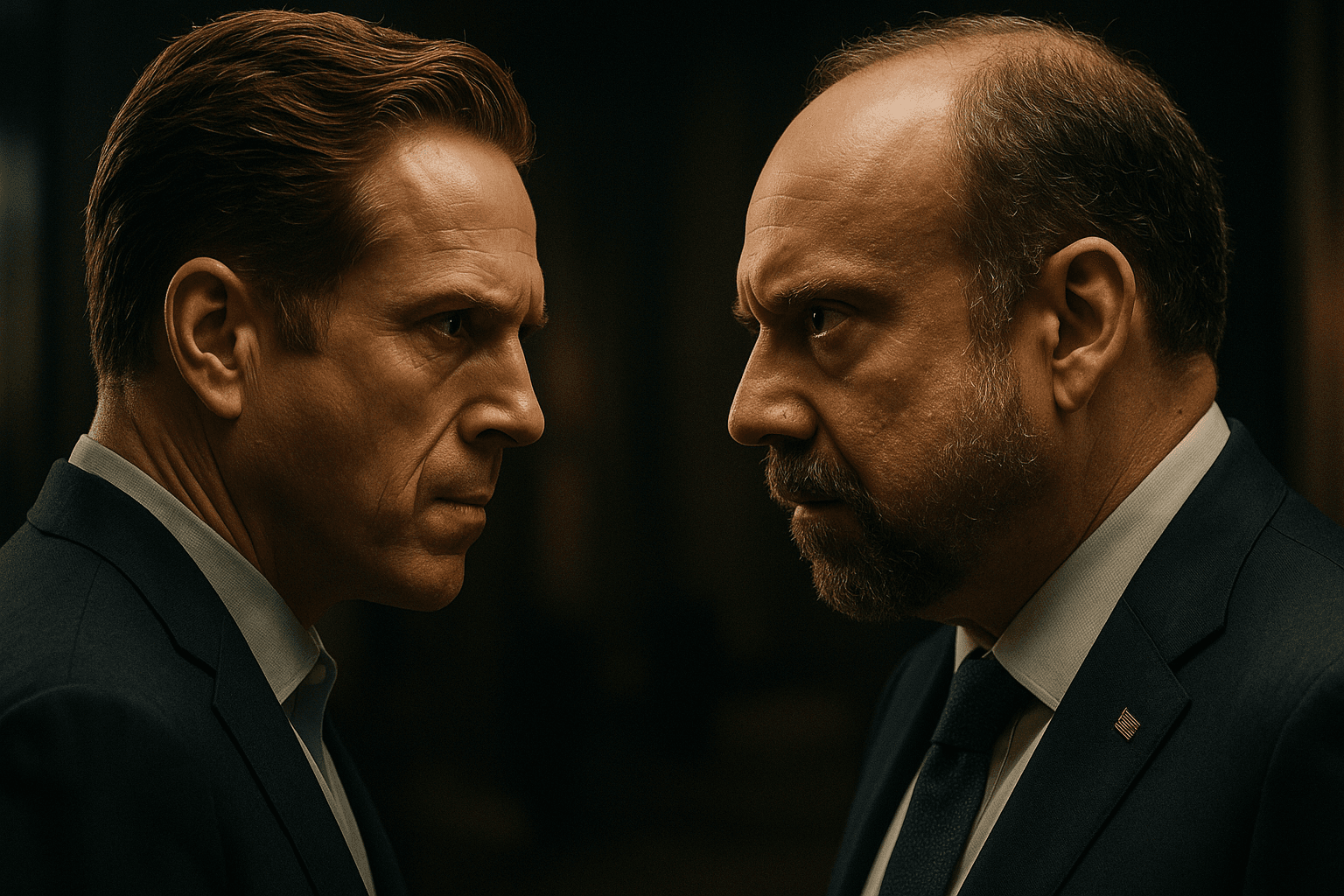
Billions ran on Showtime from January 2016 to October 2023, seven seasons and 84 episodes of two alpha men trying to destroy each other over Manhattan. On one side, Bobby "Axe" Axelrod (Damian Lewis), a hedge fund king who runs Axe Capital out of a converted Connecticut trading floor and made his first billion under circumstances he would rather you did not examine. On the other, Chuck Rhoades (Paul Giamatti), the U.S. Attorney for the Southern District of New York, a man with a perfect conviction record, a blue-blood political family, and an appetite for humiliation as a hobby. The twist that makes the whole machine work. Chuck's wife Wendy (Maggie Siff) is the performance coach at Axe Capital. She is closer to both men than either is to the other, and neither will let her go.
Brian Koppelman, David Levien, and Andrew Ross Sorkin built the show together. Koppelman and Levien are the writing team behind Rounders and Ocean's Thirteen, and the DNA is hustle and gamesmanship, with a particular eye for how two men size each other up across a table. Sorkin is the New York Times finance journalist who wrote Too Big to Fail, which is why the Wall Street detail hits correctly. The show knows what a performance fee looks like and what an SEC subpoena feels like on the receiving end.
Lewis and Giamatti are the engine. Lewis plays Axe as a working-class kid from Yonkers who learned to perform billionaire and nails it about 90% of the time. Chuck, by contrast, grew up inside the WASP machine, and Giamatti spends the whole show proving his character is harder than it. The two of them circling each other is the show.
Around them, an ensemble that the show kept expanding as it went:
Maggie Siff
Asia Kate Dillon
Corey Stoll
Daniel Breaker
Paul Giamatti
Toby Leonard Moore
Jeffrey DeMunn
Malin Akerman
David Costabile
Damian Lewis

Our Billions review covers all 7 seasons of Showtime's financial drama. Paul Giamatti and Damian Lewis deliver powerhouse performances in this smart, ambitious series. Woke rating 3/5.
Read MoreOn the surface this is a show about a prosecutor trying to put a hedge fund manager in prison. That is the pretext. What the show is actually interested in is obsession. The specific kind of obsession that money, power, and status breed in men who have already won. Axe does not need another billion. Chuck does not need another conviction. They pursue each other because the pursuit is the only game either of them knows how to play, and because losing would mean discovering they are not the men they have spent their lives constructing.
Wendy sits at the centre of that and the show is honest about it. She is not a damsel, she is not a prize. She is a professional who has built a career on reading people, and both her husband and her boss are what she reads. Taylor Mason complicates the picture further. When Taylor arrives, the show gets a character who can beat Axe at his own game intellectually and who has no interest in playing the alpha theatre he and Chuck live inside. That contrast is one of the best things the show does.
Billions is a pop-culture omnivore. Wags quotes Deadwood, Axe quotes Metallica, Chuck quotes Nietzsche, and nobody ever stops to explain the reference. The writing treats the audience like adults who will Google it later. I did, repeatedly, and that is half the pleasure of watching. Scenes are structured like heist movies. Set up the play, run it, and either it lands or it does not. The editing is snappy, the music cues are expensive, and the expensive men in the expensive rooms really do feel expensive.
The show also knows what Wall Street looks like in the late 2010s in a way most finance dramas do not. The Axe Capital trading floor is cluttered with actual Bloomberg terminals. The U.S. Attorney's office looks like a federal office, not a gleaming Law and Order set. When a deal goes through, the numbers on the screen make sense. That verisimilitude is a lot of why the show works.
Critics came around slowly. The pilot reviews were mixed. Clever but cold, some said. By season 2 the ensemble had filled out and the consensus shifted. The show settled into being one of Showtime's marquee dramas for the back half of the 2010s, reliably delivered 10 to 12 episodes a year, and built a devoted audience of finance people who liked seeing their world taken seriously and civilians who liked watching rich people behave badly with a large vocabulary.
The Taylor Mason casting was a genuine moment in US television. Asia Kate Dillon's audition, and the show's decision to write Taylor specifically as a non-binary character rather than paper over it, made Billions the first major US drama to put a non-binary lead in a prestige context. Dillon has been open about how the show fought the awards bodies over the gendered acting categories, which is its own legacy.
A spinoff, Billions: Miami, was announced before the finale aired. The parent show concluded in October 2023.
The short answer is that Billions is a show about clever people played by actors who are clever enough to sell it. The long answer is that Koppelman, Levien, and Sorkin figured out early that the engine of the show was not the legal case but the relationship between Chuck, Axe, and Wendy, and they never let the plot get in front of that triangle. When the show drifts (seasons 3 and 6 are the ones people argue about), it is always because the triangle is offstage.
If you liked the corporate knife-fighting of Succession, the moral theatre of Mad Men, or the legal-system tactics of Damages, this is cut from the same cloth. It is less cutting than Succession and less controlled than Mad Men, but it is funnier than either. I came to it expecting a dry finance drama and stayed for the insult writing. Wags alone is worth it.
Condola Rashad