2012 - 2014
Lilyhammer is the show Netflix put out before Netflix was Netflix. Season one dropped on 6 February 2012, four days before the platform's American subscribers had ever seen an original. House of Cards gets the retrospective credit, but it was Lilyhammer that quietly beat it to the punch. The production was a co-commission between Netflix for the international audience and NRK for Norway, and on NRK's own channel it pulled roughly a fifth of the country's population for the premiere. Big numbers in a small country.
The premise is a gift. Frank Tagliano, a mid-ranking New York mobster, testifies against his boss after his dog is poisoned, enters WITSEC, and when the US Marshals offer him a resettlement, he asks for Lillehammer. He liked the look of it on TV during the 1994 Winter Olympics. That's it. That's the pitch. The rest of the show is what happens when a man who has spent his life shaking down Brooklyn fences is dropped into a country where the most threatening thing in the room is an officious social worker insisting on paperwork.
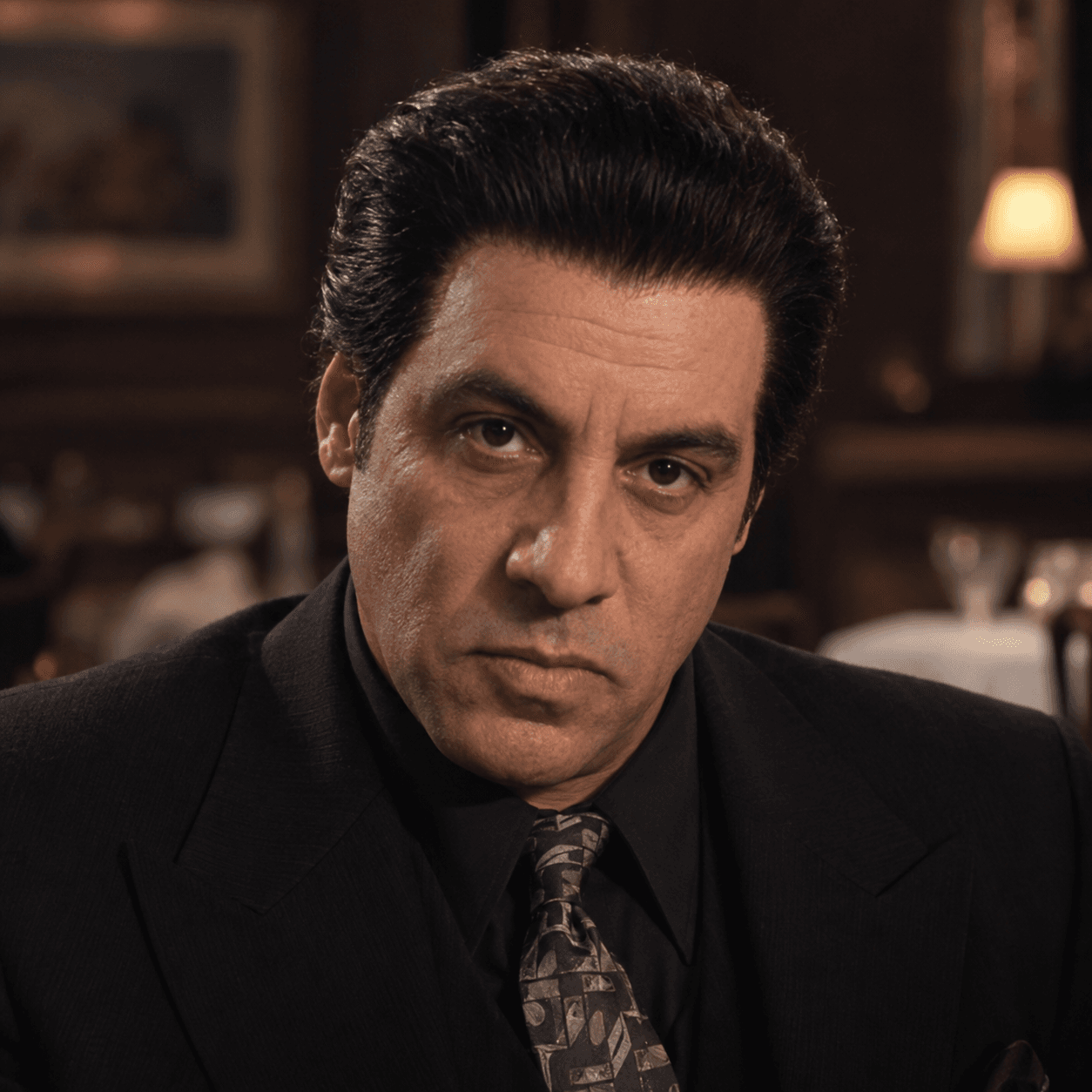
Steven Van Zandt plays Frank, rebranded as Giovanni "Johnny" Henriksen. He buys a nightclub called The Flamingo. He goes hunting for moose. He attends state-mandated immigration classes. He meets a Norwegian journalist, Sigrid, played by Trine Wiggen. He keeps reaching for the reflex violence that has always worked for him and keeps being gently baffled by a system that declines to escalate.
Van Zandt is the hook, and he is doing something fascinating with the role. He spent six seasons as Silvio Dante on The Sopranos, the gravel-voiced consigliere with the hairpiece and the cool jurisprudence, and Frank Tagliano is Silvio's cousin from a different branch of the family tree. Same hoarse whisper, same studied calm, same sense that the man in front of you has weighed your life against convenience. The trick is that Van Zandt plays the exact same register, and Norway reacts to it as if he is a visiting space alien. That is where the comedy lives.
The Norwegian cast is the reason the show actually works. Trine Wiggen's Sigrid is no pushover; she refuses to be a romantic decoration and often carries the show's moral weight. Steinar Sagen turns up as the hapless but lovable Torgeir. Fridtjov Såheim plays police detective Geir Tvedt, a man who knows exactly who Johnny Henriksen is and cannot prove a thing. Marian Saastad Ottesen takes on Laila, the social worker whose bureaucratic patience becomes a slow-motion adversary. Silje Torp, Anne Krigsvoll, Kyrre Hellum and Sven Nordin round out a bench deep enough that the Norwegian-language scenes never feel like filler you are waiting out for Van Zandt to come back on screen.
Roughly 40 percent of the dialogue is in English. The remaining 60 percent is Norwegian with subtitles. It sounds more demanding than it plays. Within two episodes you stop noticing the switch. The bilingual rhythm is part of the joke. Johnny speaks his mangled Norwegian to his neighbours, and they speak their mangled English to him, and the gap between what either side is saying and what either side means is where most of the show's best beats are buried.
Anne Bjørnstad
Co-creator / writer
Anne Krigsvoll
Supporting role
Steinar Sagen
Torgeir Lien
Fridtjov Såheim
Geir Tvedt
Marian Saastad Ottesen
Laila Hovland
Trine Wiggen
Sigrid Haugli
Steven Van Zandt
Frank "The Fixer" Tagliano / Giovanni "Johnny" Henriksen
Eilif Skodvin
Co-creator / writer
On the surface this is a fish-out-of-water comedy. Under that surface it is a culture-clash essay, and the essay has teeth. The show is not interested in mocking Norway. It is interested in noticing that a society engineered to minimise conflict produces a specific kind of citizen, and that person is genuinely helpless against someone willing to simply break the rules. Johnny does not outsmart Norway so much as exploit its good faith. Every time a Norwegian character assumes the other party will also act in good faith, Johnny wins.
There is a sideways reading of the series as a satire of wholesome social democracy, and another as a satire of American exceptionalism, and a third as a satire of the fantasy that you can buy yourself a new life and leave the old one on a different continent. The show is good enough to hold all three readings at once without committing to any of them. That ambivalence is why it lasts.
Creators Anne Bjørnstad and Eilif Skodvin co-developed the project with Van Zandt, and their fingerprints are all over it. The humour is Nordic in its bone-dryness, quick to puncture pomposity, slow to signpost its own jokes. The cultural specifics of small-town Lillehammer life, the sauna etiquette, the hunting-cabin rituals, the 17 May national day pageantry, all land because the writers are local and know which details matter.
Visually the show is gorgeous in a very specific way. Lillehammer is a real town of 28,000 people built on a hillside above a long blue lake, and the camera treats the place as a full character rather than a postcard. The pine forests and the low cold sun and the snow piled up to the kerb flatten everything by four in the afternoon. The contrast between the natural setting and Frank's Brooklyn mannerisms never stops being funny. I found myself laughing at a shot of Johnny, in full New York leather, trudging through deep snow in a forest with a hunting rifle, simply because the composition was so wrong.
The soundtrack leans heavily on Van Zandt's own musical taste. Little Steven the DJ is not hiding behind Little Steven the producer. Expect soul, early rock, a generous run of deep cuts from the back of your dad's record collection. It fits the character. A man carrying his own 1970s New York around inside his head would pick exactly this music.
In Norway the show was a phenomenon. 998,000 viewers watched the premiere on NRK1 in a country of roughly 5 million. On the international Netflix side, the reception was warmer than the trade press predicted and the show ran for three seasons, 24 episodes in total, before ending in December 2014. The critical line settled fairly quickly. Season one is a small miracle and season two keeps the balance. Season three runs out of creative fuel as the story drifts away from the original premise and the Norwegian cast gets less to do. That last point is the fairest of the criticisms. The show was best when Frank was a stranger, and once he stops being one, some of the engine goes cold.
Historically though, Lilyhammer matters for a reason that has nothing to do with quality control. It was the first time Netflix put its name on a piece of original scripted programming, and the approach they piloted, all eight episodes dropped at once, binge-ready, commissioned across borders, is now the entire industry. Every streaming strategy meeting in 2026 still operates on the playbook this little Norwegian-American co-production proved.
I came to Lilyhammer years after the Netflix-original narrative had shifted to bigger, flashier shows, and I was surprised how well it holds up. It is genuinely funny. It is surprisingly thoughtful about what makes a place a place. Van Zandt gets to carry a lead role for the first time at 61 and looks like he is having the most fun of his acting life. If you liked Silvio, you will like Johnny. If you have any interest in how modern streaming got built, the first episode is a small piece of television history.
It will not reach the heights of The Sopranos or the bloody swagger of Banshee, and the late seasons wobble. But as a three-season experiment in what a bilingual fish-out-of-water crime comedy could look like, there is nothing else quite like it. Fans of Fargo and its frozen-midwest absurdism will feel at home here immediately. Admirers of Norwegian genre TV like Occupied will recognise the national sensibility. And anyone who came to crime drama through Narcos or Money Heist and wants a slower, stranger, funnier cousin of the genre will find one here.
Kyrre Hellum
Supporting role
Sven Nordin
Supporting role
Silje Torp
Lotta Helgeland