2013 - 2016
Banshee ran on Cinemax from 2013 to 2016, four seasons and thirty-eight episodes of the pulpiest, most beautifully shot action drama the channel ever produced. Created by Jonathan Tropper and David Schickler, executive produced by Alan Ball of Six Feet Under and True Blood fame, it is a show with a premise so lurid you half expect it to collapse under its own weight within three episodes. It refuses to.
An ex-con master thief walks out of a fifteen-year prison stretch and makes his way to the small town of Banshee, Pennsylvania, in the middle of Amish country, hunting for the ex-lover who abandoned him on the night of their last big score. Within his first hour in town he watches the newly appointed sheriff, a stranger named Lucas Hood, get shot dead in a roadside bar. And so, through a chain of circumstance and a total absence of better ideas, he assumes the dead man's identity, pins on the badge, and starts policing the town. All while hiding from Rabbit, the Ukrainian crime boss who wants him dead and happens to be his former lover's father.
It is, in every meaningful sense, a ridiculous show. It is also one of the best-made action dramas of its decade.
Antony Starr plays Lucas Hood. If you know him only as Homelander from The Boys, it is genuinely strange to see him here, a decade earlier, playing a bruised and morally confused antihero rather than the cheerful sociopath that made him famous. He is the physical engine of the show. The fight scenes live and die on his willingness to get knocked around, and he takes more punishment on screen than any lead I can remember.
Around him the show builds a genuinely eccentric ensemble.
Ulrich Thomsen
Kai Proctor
Antony Starr
Lucas Hood
Frankie Faison
Sugar Bates
Hoon Lee
Job
Lili Simmons
Rebecca Bowman
Rus Blackwell
Gordon Hopewell
Ivana Miličević
Carrie Hopewell / Anastasia
Langley Kirkwood
Colonel Stowe
Nobody on this list was a household name when Banshee aired. Most of them should have been.
The premise is a stolen identity, but the actual subject is whether a man can outrun who he used to be by inventing a new self. Everyone in Banshee is performing a role they were not born into. Hood is a thief pretending to be a sheriff. Carrie is a criminal pretending to be a PTA mother. Kai Proctor built a criminal empire after being cast out by his own father and has spent decades pretending that does not hurt. Rebecca leaves the Amish convinced she is choosing freedom and finds out later what she actually chose. Even Job, the most self-assured character on the show, has armoured himself with a persona that is both absolutely authentic and completely defensive.
"There is no such thing as a clean break. Only a deeper cut."
That is the thematic core of the whole series. You can run, you can lie, you can wear somebody else's uniform. The past comes anyway.
Two things separate Banshee from every other Cinemax action show.
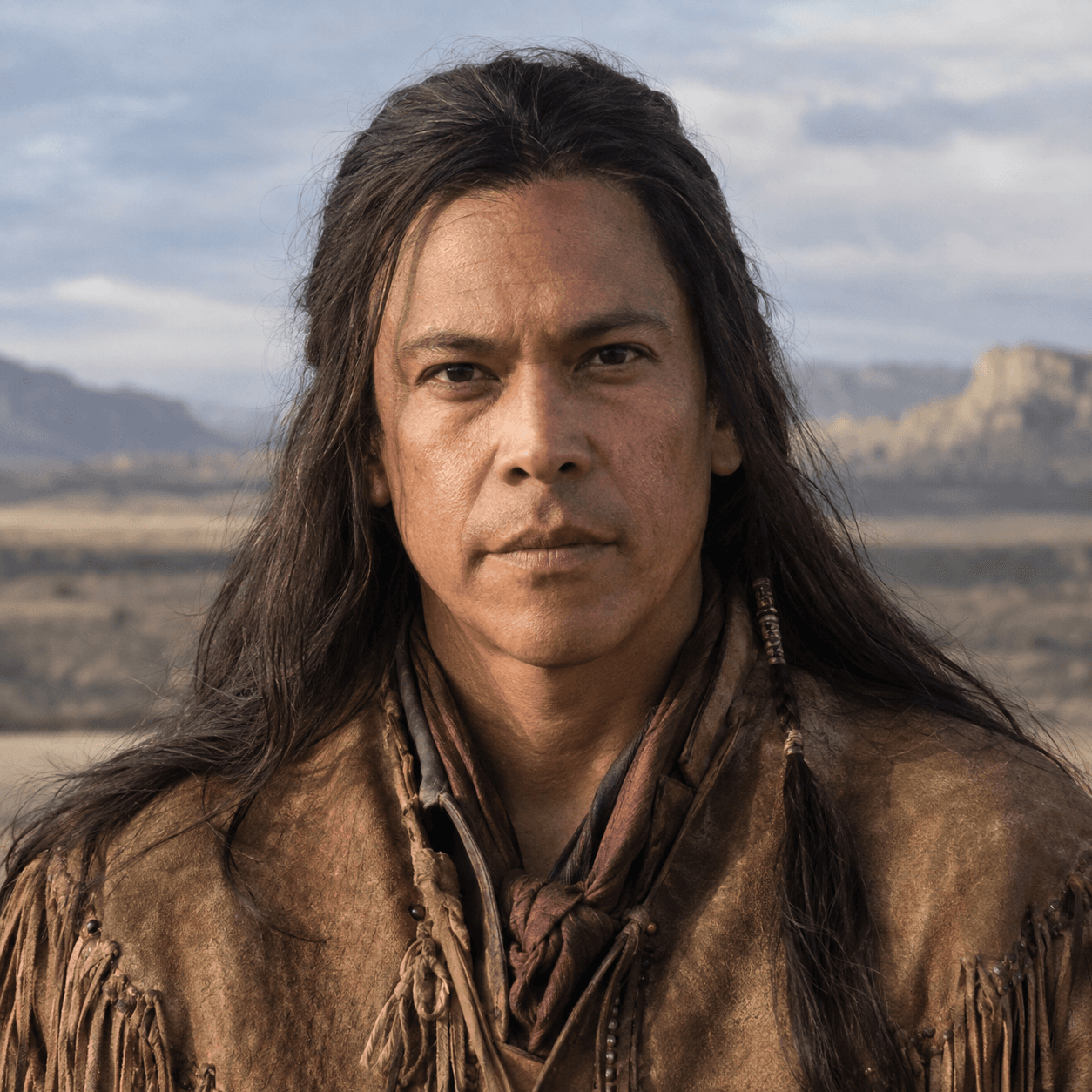
The first is the fight choreography. The brawls on this show are among the most inventively staged in modern television, not in the balletic John Wick sense but in a grounded, brutal, exhausted way. Fights last longer than you expect. People get tired. A fist to the jaw has weight. When Hood fights the recurring Amish gangster Chayton Littlestone it is less a duel than a natural disaster. The stunt team, led by coordinator Marcus Young, picked up industry awards nobody had ever previously associated with Cinemax.
The second is the cinematography. Shot largely in North Carolina standing in for Pennsylvania, the show has a moody, painterly visual signature that no action drama of this budget had any business pulling off. Forests in low November light. Rain on a Pennsylvania two-lane blacktop. The deep amber interior of Sugar's bar. It looks like a prestige drama that keeps forgetting it is one and remembering to throw a bank heist into the next episode.
Banshee never won major awards and it was never a mainstream hit. Cinemax, at the time, was a channel best known for late-night erotica and the slightly embarrassing cousin to HBO, which meant the show never got the critical attention it deserved when it aired. The people who found it tended to love it fiercely. A cult show in the truest sense, passed hand to hand by viewers who kept recommending it to friends who were convinced the premise sounded stupid.
In retrospect it looks like a proving ground for talent that later broke out everywhere. Starr went on to The Boys. Hoon Lee is now a fixture in American prestige TV. Tropper and Schickler's writing on this show reads as a direct ancestor to a lot of the pulpy literary crime drama that followed on Netflix and Amazon. If Peaky Blinders and Sons of Anarchy had a cousin nobody invited to the family reunion, this is it.
I will be honest about my bias. I think Banshee is an underrated masterpiece of genre TV and anyone who likes the hard-edged cop-on-the-wrong-side-of-the-law stuff of The Shield owes it a weekend. The show knows exactly what it is. It is not pretending to be Mad Men. It is a lurid, muscular, almost operatic action thriller with genuine thematic weight hiding underneath the bloodshed, and it plays that register more cleanly than any of its peers.
It also knows when to end. Four seasons. No bloat. The final run is tighter and more confident than the middle stretch, which is the opposite of what normally happens to cable dramas. By the time the lights go out in Banshee, Pennsylvania, the show has said what it set out to say.
If you have never heard of it, start with the pilot. It earns your attention by the end of the first fight.
Eliza Dushku
Veronica Dawson
Trieste Kelly Dunn
Deputy Siobhan Kelly
Demetrius Grosse
Chayton Littlestone
Matt Servitto
Deputy Brock Lotus
Dennis Haysbert
Season 4 recurring