2018 - 2023
Das Boot is the Sky / Sky Atlantic continuation of the story Wolfgang Petersen told in his 1981 film of the same name. The series ran four seasons and 34 episodes from 2018 to 2022, a German-Czech-Italian co-production created by Andreas Pflüger, Johannes W. Betz, and Tony Saint. It is primarily in German, with French and English layered in from season two onward as the story widens beyond the Kriegsmarine.
The show picks up in late 1942. Wolfgang Petersen's film took place almost entirely inside a single U-boat on a single patrol. This sequel-reboot pulls the camera back. Two storylines run in parallel and rarely meet. One is below decks aboard U-612, a new boat under a young Kaleun (Kapitänleutnant) named Klaus Hoffmann, out in the North Atlantic hunting convoys and being hunted in return. The other is ashore in occupied La Rochelle, the French port city that served as the real Kriegsmarine base for the Atlantic U-boat fleet. On land, Klaus's sister Simone Strasser arrives to work as a German naval translator and, almost against her will, finds herself pulled into the orbit of the French Resistance.
Where Petersen's film was a closed-room study of a crew at sea, the series splits that study in two. Half of it is claustrophobic submarine warfare. The other half is a Vichy-era occupation drama about a young woman who cannot decide whose side she is on. Neither half works without the other.
Das Boot is built on an ensemble drawn from German, French, Austrian, and American talent.
Rick Okon plays Klaus Hoffmann, the inexperienced Kaleun thrust into command of U-612. Okon gives Hoffmann the posture of someone who knows he is not ready and cannot say so. He is the quiet centre of the boat storyline across all four seasons.
Vicky Krieps, who broke through internationally in Phantom Thread, carries the first season on land as Simone Strasser. Krieps plays Simone as watchful, unshowy, a translator who listens more than she talks. The role launches the entire occupation strand.
Tom Wlaschiha, familiar to English-speaking audiences from elsewhere, is Hagen Forster, the Gestapo officer working the case against the Resistance in La Rochelle. Wlaschiha is the show's most precisely calibrated antagonist. Forster is a professional. He takes pride in his work. That is what makes him frightening.
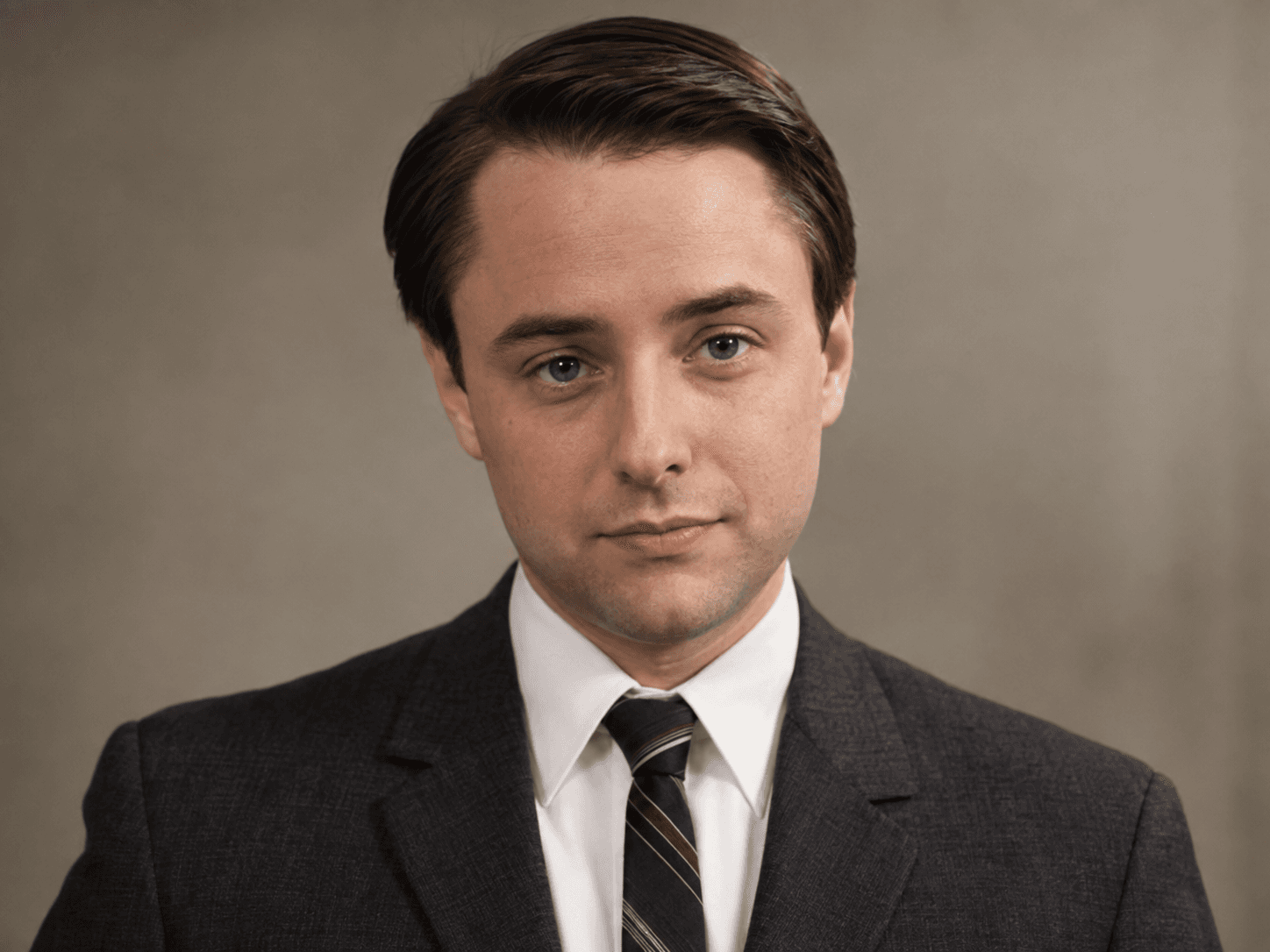
August Wittgenstein plays Commander Ulrich Wrangel, a veteran Kaleun whose relationship with Hoffmann complicates the command chain above U-612. Lizzy Caplan joins in season two as Cassandra Lloyd, an American OSS officer working her own war in Portugal. Vincent Kartheiser (last seen in Mad Men) arrives alongside her as an American naval intelligence figure, a sharp off-key casting choice that works because he knows how to play buttoned-down menace.
Rainer Bock is Samuel Greenwood, a wealthy neutral caught between sides. Clemens Schick and Jonathan Zaccaï round out a supporting bench that moves through the occupation plot across seasons.
Stefan Konarske
Das Boot Ensemble
Clemens Schick
Occupation Ensemble
Lizzy Caplan
Cassandra Lloyd
Vincent Kartheiser
US Naval Intelligence Officer
Jonathan Zaccaï
Occupation Ensemble
Tom Wlaschiha
Hagen Forster
Rainer Bock
Samuel Greenwood
Leonard Scheicher
U-612 Crew
Below decks on U-612 the crew is large and the camera picks out faces more than names. The show trusts you to learn the men from how they work their stations. By the end of a patrol you know the radio operator by the back of his head.
On paper this is a story about the Atlantic convoy war and the women and men who tried to survive it. Underneath the action it is about moral compromise inside a rotten cause.
Every character is navigating the same question from a different angle. Hoffmann wears a Kriegsmarine uniform and is pointed at British and American ships by officers who serve the Third Reich. Simone translates for men she is coming to despise. Forster enforces a regime he does not examine. Wrangel is old enough to have chosen this life before he knew what it would become. The show is unsparing about the Wehrmacht and Kriegsmarine being instruments of a genocidal state. It is also interested in the daily human-sized compromises the people inside those uniforms kept making. Not to absolve them. To show the machinery.
A sailor in Das Boot is not a hero. He is someone who volunteered for one war and wound up fighting a different one.
This is the thread that the 1981 film pulled on and the series keeps pulling. It refuses to let anyone off the hook, including the viewer who came for submarine thrills.
The boat scenes do what the Petersen film taught German television how to do. Long lenses in narrow corridors. Red battle lighting. The sonar ping as the loudest sound in the room. Depth charges felt rather than shown. The sound design is the single biggest reason to watch on good speakers.
On land the palette shifts. La Rochelle is grey light and wet stone. Uniforms everywhere. Cafés where a quarter of the customers are listening for accents. The occupation is photographed in a register that feels closer to The Americans than to a traditional war film. Paranoia as wallpaper. Small rooms, two people, one of them lying.
The series was shot largely in Munich studios and on location in Malta, La Rochelle, Prague, and Cape Town across its run. The production value is visible in every frame. Later seasons expand the geography to include Lisbon and the northern Atlantic, and they hold up.
Critics treated the first season as a serious continuation, not a cash-in. Reviewers admired the willingness to slow the pacing to real submarine-warfare speed. That speed is a barrier for some viewers. Patrols in the Atlantic took weeks and the show asks you to feel that. If you can settle in, the payoff is total immersion. If you cannot, the boat scenes will feel endless.
Season two expanded the canvas, added American characters, and divided the audience. Some felt the show lost its submarine identity. Others welcomed the widening. Seasons three and four worked to pull those threads together with mixed results.
The show's place in the 2010s German prestige wave is secure. Alongside Babylon Berlin and Deutschland 83, Das Boot is one of the titles that convinced international audiences German television could do long-form drama on a par with anything else on air. It also sits with the American prestige war canon of Band of Brothers, The Pacific, Masters of the Air, and Generation Kill, as the European counterweight. Those shows tell the story from the Allied side. Das Boot is the rare serious drama that puts you inside the losing side of the war and asks you to watch.
The show works because it takes its own premise seriously. A German U-boat in 1942 is a metal tube full of young men sent to drown enemy sailors for a cause history has already judged. The series does not dodge that judgement. It also does not pretend the men inside the tube were not real, were not frightened, were not sometimes decent to each other in small ways while the larger war went on being evil.
Set this alongside Chernobyl and you see a version of the same project, done in a different key. Both shows are interested in how ordinary people carry out extraordinary harm inside systems that do not care about them. Chernobyl is the Soviet state. Das Boot is the Third Reich. The moral architecture is uncomfortably similar.
It is not a binge show. Pacing is a choice the producers made on purpose. Watch it slowly, two episodes at a time, with the sound up. The Atlantic is very dark and very cold and the boat is very small. That is the experience the show is trying to deliver, and it delivers.
Vicky Krieps
Simone Strasser
Franz Dinda
Naval Officer Corps
Rick Okon
Klaus Hoffmann
August Wittgenstein
Commander Ulrich Wrangel