2004 - 2009

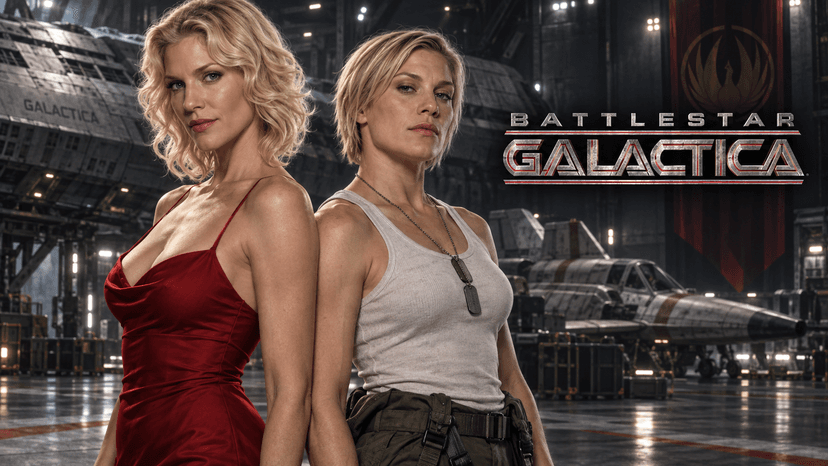
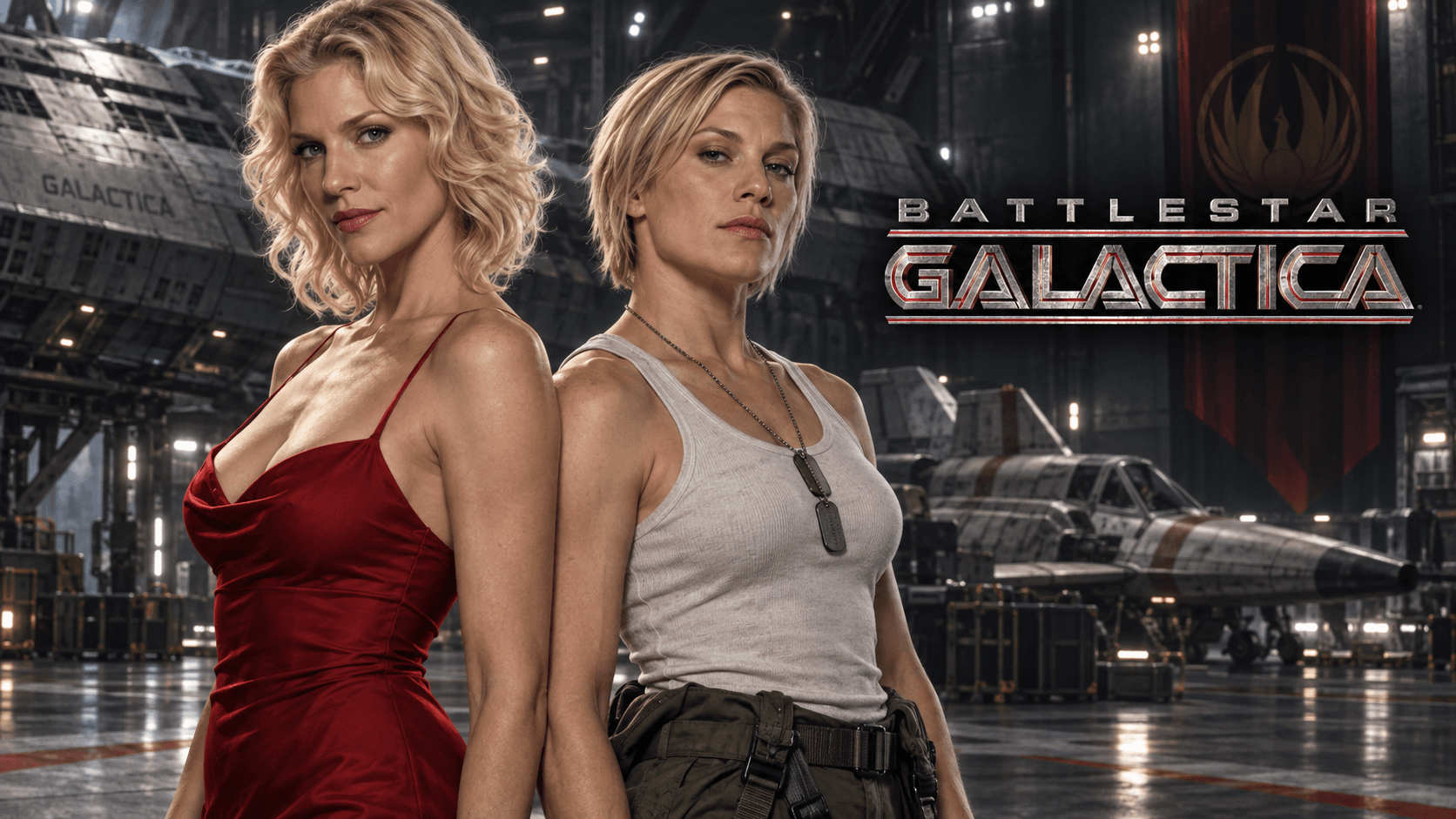
Battlestar Galactica aired on the Sci-Fi Channel from 2004 to 2009, preceded by a three-hour miniseries in late 2003 and followed by two TV movies, Razor in 2007 and The Plan in 2009, plus a prequel called Caprica. Four seasons. Seventy-six episodes. Ronald D. Moore and David Eick developed it as a reimagining of Glen A. Larson's 1978 space opera, and somehow they took a cheesy Star Wars knock-off and turned it into one of the heaviest pieces of genre television ever broadcast on American cable.
The premise is biblical in scale and bleak in execution. Humanity lives across Twelve Colonies, descendants of a lost people from a world called Kobol. Forty years ago they built an army of robot servants, the Cylons, who rebelled. Then a long war, then silence for forty years. As the story opens, the Cylons come back. They have learned to look exactly like us. And they hit the Twelve Colonies with a coordinated nuclear strike that wipes out billions in an afternoon.
What survives is a ragtag civilian fleet of about fifty thousand people, protected by the last operational Battlestar, the Galactica, under Commander William Adama. President Laura Roslin, the Secretary of Education, is sworn in on a Raptor because almost everyone senior to her has just been killed. They point the fleet toward a rumoured thirteenth colony called Earth and run.
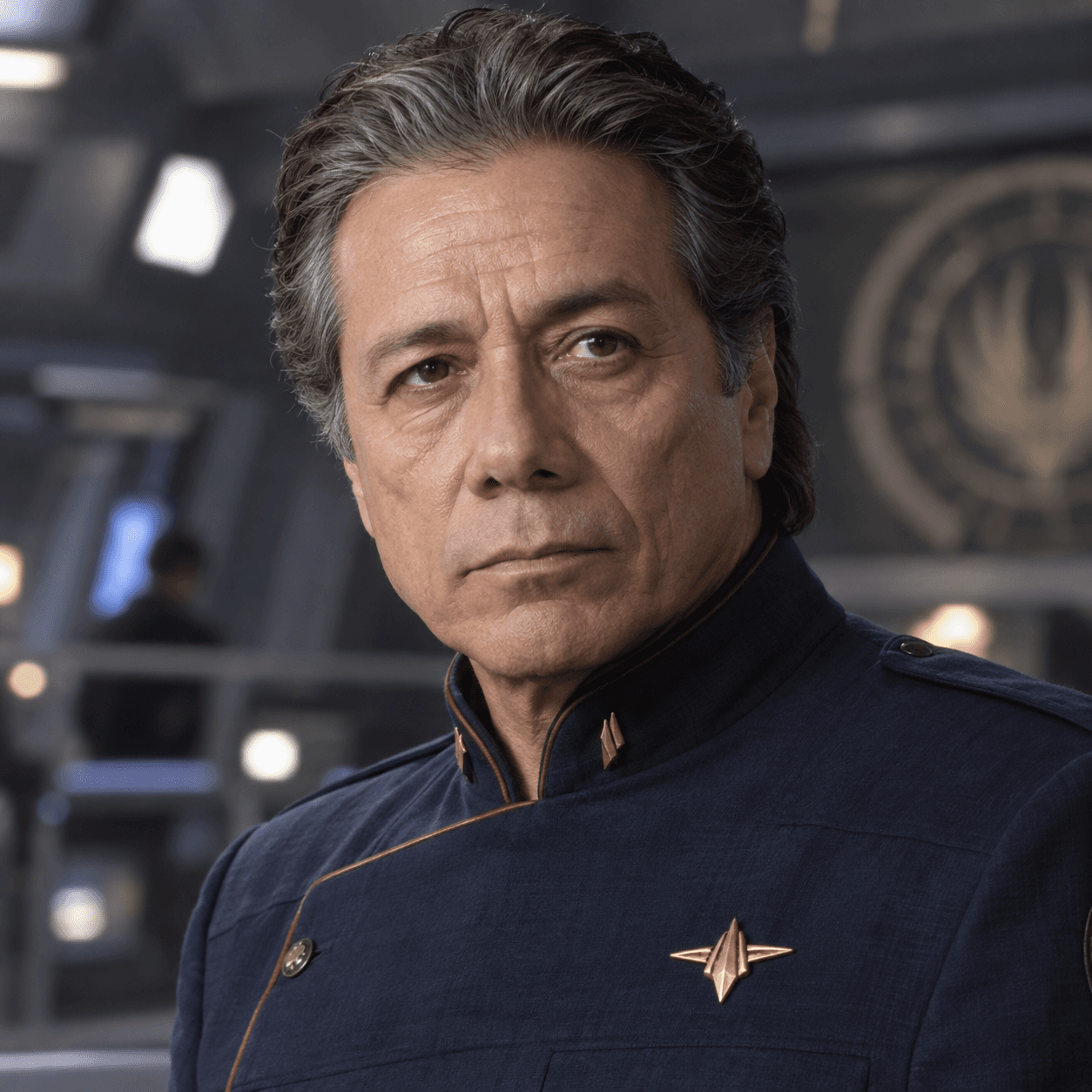
The ensemble is the single biggest reason the reboot works. Edward James Olmos plays Adama as all gravel and restraint, the kind of captain you believe would run toward a fire. Mary McDonnell then arrives as Laura Roslin, a schoolteacher who ends up running what is left of a species, and brings a moral weariness to the job that no sci-fi show had really done before. When the two of them share a scene, you watch their shoulders before you watch their mouths.
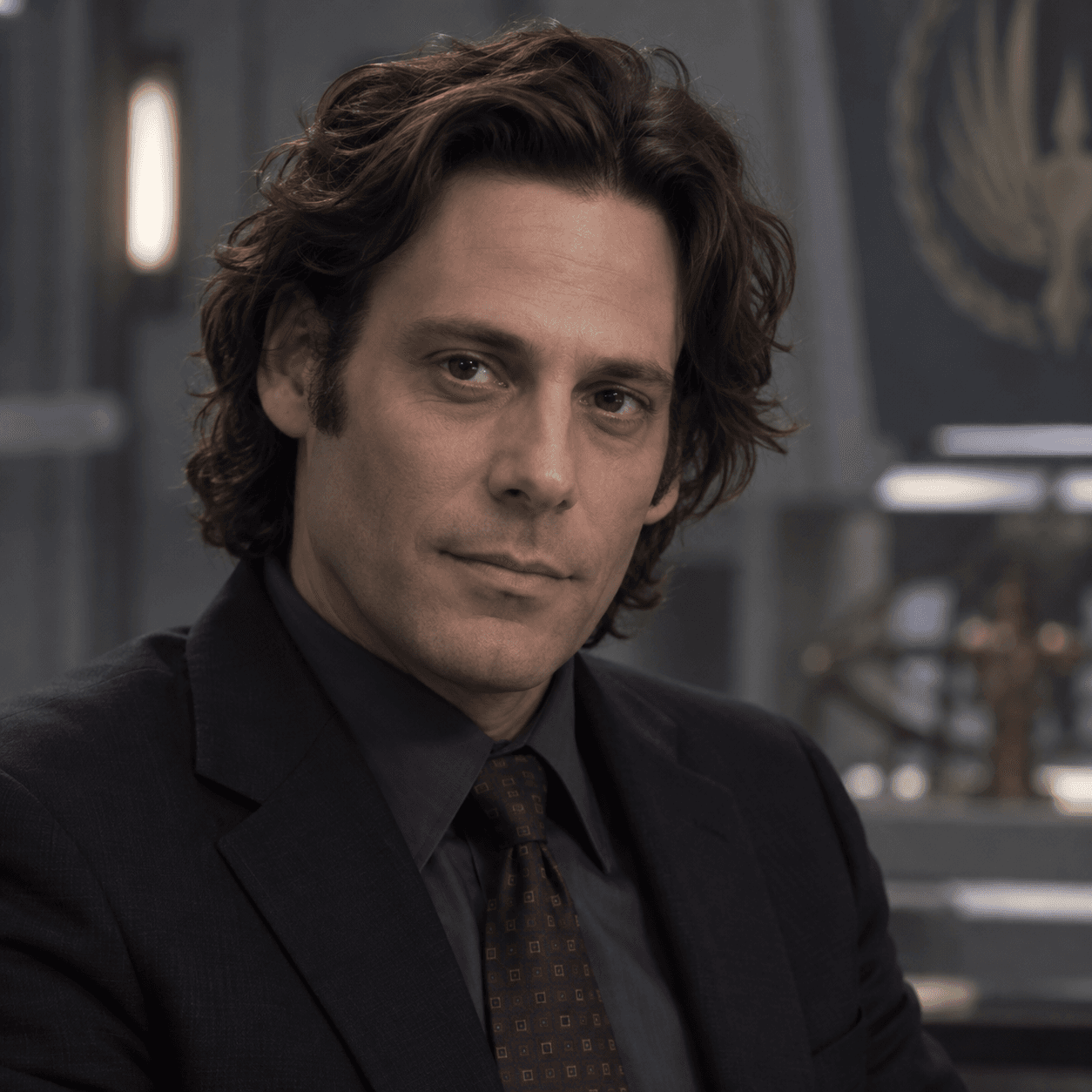
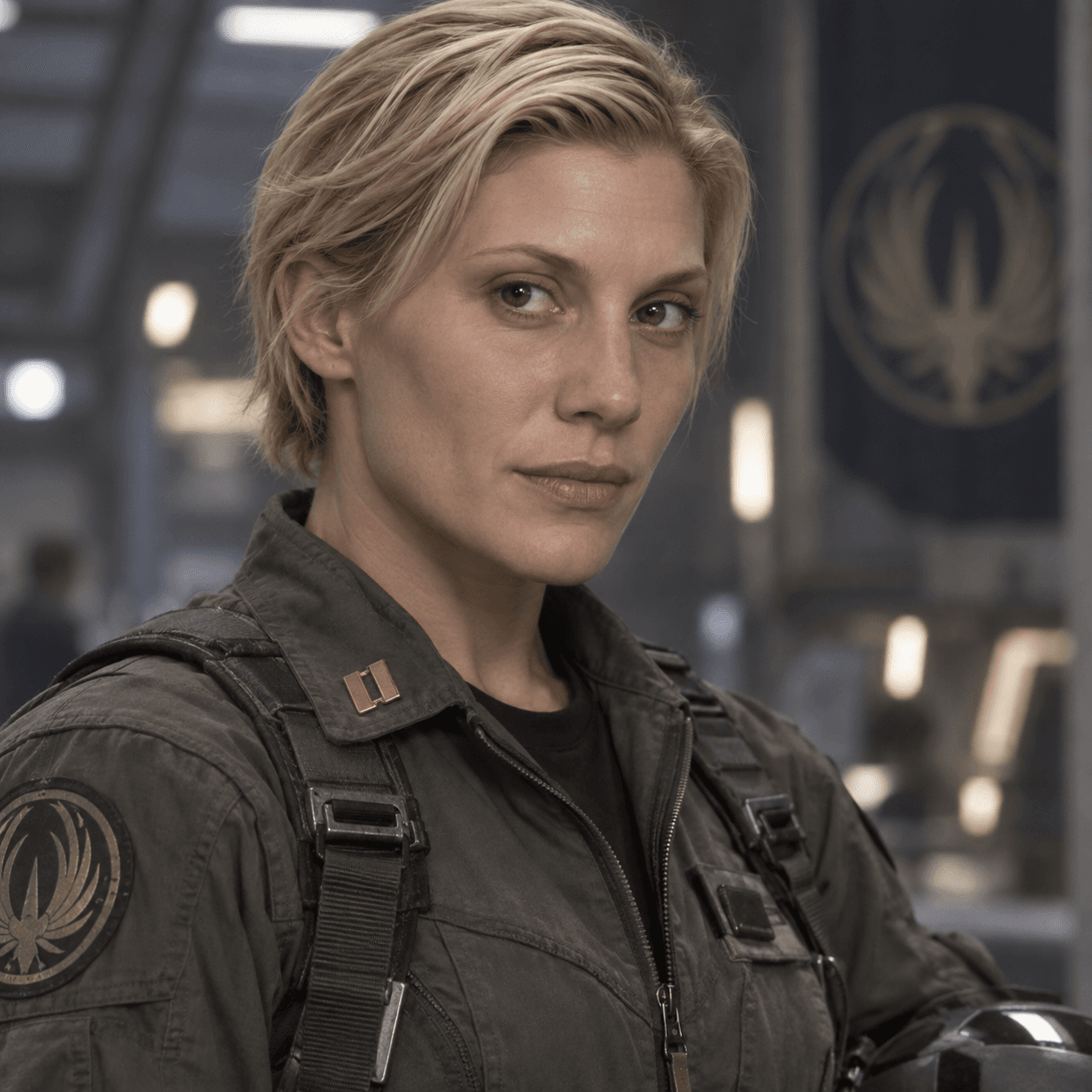
Katee Sackhoff as Kara "Starbuck" Thrace is the breakout. Gender-flipped from the 1978 version and reportedly protested by the original Starbuck actor Dirk Benedict, she turns the character into a cocky Viper pilot who can drink anyone under the table and who carries a history she mostly hides behind fists and a cigar. Jamie Bamber as Lee "Apollo" Adama is the straight arrow to her chaos. James Callis as Dr. Gaius Baltar is the show's secret weapon. A vain and cowardly genius who is maybe the worst person in the fleet, and definitely the funniest.
Tricia Helfer plays Number Six, the most-recognised Cylon model, and does genuinely strange work with a character who exists simultaneously in the flesh and as a voice inside Baltar's head, with the same face repeated across dozens of identical copies. Grace Park as Sharon Valerii has to play two versions of the same Cylon and make them feel like different people, which she does. And then there is the rest of the Colonial officer corps. Michael Hogan as the one-eyed alcoholic Colonel Saul Tigh. Aaron Douglas as Chief Galen Tyrol. Tahmoh Penikett as Karl "Helo" Agathon, with Alessandro Juliani and Kandyse McClure rounding out the CIC as Gaeta and Dualla. Everyone gets something to do. Lucy Lawless shows up as a reporter with an agenda, and the late character actor Dean Stockwell arrives as a Cylon who complicates every scene he walks into.
Tricia Helfer
Grace Park
James Callis
Kandyse McClure
Michael Hogan
Alessandro Juliani
Katee Sackhoff
Mary McDonnell
Jamie Bamber
Edward James Olmos

BSG remains one of sci-fi's greatest achievements. Woke rating 5/5. From Adama's leadership to Cylon paranoia, here's why this 2004 classic still hits hard.
Read MoreOn the surface this is a chase story. A fleet running from robots. Underneath it is a post-9/11 argument about everything America had been doing for three years when it first aired. The show puts the survivors of a genocide in a position where they have to decide how much democracy they can afford, whether torture works, whether assassination is ever justified, and what you do when a civilian-elected government and a military command structure stop agreeing. The third-season opener, which I will not describe in any detail, is as direct a piece of allegory about occupation and insurgency as American television has ever produced.
It is also a religion show. The Cylons are monotheists with what looks increasingly like a genuine prophet in their ranks. The humans are polytheists praying to Greek-named gods from ancient Kobol scripture. Roslin starts having visions. Baltar starts attracting followers. What begins as a genre shorthand for "they are different from us" becomes the actual plot engine of the back half of the series. Few shows take faith as seriously as Battlestar Galactica does, and fewer still treat both sides as worth hearing out.
A few of the hallmarks:
The Galactica herself is a deliberately old warhorse. Her hull is all right angles and battle scars. Inside, the corridors are painted battleship grey, with phone handsets and exposed pipes. She has no networked computers, because networks were how the Cylons beat humanity the first time, so information moves on paper. The contrast with the sleek white interiors of the Cylon Basestars is the whole visual thesis of the show. Humanity is dirty and tired and still alive. The enemy is clean and cold, and there are always more of them.
Space itself looks wrong in the best way. No flashy pew-pew. Vipers and Raptors fly with inertia, tumble when hit, and the camera lurches with them. A Raider, the Cylon fighter, flies like something organic. Battles feel dangerous in a way that most sci-fi television fights do not, and I had watched a lot of sci-fi television fights before this one without ever feeling that.
Critics loved it. Time named it one of the best shows on television more than once. It won a Peabody in 2006, a Hugo for its third-season finale, and a pile of Emmys for its effects and score. The finale, when it came in March 2009, split the audience down the middle and has remained a genuine argument ever since. People who loved it really loved it. People who felt cheated have not forgiven it.
The influence is everywhere. The Expanse owes it the entire template of grounded, politically serious space opera that respects physics. For All Mankind inherits the ensemble-under-pressure structure. Westworld picked up the artificial-consciousness questions and tried to build a whole series out of them. You can draw a line from the reimagined Galactica to basically every serious streaming sci-fi drama of the last fifteen years, and it is a short line.
The reason this show hits so much harder than it has any right to is that it refuses to let the premise do the work. A lesser version would be a chase with explosions. This one is a chase with explosions plus arguments about torture and about elections and about whether the survivors should have children at all. The sci-fi is an excuse to ask questions that would sound preachy in any other genre and land clean here because people in flight suits are asking them while being shot at.
It is not perfect. The middle of season three wanders. Some of the ancillary character arcs go cold. The theology gets denser than some viewers will want. But the peaks, and there are a lot of peaks, belong in the same conversation as anything Game of Thrones or Breaking Bad ever aired. This is the show that dragged science fiction out of the weekly-adventure cul-de-sac and made the case for the genre as serious drama.
So say we all.
Tahmoh Penikett
Aaron Douglas