2020 - 2023

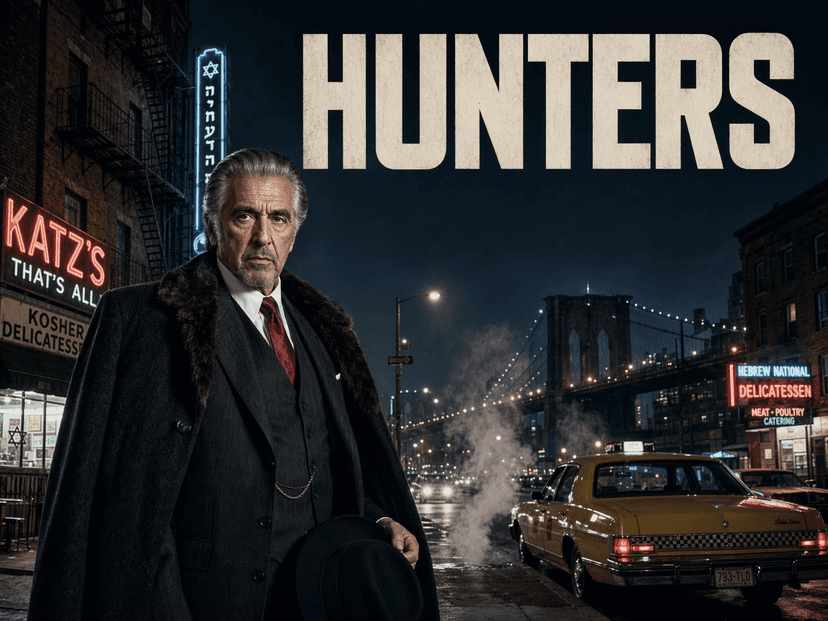
Hunters premiered on Amazon Prime Video in February 2020 and wrapped its second and final season in January 2023. Two seasons. Eighteen episodes. Created by David Weil and executive produced by Jordan Peele's Monkeypaw Productions, the show is a revenge-pulp fantasia built on a deadly serious premise: in 1977 New York, a group of Nazi hunters discovers that dozens of high-ranking war criminals have been quietly resettled in America and are plotting a Fourth Reich.
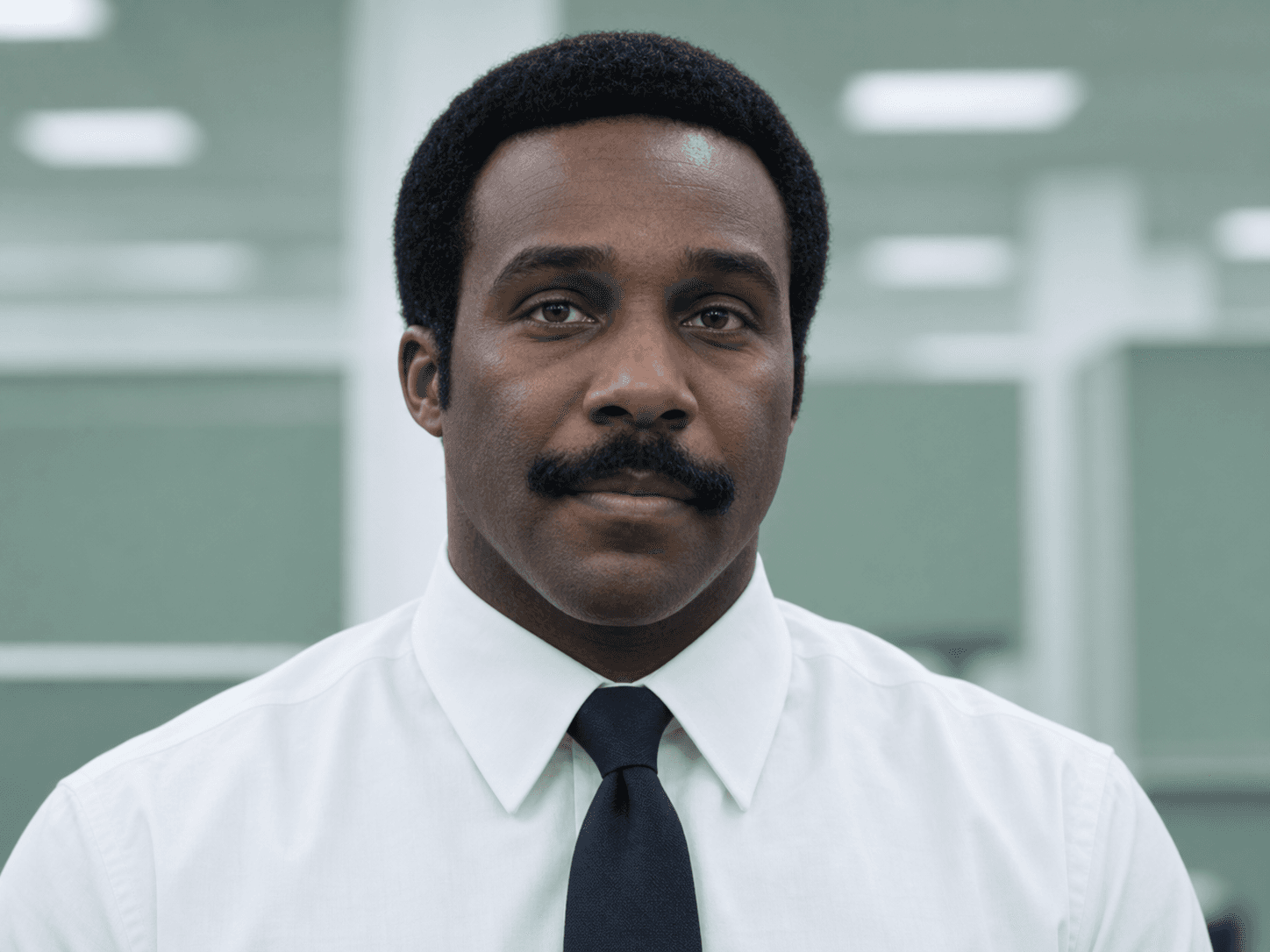
The story opens on Jonah Heidelbaum, a 19-year-old Brooklyn Jewish kid scraping by with a part-time comic book store job and some low-level weed dealing. When his grandmother, a Holocaust survivor, is killed in his apartment, Jonah is pulled into the orbit of Meyer Offerman, a wealthy survivor himself and the quiet financier of a secret hunting cell. The team is deliberately eclectic. A British screen actor, a nun, a weapons expert, a Vietnam vet, an elderly couple who lived through the camps, and a young tech-savvy Black woman fresh off working in civil rights. They kill Nazis. They are, for the most part, very good at it.
Season two jumps forward to 1979 and sends what remains of the crew to Europe in pursuit of the most wanted Nazi of all. The tone hardens. The questions get uglier. I came to Hunters expecting Tarantino cosplay and came away genuinely wrestling with what the show was trying to say.
Al Pacino as Meyer Offerman is the sell. This was Pacino's first regular TV role and he arrives with the full baritone rumble, quoting Torah one minute and ordering a kill the next. He gets the show's best monologues and the heaviest moral weight. Logan Lerman, playing Jonah Heidelbaum, is the audience surrogate and he holds his own opposite Pacino more often than you would expect. Is Jonah a bit of a drip in the early episodes? Yes. Does Lerman earn the arc he is handed? Also yes.
Around those two, the hunting cell is where the show finds its most interesting energy:
Jerrika Hinton plays FBI agent Millie Morris, the show's third point of view. She is working the same murders from the legal side, and the show uses her to ask what happens when the law is structurally incapable of delivering the justice the hunters are after. In season two, Lena Olin arrives as The Colonel and calmly steals every scene she walks into. Dylan Baker and Greg Austin fill out the antagonist ranks with precisely the oily menace you want.
Logan Lerman
Jonah Heidelbaum
Tiffany Boone
Roxy Jones
Louis Ozawa
Joe Mizushima
Dylan Baker
Biff Simpson
Jerrika Hinton
Millie Morris
Carol Kane
Mindy Markowitz
Greg Austin
Travis Leich
Kate Mulvany
Sister Harriet
On the surface Hunters is pulp. Comic book panel cutaways, Quentin Tarantino-style chapter cards, flamethrowers and meat grinders and operatic torture sequences. Underneath, the show is chewing on something heavier. The pilot opens with a real Nazi war criminal at a 1977 Maryland garden party, revealed as a high-ranking US government official. That is not a fictional stretch. Operation Paperclip was the actual postwar US programme that quietly relocated German scientists and officers to America, some of them complicit in Holocaust crimes, because their knowledge was useful in the Cold War. Weil is angry about this, and the show is angry with him.
The real argument here is about what you owe the dead. Meyer Offerman believes Jewish vengeance is a moral duty. Jonah Heidelbaum is not so sure. The tension between those two positions runs through both seasons and the show has the integrity not to resolve it easily. By season two, even the hunters are asking whether the line between justice and murder was ever really there, or whether they crossed it the first night they picked up a weapon.
There is also a sharp strand of critique about America itself. The show argues that the United States made a cold calculation after 1945 and quietly decided that hunting Nazis was less valuable than recruiting them. Hunters refuses to let that slide. For a pulp revenge show it is unusually invested in the archival record.
Visually the show commits fully to 1977 New York. Grain, sodium lamps, Bronx grit, disco-era polyester, wood-panelled Brooklyn kitchens. The pilot was directed by Alfonso Gomez-Rejon and sets a very specific aesthetic that the season then tries to match: part Death Wish, part blaxploitation poster, part Inglourious Basterds. Parts of this work beautifully. The fake in-universe commercials for products like "The Jew", a board game where the goal is to round up and murder Jewish families, are genuinely shocking and stand among the most pointed satirical bits on television in years.
Parts do not work. The show occasionally cannot decide whether it wants to be a serious drama about historical trauma or a comic book, and it tries to be both in the same scene. I'd argue this is Hunters main problem. When the tonal pivots land, they land hard. When they miss, they really miss, and you feel the show betray its own subject matter.
Think of it as a cousin to The Man in the High Castle in its alt-history Nazi-in-America preoccupations, or The Boys in its willingness to splatter violence and ideology into the same frame. Tonally it occasionally reaches for Fargo. The period texture sits alongside something like Mad Men or The Americans, both set in roughly the same era of American life.
Reviews were split. Critics praised Pacino, the ambition, the willingness to put Holocaust memory on a mainstream streaming platform. They were less kind about the tonal whiplash and about one specific fabricated plot element in season one. The Auschwitz Memorial publicly criticised an invented sequence in the death camp, arguing that fictionalising Holocaust atrocities can hand ammunition to deniers. Weil defended the creative choice as symbolic truth. Reasonable people can disagree about who is right there. It was the defining controversy of the show's first season.
Amazon cancelled it after season two, though the creators were given room to wrap the Most Wanted Nazi arc in a proper ending rather than a cliffhanger. The audience that loved it really loved it. The audience that bounced off the pulp register bounced hard. Eighteen episodes is a manageable commitment for a show with this much on its mind.
Hunters is not a perfect show. It is swinging at something most prestige TV will not go near, and its reach sometimes outpaces its grasp. But the ambition is real, the performances are real, and the underlying anger at a historical injustice most Americans have never heard of is entirely justified. Pacino alone is worth the ticket.
A pulp revenge fantasy that refuses to let the pulp obscure the fact that the crimes it dramatises were real, and that the men who committed them were not all punished.
Worth your time if you want something that will swing between Torah study and flamethrower set pieces and mean it.
Lena Olin
The Colonel
Josh Radnor
Lonny Flash
Saul Rubinek
Murray Markowitz
Al Pacino
Meyer Offerman