2014 - 2017

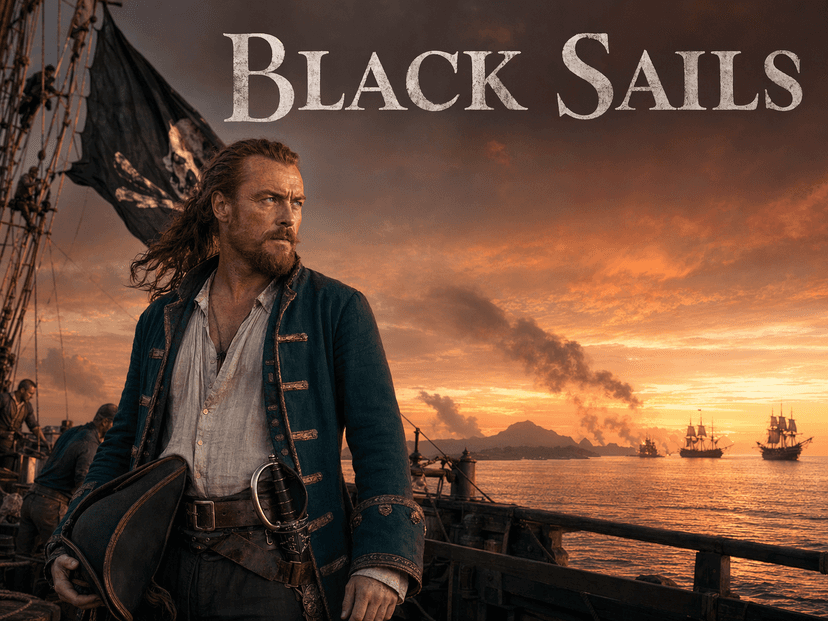
Four seasons on Starz, 2014 to 2017. Created by Jonathan E. Steinberg and Robert Levine, with Michael Bay as an executive producer (yes, the Armageddon Michael Bay, and no, you would never guess from watching it). Black Sails is a prequel to Robert Louis Stevenson's Treasure Island, set roughly twenty years before the novel. The pitch is audacious. Take the characters Stevenson only hinted at, Captain Flint, Long John Silver, Billy Bones, the men whose names haunt Jim Hawkins from the margins of that book, and show you who they were before they became legend. Then drop them into 1715 Nassau alongside the real pirates of the Golden Age: Captain Charles Vane, Jack Rackham, Anne Bonny, Blackbeard himself.
Nassau in 1715 was a pirate republic in all but name. A lawless port run by the men who sacked Spanish gold ships for a living, free from the Crown, uneasily tolerated by a British Empire too stretched to deal with it. Black Sails takes that historical moment seriously. The show is about the war between a failing outlaw settlement and an empire that has finally decided to come for it, with the fictional figure of Flint at the centre and the very real Woodes Rogers, the Crown's chosen instrument, on the other side.
Toby Stephens is Captain James Flint and it is the role of his career. Stephens plays Flint as a man of ferocious intelligence held together by rage he cannot let anyone see, and the way the show slowly uncovers why he became the pirate Stevenson would write about a generation later is the single best character arc on the show. Luke Arnold plays John Silver, years before the peg leg and the parrot, as a charming opportunist who drifts into the crew and then into something much larger than himself. The slow evolution of Arnold's Silver toward the figure Stevenson will eventually put on the page is one of the most patient pieces of character work on television.
Around them, a proper ensemble:
Clara Paget
Anne Bonny
Toby Schmitz
Jack Rackham
Zach McGowan
Captain Charles Vane
Jessica Parker Kennedy
Max
Louise Barnes
Miranda Barlow
Tom Hopper
Billy Bones
Hannah New
Eleanor Guthrie
Toby Stephens
Captain James Flint
Not a weak link in the principal cast. You rarely see a prestige drama hold this many plotlines and keep every character fully specific.
Pirates, yes. Naval warfare, yes. But underneath, Black Sails is a deeply political show with two load-bearing themes most pirate media runs a mile from.
First: Flint is gay. The show does not treat this as a twist or a reveal, it treats it as the engine of the whole story. The man who became Captain Flint was a British officer in love with another man, and the empire destroyed that life. His piracy is what was left. This is the architecture of the entire series, not a footnote, and Black Sails is one of the most honest things mainstream television has done with what it actually cost a gay man to exist inside an 18th-century imperial institution.
Second: slavery, colonialism, and the possibility of a Black republic. Nassau is a free port. The show takes that seriously and asks what it would mean if Nassau allied with the Maroon communities, the escaped-slave societies hiding in the Caribbean. The Maroon Queen, her daughter Madi, and the arc that grows out of their alliance with the pirates carries real historical weight. You can hear Toussaint Louverture through the writing. For a Starz show nominally about pirate gold, the political seriousness here is genuinely astonishing.
Black Sails treats piracy as a war of poor men against empire, and treats slavery as that same war with higher stakes. That is not the usual pirate-show pitch.
Shot in Cape Town on practical-scale ships with CG water doing the heavy lifting, and the result is naval combat that no other show has matched. Full stop. Cannons actually feel like cannons. A broadside actually feels like a broadside. The show understands that a ship under sail is a terrifying living machine, and it films them accordingly.
The production is patient. Scenes breathe. Conversations run long. A political negotiation in Nassau's tavern is given the same weight as a boarding action, and in the back half of the run the show trusts the audience enough to sit inside long philosophical arguments about empire, legacy, and what any of it is for. The sound design is excellent, the score by Bear McCreary (of Battlestar Galactica) is a lived-in mix of sea shanty and orchestral grief, and the costuming of 1715 Nassau feels dirty and specific in a way period drama rarely bothers with.
Black Sails never got the mainstream prestige buzz it deserved. Starz did not have HBO's platform, and the pirate framing put off critics who assumed they knew what it was. By season two word of mouth had caught up, by seasons three and four it was getting sincere critical reappraisal, and in the years since it has only grown in reputation. If you ask TV writers which underseen prestige dramas are worth digging up, Black Sails is usually the first name out.
The four-season arc is complete and closed. No sequel, no spin-off, no loose ends. It lands its ending with the confidence of a show that knew what it was the entire time. One of those rare four-season runs that deliver a real structural full stop.
If you liked the political weight of Rome or the grounded brutality of Spartacus, Black Sails is pitching at that level and hitting. The closest spiritual cousin on the site is probably Deadwood, another drama about a lawless frontier town absorbing itself into an empire that does not want it. Fans of Vikings and The Last Kingdom will find the same craft in the combat and the same patience with its characters. And anyone who came to Game of Thrones for the political machinations and the morally serious anti-heroes should treat Black Sails as unfinished business.
I put off watching this for years on the pirate framing, which was a mistake. What I got was a four-season prestige tragedy about empire, love, identity, and the stories men leave behind them when the winning side gets to write the history. One of the most undersold shows of the last decade.
Luke Roberts
Woodes Rogers
Luke Arnold
John Silver
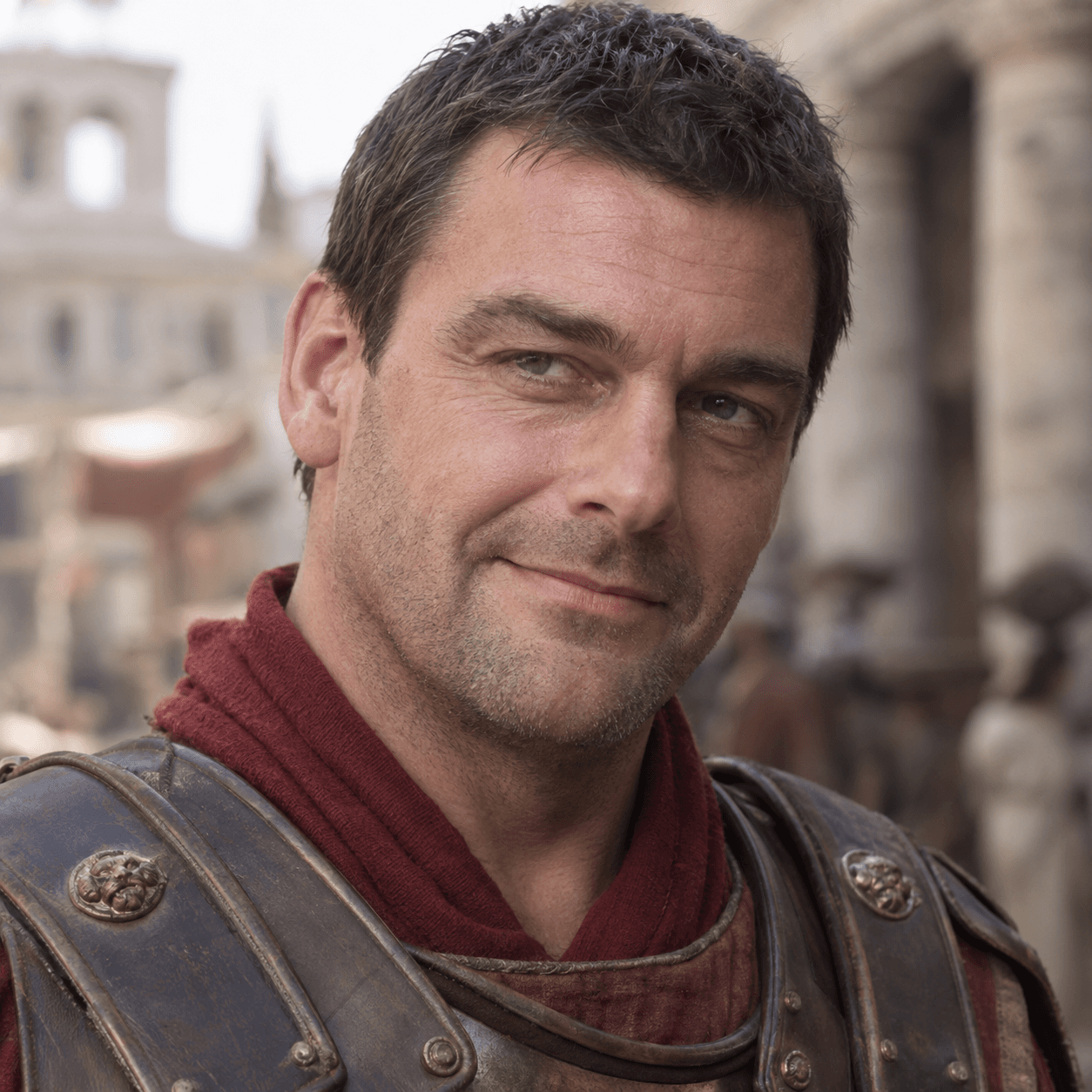
Ray Stevenson
Edward Teach / Blackbeard