2004 - 2006

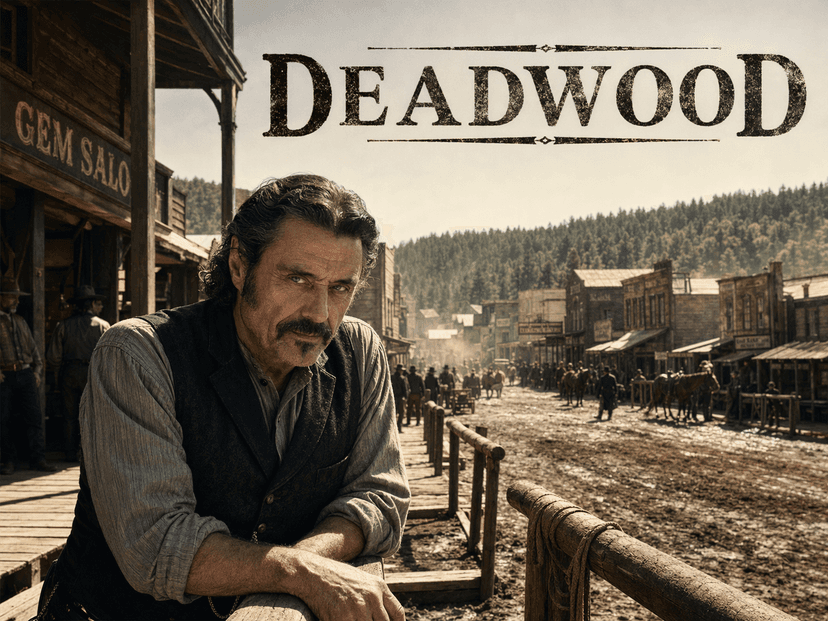
Deadwood ran on HBO from 2004 to 2006 across three seasons and 36 episodes, with a feature-length coda, Deadwood: The Movie, arriving in 2019 to give creator David Milch a chance to land threads HBO had cut short thirteen years earlier. It is set in the actual Deadwood camp in the Black Hills of Dakota Territory in 1876, a gold-rush settlement sitting on land the US government had ceded to the Lakota by treaty and then quietly un-ceded the moment placer gold was found in the creeks. That legal limbo is the show's whole engine. No sheriff. No courts. No recognised property rights. Just a muddy thoroughfare and a few hundred prospectors, pimps, storekeepers and card cheats, governed by whatever private arrangements they can enforce with a pistol or a bribe.
Timothy Olyphant plays Seth Bullock, a former Montana territorial marshal who has ridden into camp with his business partner Sol Star (John Hawkes) to open a hardware store and leave the badge behind. Ian McShane plays Al Swearengen, the English-born pimp and saloon keeper who runs the Gem Theatre and, by extension, runs Deadwood. The show is ostensibly about the tension between those two men. In practice it is about a hundred other things at once.
The ensemble is one of the deepest in television history and you feel it in every scene that contains more than two people. Milch wrote for the whole room rather than the leads, and the supporting players get monologues and arcs that in a lesser show would have been headlined.
Keith Carradine
Wild Bill Hickok
Brad Dourif
Doc Cochran
Ian McShane
Al Swearengen
Kim Dickens
Joanie Stubbs
Molly Parker
Alma Garret
Powers Boothe
Cy Tolliver
Robin Weigert
Calamity Jane
Paula Malcomson
Trixie
Milch has been open that the show is a study of how communities organise themselves out of nothing. Deadwood exists outside US jurisdiction, so every institution we take for granted has to be invented from scratch in front of us. A hardware store. A bank. A newspaper. A school. A sheriff's office. A court. Every one of them is a deal cut between bad people who would happily murder each other an hour earlier. Civilisation, the show argues, is what happens when murder becomes inconvenient.
The other argument running underneath is about capitalism in its infant form. The gold in the creeks is the pretext for everything. Once George Hearst arrives the show becomes, quite nakedly, about big capital annexing small capital and what that costs the people who were there first. It is the most honest show about American economic origin ever made, and it remains relevant in a way a lot of period pieces do not.
The dialogue is the thing nearly everyone mentions first. Milch writes a register no one else in television has tried: iambic-adjacent cadences, deliberate inversions, quotations hidden inside obscenity, long sentences that fold back on themselves. The word "cocksucker" appears, famously, about a thousand times across the run, and Milch has explained that the constant profanity is historically defensible while also serving a musical function. I adjusted inside two episodes. After that you notice when anyone reverts to normal English, and it feels flat.
Visually the show is mud, wood and oil-lamp yellow. The Melody Ranch standing set in Santa Clarita becomes, over three seasons, a place you know as well as your own street. Rain, blood, whisky, horses. A soundtrack that barely intrudes. Camerawork that moves almost exclusively in service of performance. It looks like almost nothing else HBO has put out, before or since.
Deadwood won eight Primetime Emmys during its run, including for directing and cinematography. Ian McShane took the Golden Globe for Best Actor in a Drama in 2005 and should have taken several more. Reviews were rapturous at the time and have only gotten warmer. It sits comfortably in most critical top-ten lists for the decade and, for a minority of viewers (me included), quietly in the top three of all time.
The cancellation after season three is the great scandal of the HBO era. Milch has given different accounts over the years. What is not disputed is that production costs were ballooning, HBO and the studio could not agree, and the show was pulled from under the writers with arcs still mid-swing. Deadwood: The Movie in 2019 closed some of the circuits. It is a beautiful piece of television and also, watched cold, a strange one. Milch had by then received a diagnosis of Alzheimer's, and you can feel him pressing every key he has left. Fans of Boardwalk Empire, Rome and The Wire tend to converge here eventually. Modern Western ensembles like Yellowstone, 1883 and Hell on Wheels all live in the long shadow this show casts.
Most prestige drama ages. Deadwood has barely aged at all. Part of that is the dialogue, which remains unlike anything else being written for the screen. Part of it is the ensemble, which is so deep that a second viewing is really about noticing what the sixth-billed actor is doing in the corner of a frame you were not watching the first time. Part of it is the themes, which have become more pressing rather than less.
Announcing your plans is a good way to hear God laugh.
Al Swearengen, Deadwood.
It is a show about bad people slowly, painfully, becoming a society. That is also a description of a lot of real history. I rewatch it every few years, and every time the sixth-billed actor is doing something I missed.
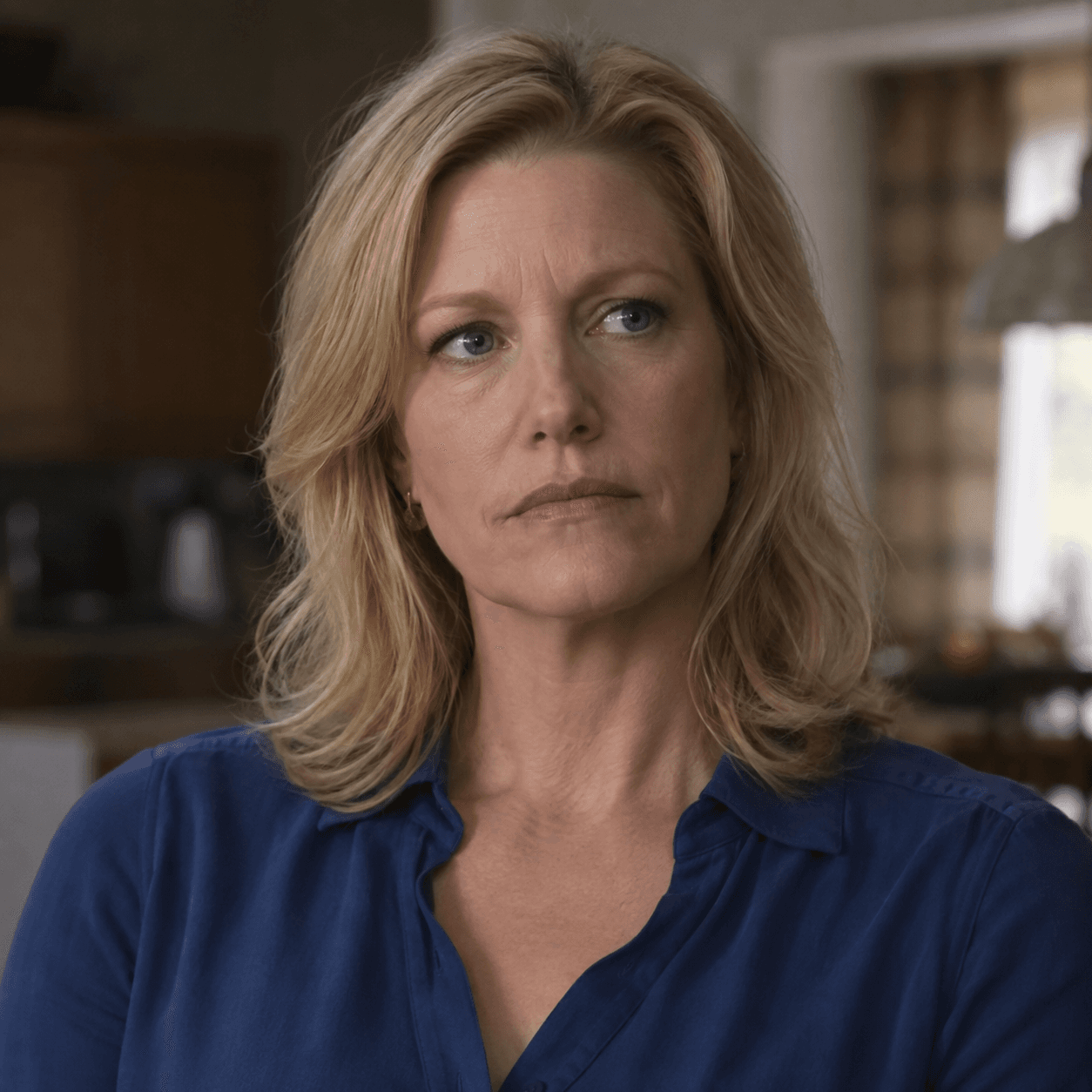
Anna Gunn
Martha Bullock
W. Earl Brown
Dan Dority
William Sanderson
E.B. Farnum
Titus Welliver
Silas Adams
Garret Dillahunt
Jack McCall / Francis Wolcott
Jim Beaver
Whitney Ellsworth
John Hawkes
Sol Star
Dayton Callie
Charlie Utter
Gerald McRaney
George Hearst
Timothy Olyphant
Seth Bullock