Absentia review: a solid thriller carried by Stana Katic
Updated
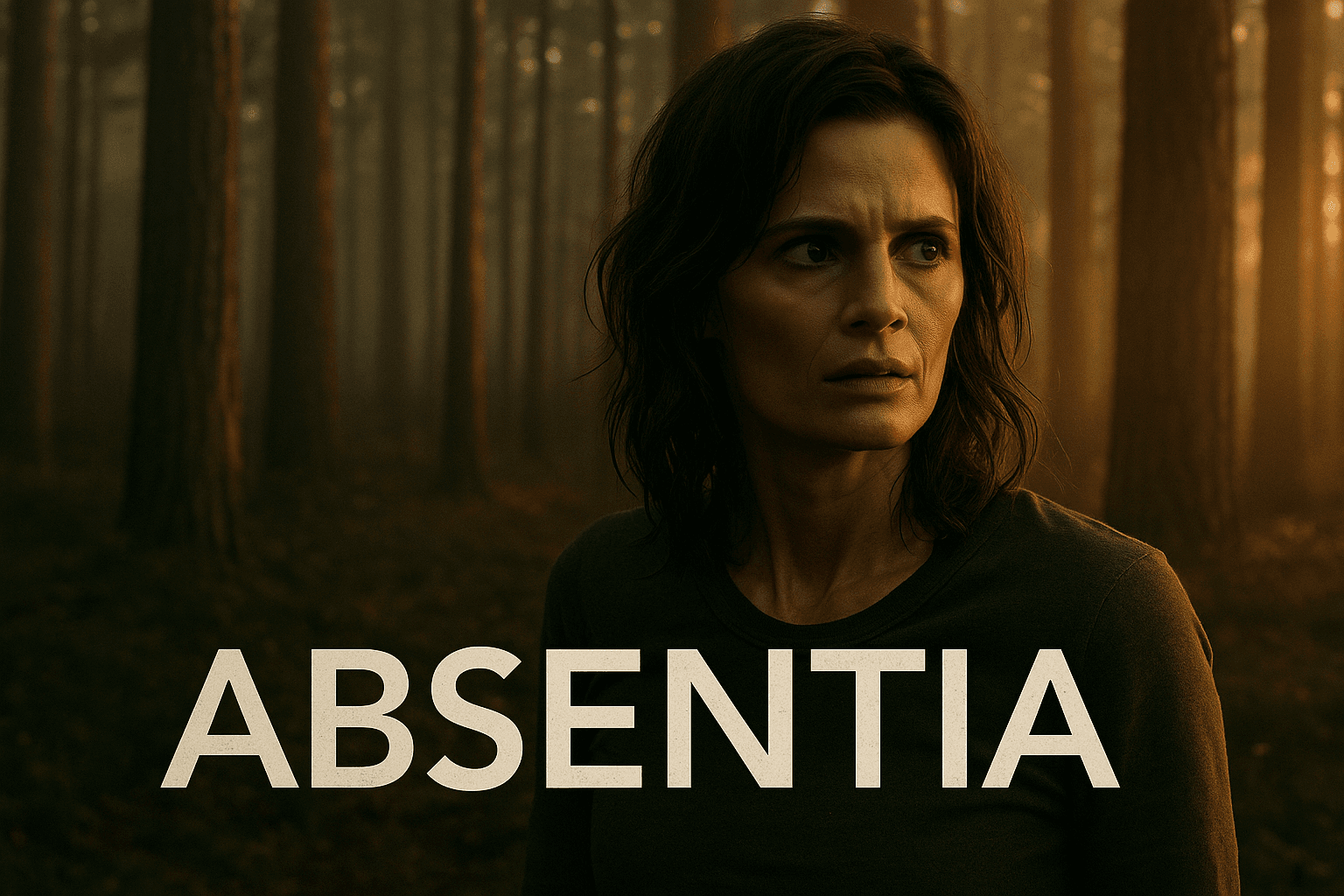
Emily Byrne has been missing for six years. When she comes home, her husband has remarried and her son has grown up calling someone else mum. Some homecoming.
Absentia gets plenty of mileage out of that miserable homecoming. Emily is an FBI agent who disappeared while investigating a serial killer, and she remembers very little of her captivity. She has lost years of her life, other people have filled the space she left, and new suspicions make it difficult for her to find her feet. There is a mystery to solve, but she can barely account for what has happened to her.
I watched all three seasons and enjoyed them. Stana Katic is the main attraction: I cared about Emily enough to follow her through the investigations and the considerable mess of her personal life. The show kept me interested without wearing out its welcome.
Stana Katic makes it work
Katic gives Emily a stubbornness I like. She can be frightened and still push ahead; she doesn't have to look comfortable to be capable. There is something satisfying about watching her try to take charge when so much of her own life is unfamiliar to her.
The action does occasionally ask a bit much of her. She is very capable, sometimes more so than I find entirely convincing, but I didn't spend the series rolling my eyes at an unstoppable hero. Katic looks as though the effort costs her. The fear and exhaustion don't conveniently disappear because Emily has something urgent to do.
Emily's FBI background gives that competence a basis. I can believe she knows how to deal with a threat; it's her own life she no longer knows what to do with. Katic is convincing on both sides. The agent is still there, even when the woman underneath is struggling.
I was willing to forgive the occasional excess because I believed in Emily. There is a person underneath all the running and fighting, and the show gives her more to worry about than surviving the next confrontation.
The recurring water imagery is where Katic really got to me. Those reminders of captivity get under Emily's skin, and Katic makes the fear feel immediate. She doesn't seem to be remembering an unpleasant experience at a safe distance. For a moment, the distance has gone.
I found that much more affecting than another explanation of how damaged she is. Water gives the fear a physical presence. Something utterly ordinary to everyone else can stop being ordinary for her, regardless of how determined she was a moment earlier. It leaves her exposed in a way that another injury in an action scene wouldn't.
There is also an unpleasant gap between what Emily can remember and what she can feel. She may not have a useful account of those missing years, but she is certainly living with them. I connected with her through that. I wanted her to get a little room to breathe, even as the thriller kept finding reasons not to give her any.

The family didn't stand still
The missing years have done a different kind of damage at home. Emily wants her family back, which is perfectly understandable. Unfortunately, wanting it badly enough cannot make her son six years younger or undo her husband's second marriage.
I sympathised with Emily, but I couldn't blame her family for having a life in her absence. They believed she was dead. Moving on wasn't an act of cruelty, and her return doesn't make the lives they built in her absence imaginary. Nobody gets an easy way out of that.
For Emily, of course, that is small comfort. Someone else has been there for her son while she couldn't be. She is his mother, but that doesn't instantly give her the familiarity she has lost. The investigation offers questions she can at least try to answer. There isn't a comparably tidy way to make up six years with a child.
Patrick Heusinger plays Nick Durand, her husband and a fellow FBI agent. He is caught in the middle of all this. His connection to Emily doesn't erase his responsibilities to the family he has now, and being a colleague as well as a husband adds another complication. I found those tensions easier to believe in than a reunion that simply put everything back where it belonged.
Ralph Ineson also turns up as FBI agent Adam Radford. He can put on an FBI suit; I still hear Finchy from the UK Office. That voice is a pleasure wherever it appears, and I always enjoy seeing him. Katic remains the reason to stay, though.

When your own memory is no help
Trying to clear your name is difficult enough when you can remember where you've been. Emily doesn't have that luxury. She needs to establish what happened during a period she can barely remember, while dealing with people who have their own reasons to doubt her. Her own memory isn't much use as a witness.
I enjoyed the uncertainty around her. A gap in somebody else's account is a clue to investigate. A gap in your own is a rather nastier prospect. I wanted to know what had happened to her, and how much of her old life she could realistically hope to recover.
The writing is generally quite good and believable. I usually found myself following the story rather than arguing with it. The family situation helps: even when the thriller becomes more elaborate, the difficulty of coming home remains easy to understand.
Absentia does feel small beside the biggest dramas. It doesn't have their scale or spectacle, and there aren't many grand ideas to chew over afterwards. The world can feel a little narrow, with so much tied to Emily's immediate trouble. Even so, I enjoyed settling in with this one. It had a lead I liked and enough going on to hold my attention, which is a perfectly good way to spend an evening.

Season one establishes the concept well, especially the collision between Emily's professional instincts and the life she can no longer walk straight back into. I enjoyed seasons two and three just as much. For me, the quality held up across the run.
I wasn't carrying on out of loyalty to a much better beginning. I was still enjoying Katic's performance and wanted to keep watching.
The subject matter is grim, but the experience of watching it was enjoyable. I could relax into an episode without needing every hour to be a major event.
Would I put it ahead of the best dramas I recommend? No. But when I wanted an absorbing thriller for the evening, it did the job. If you are running low on things to watch and the premise appeals, give Absentia a try. Emily is good company for someone whose life you wouldn't wish on anybody.
Where to watch
All three seasons are available on Netflix in the UK, checked on 10 September 2026. Availability elsewhere may differ.
If you want a thriller with a bigger canvas, Homeland takes its troubled lead into international intelligence work. The Sinner digs into the people and circumstances behind a crime, while Tehran puts more of the emphasis on espionage and operating undercover.
Keep Reading
More Reviews You Might Like

Top 10 Gangster Shows Told From Inside the Family
Ten gangster dramas I recommend for their characters, family loyalties and criminal worlds, from The Sopranos and Gomorrah to Kin and MobLand.
Read review
Severance review: the horror of never leaving work
My spoiler-free Severance review after finishing season two: why its divided lives, performances and unsettling office made me rate it more highly.
Read review
The Big Bang Theory review: brilliant company, terrible flatmates
A highly recommended sitcom, with Jim Parsons, Kaley Cuoco and an excellent ensemble finding comedy in friendship, science and the smallest disagreements.
Read review
Hell on Wheels: Blood, Rails and Redemption on the American Frontier
Anson Mount and Colm Meaney make Hell on Wheels worth the journey: a spoiler-free review of the railway Western, its memorable cast and uneven stretches.
Read review