2020 - Present

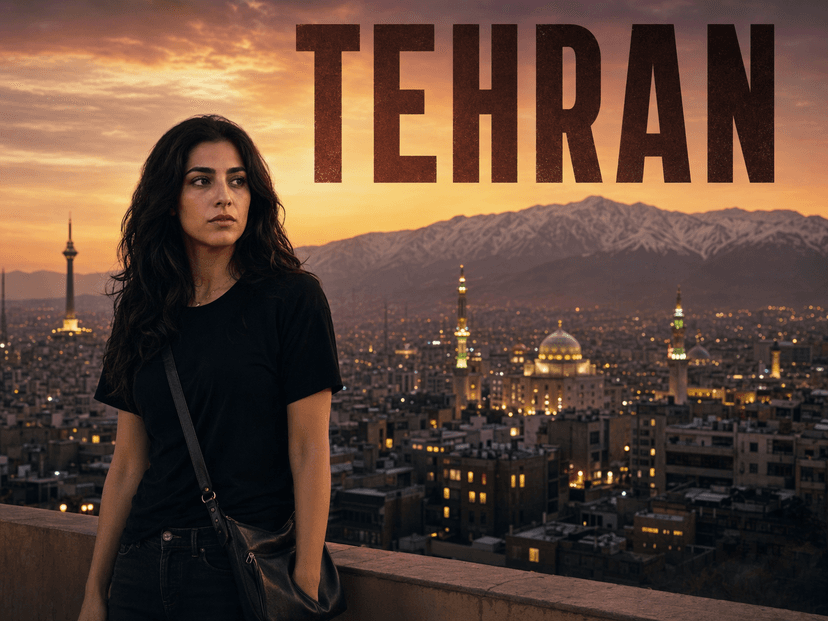
Tehran is an Israeli espionage thriller that premiered on Kan 11 in June 2020 and arrived internationally on Apple TV+ that September. Three seasons, 24 episodes, with a fourth on the way. It is created by Moshe Zonder (who also wrote the first two seasons of Fauda), Dana Eden, and Maor Kohn, directed by Daniel Syrkin, and filmed in Hebrew, Farsi, and English, often inside the same scene as characters switch languages to hide who they are from whom.
The premise is clean and nasty. Tamar Rabinyan, played by Niv Sultan, is a young Mossad hacker of Iranian-Jewish descent. She was born in Tehran, smuggled out as a child, and trained in Israel. Her first field mission sends her back to the city of her birth to take down Iran's nuclear infrastructure so Israeli jets can fly. Within the first episode things go badly wrong and she is stranded inside the regime she was sent to sabotage, wearing the face of a dead woman and trying to stay breathing long enough to get out.
What starts as a pure procedural op then stretches into three seasons of cross-border shadow war. Mossad handlers, IRGC counter-intelligence, a British-Iranian asset in North Tehran, a CIA officer working off-book, and a young Iranian with a foot in hacktivist circles who gets dragged into something far bigger than he signed up for. Tamar is the thread that ties it all together and the person most likely to snap because of it.
Sultan is the find. I had not seen her in anything before this and she carries the show with a performance that is quiet, watchful, and frequently close to shaking apart. Tamar is supposed to be clever and composed and the show lets you see her cost every piece of composure. Opposite her, Shaun Toub as Faraz Kamali, the IRGC investigator hunting her, is the other half of the series. Toub, Iranian-born, Manchester-raised, gives Faraz the patience of a man who has done this job for thirty years and the private sorrow of someone who suspects the job is eating him alive. His scenes at home with Shila Ommi as his wife Nahid are some of the warmest material in any recent spy series.
Around them the ensemble keeps deepening.
Season 2 brings in Glenn Close as Marjan Montazemi, a British-Iranian psychiatrist living in the hills above Tehran who has been a Mossad asset for decades. Close plays her like a velvet knife and it is immediately clear why the show wanted her. Season 3 adds Hugh Laurie as Eric Peterson, a CIA officer with his own agenda that does not necessarily align with Tel Aviv's. Close and Laurie bring star wattage without flattening the Israeli and Iranian leads around them, which is the trick the show needed to pull off to translate to a global audience.
Esti Yerushalmi
Arezoo
Navid Negahban
Masoud Tabrizi
Shila Ommi
Nahid Kamali
Menashe Noy
Yoel Regev
Luna Mansour
Razieh
Shervin Alenabi
Milad Kahani
Niv Sultan
Tamar Rabinyan
Glenn Close
Marjan Montazemi
On the surface Tehran is a sabotage thriller. Underneath it is a show about identity under unbearable pressure. Tamar is Iranian and Israeli at once, and by the show's own logic neither country gets to claim her without paying for the privilege. She speaks Farsi with the accent of the city she was stolen from as a child, and she speaks Hebrew as a soldier of the state that stole her. Every meaningful scene between her and Faraz is a scene between two people who could plausibly swap biographies and still recognise each other.
The Israel-Iran shadow war is treated as a given, not as a debate. Nobody on either side gets a speech about who is right. People carry out orders, people protect their families, people break. What the show is interested in is the texture of a life lived between languages. The diaspora Jew hunting in the country her grandparents were born in. The IRGC man who still listens to the same pop songs his daughter listens to in LA. The British-Iranian exile using her Tehran townhouse as an embassy of a country she no longer belongs to. That is the show.
There is also a steady undercurrent of human cost. Assets get used up. Covers get blown. Relationships formed inside the operation cannot survive outside it. The show is honest about what the job does to the people doing it and quietly brutal about the civilians who catch the shrapnel.
Visually Tehran is doing something that took genuine work. It was shot largely in Athens with the city dressed and relit to read as North and South Tehran, with set dressing, vehicle licence plates, signage, and wardrobe all tuned to look right to Iranian viewers. A lot of the exterior work stands up. The apartment blocks, tea houses, street markets, and wealthy garden compounds feel specific rather than generic Middle East. Season 2's Marjan Montazemi house is an actual character in the show.
The sound design is probably the most underrated element. The series sits inside a soundscape of Persian pop, Iranian classical music, muezzin calls, and quiet apartment rooms with a television murmuring in the background. Charhi, who is also a Farsi-language pop singer in real life, contributes to that texture in ways the credits never quite spell out. Pacing is patient rather than frantic. This is closer to European-tempo thriller work than American action TV, which is fair given Zonder's Fauda pedigree.
Tehran won the International Emmy for Best Drama Series for its first season, which was a real moment for Israeli television. Critical response through all three seasons has been strong, with praise generally falling on Sultan's central performance, Toub's counterweight, and the casting coups of Close and Laurie. The show sits in a growing shelf of Israeli prestige exports that started with Prisoners of War, ran through Fauda, and now includes this. Apple TV+ has treated it as a flagship for its non-English slate.
Within the genre it is one of the few spy thrillers where both sides of the operation are rendered with equal care. Compare Homeland, which spent its strongest early seasons on American unease about Middle East intervention, or The Americans, which looked at espionage through a cold-war domestic lens. Tehran flips the camera more than those and asks you to sit inside both sides' kitchens. The Spy with Sacha Baron Cohen is the closest tonal cousin, another Israeli-intelligence true-ish story, and The Night Manager works as a comparator for cat-and-mouse craft even if the tradecraft is pitched differently.
The reason to watch Tehran is not the sabotage plot, which is serviceable and occasionally implausible in the way all spy TV eventually becomes. What kept me in it was the human cost written into every episode, and the fact that a show about the most polarising rivalry in the region refuses to cheer for a side. Sultan and Toub are reason enough on their own. Close and Laurie are gifts. If you like the grounded patience of Slow Horses or the adult statecraft of The Diplomat, you will find Tehran sitting comfortably alongside them, with the added weight of a show made by people who actually live next door to the story they are telling.
Quiet, careful, and steadily devastating. Apple's best-kept secret on the non-English shelf.
Liraz Charhi
Yael Kadosh
Hugh Laurie
Eric Peterson
Shaun Toub
Faraz Kamali