2018 - Present

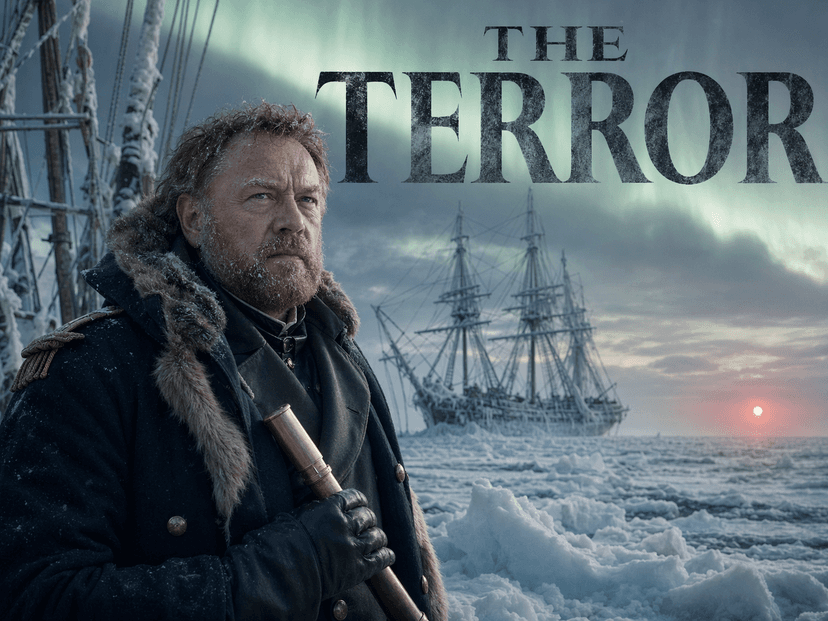
The Terror is AMC's prestige survival-horror anthology, and calling it anthology matters. Each season is its own story, its own cast, its own historical nightmare. The only thread is the show's thesis: put real people in a real disaster, then add something from the dark that should not be there.
Season one aired in 2018. Ten episodes. It adapts Dan Simmons's 2007 novel The Terror, which fictionalises the Franklin Expedition of 1845, when the Royal Navy sent HMS Erebus and HMS Terror to find the Northwest Passage and lost every man on board. Simmons took that documented catastrophe and added the Tuunbaq, a spirit-bear drawn from Inuit mythology, stalking the starving officers across the pack ice. Co-created by David Kajganich and Soo Hugh, with Hugh running the show, it is one of the great limited series of the streaming era. I will not hedge on that.
Season two, Infamy, aired in 2019 under the same title umbrella and nothing else. Different creators, different cast, different century, different ghost. Alexander Woo and Max Borenstein built it around a Japanese-American family in the 1942 internment camps at Manzanar and Tule Lake, with a yūrei pursuing them through the wire. It is a more uneven piece of television than season one and the reviews reflected that. It is also, I think, one of the bravest swings AMC ever took, and the presence of George Takei, who was genuinely interned as a child at Tule Lake, makes it something more than a genre exercise.
Season one runs on Jared Harris. Same year he anchored Chernobyl, he played Captain Francis Crozier of HMS Terror, and the two performances together should have ended the argument about him being one of the best living television actors. Crozier is a man fighting alcoholism, class prejudice, his own competence, and a monster, in that order. Harris plays all of it without raising his voice.
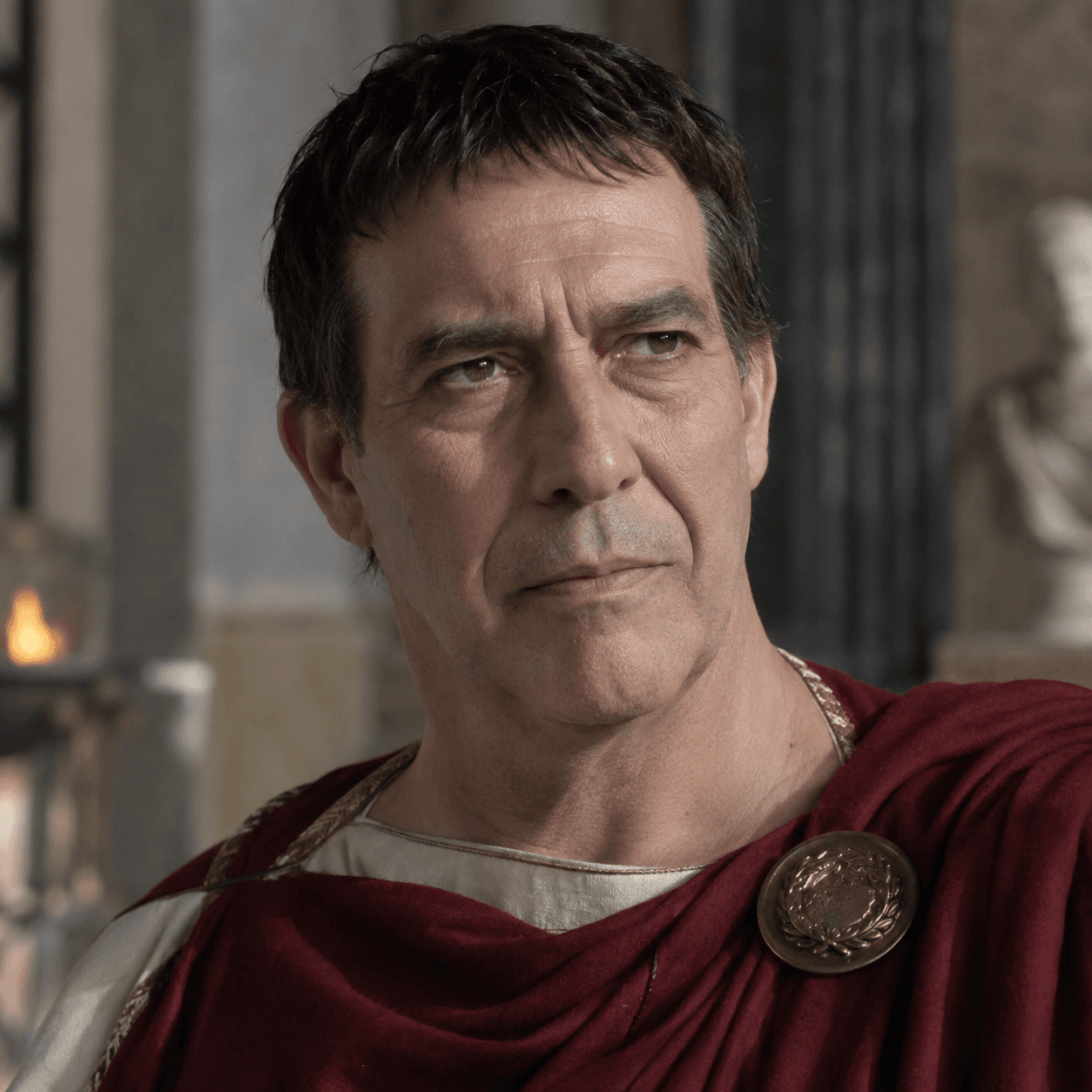
Ciarán Hinds is Sir John Franklin, the expedition's doomed commander, with that banked authority Hinds carries into every role. Tobias Menzies, a year before The Crown, plays Captain James Fitzjames of HMS Erebus, and turns what could have been a posh second lead into the season's other spine. Paul Ready is ship's surgeon Henry Goodsir and breaks hearts with how he plays him. Adam Nagaitis as caulker's mate Cornelius Hickey is the scene-stealer, a stowaway whose menace builds slowly and then stops building slowly. Nive Nielsen as Lady Silence, the Inuit woman the crew encounter on the ice, brings a quiet centre to scenes that would otherwise tip into hysteria. Ian Hart, Clive Russell as ice-master Thomas Blanky, Trystan Gravelle and Sebastian Armesto round out one of the deepest ensembles of the decade.
Nive Nielsen
Lady Silence (S1)
Tobias Menzies
Captain James Fitzjames (S1)
Cristina Rodlo
Luz Ojeda (S2)
Trystan Gravelle
Henry Collins (S1)
Kiki Sukezane
Yuko / the yūrei (S2)
Shingo Usami
Henry Nakayama (S2)
Clive Russell
Thomas Blanky (S1)
Ian Hart
John Bridgens (S1)
Season two is Derek Mio's show. He plays Chester Nakayama, an American-born son of Japanese immigrants who is trying to hold his family together while the US government puts them behind barbed wire and a ghost picks them off one by one. Kiki Sukezane plays the yūrei Yuko with a fury the writing does not always match. Shingo Usami is Chester's father Henry. Cristina Rodlo plays Luz Ojeda, Chester's Mexican-American girlfriend, caught between worlds. Naoko Mori is in the ensemble too. And George Takei is Nobuhiro Yamato, a community elder. Takei was five years old when his family was taken to an internment camp. He is not acting at arm's length here. Whatever you think of the pacing, watch his scenes.
Season one is a story about British imperial confidence colliding with a place that does not care. The officers bring their brass instruments, their porcelain, their hierarchy, their tinned food, and the Arctic just grinds them down. The Tuunbaq is supernatural but it is also, fairly obviously, the land itself refusing to be mapped. Simmons's novel makes this explicit. The show makes it inevitable. Watch how the crew behaves around Lady Silence versus how they behave around Franklin, and you can read the whole thesis.
Season two has a harder assignment and a more direct one. It is trying to dramatise a specific American injustice that US television has mostly refused to look at, and wrap it in a genre skin that will make people watch. The yūrei works best when it is a metaphor for the unburied dead of a community that was never allowed to mourn. It works less well when it is a ghost being a ghost. The show's instincts about what the camps felt like are strong. The plotting around them is less sure.
Both seasons share a belief that the supernatural is a useful tool for talking about real horror, not a replacement for it. The monster is never the point. The people dying are the point.
Season one looks like nothing else on television. Vast wide shots of ships iced into a white nothing. Candle-lit interiors below deck where the faces are half in shadow. A colour palette that is essentially grey, bone, and the red of a lit fuse. The sound design is a slow horror, rope creaking, ice groaning, wind, silence, then a noise that should not exist. Directors including Edward Berger (now of All Quiet on the Western Front), Sergio Mimica-Gezzan, and Tim Mielants shape a consistent visual grammar across the ten episodes. The costuming and set dressing were researched to a level that you can feel without being told.
Season two shifts palette completely. California sunlight, dust, paper-walled barracks, the particular beige of a government document. The horror imagery leans on Japanese cinematic traditions, with yūrei staging that will be familiar to anyone who has watched Ringu or Ju-On. It looks good. Some of the CGI does not always hold up next to season one's physical production, but the human scenes in the barracks and the desert camps carry the weight.
Season one was received as a masterpiece and largely remains so. Critics talked about it in the same breath as Chernobyl and The Night Of as evidence that limited-series drama had become prestige television's richest form. Harris was nominated for a Critics' Choice award. The show won Visual Effects and Production Design awards that matter more than they sound, because every frame looks researched. Cinephiles who missed it first time round have been finding it ever since.
Season two had a tougher reception. Reviews praised Takei's involvement, the historical importance of the story, and the ambition. Criticism landed on pacing, on a yūrei storyline that sometimes pulled focus from the internment material, on a finale that did not quite earn its ending. No third season was ordered. AMC moved on.
Worth saying though: season two has gained quiet respect in the years since, especially from viewers who came to it via season one and stuck with it. It is an imperfect show about an important thing, made by people who cared. There are worse legacies.
What elevates The Terror over most horror television is its refusal to cheapen what it is adapting. The Franklin Expedition killed 129 men in conditions that modern audiences cannot quite imagine. The internment of 120,000 Japanese Americans happened inside living memory, to families whose grandchildren watch this show. The series holds those facts steady while the genre machinery runs. It never uses the real disaster as wallpaper for a monster story. The monster is wallpaper for the disaster.
Season one is required viewing if you care about what limited-series television can do. Put it next to Chernobyl, Band Of Brothers, or Das Boot and it earns its place. If you liked the slow-burn dread of Midnight Mass or the historical density of Hell on Wheels, you are the audience.
Season two is not for everyone. Go in knowing it is trying something harder than season one, with fewer resources and a more resistant subject. If you can meet it halfway, there is a show there worth the effort. Takei alone is worth the ticket.
Two seasons. Two failures of the historical record filled in with genre. It should not work. Most of the time it does.
Adam Nagaitis
Cornelius Hickey (S1)
Jared Harris
Captain Francis Crozier (S1)
Sebastian Armesto
Charles Des Voeux (S1)
Alexander Woo
Co-creator / showrunner (S2 Infamy)
Derek Mio
Chester Nakayama (S2)
Paul Ready
Henry Goodsir (S1)
Naoko Mori
Asako Nakayama (S2)
Ciarán Hinds
Sir John Franklin (S1)
George Takei
Nobuhiro Yamato (S2)