El Chapo
2017 - 2018
Rank:#60 out of 225
ELO:1618
Woke Rating:
5/5
About This Show
🎬 The Setup
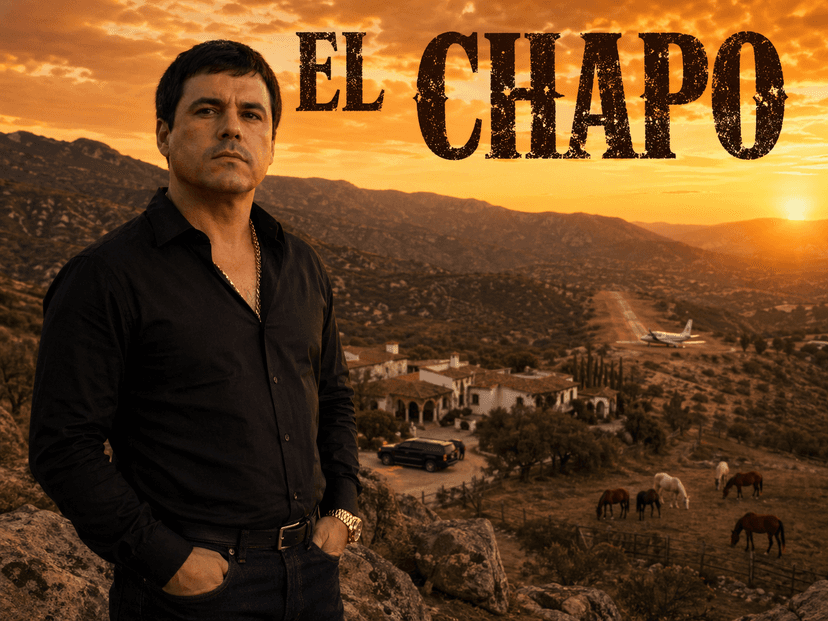
El Chapo is the Spanish-language biographical crime drama co-produced by Univision Studios and Story House Entertainment that ran for three seasons and 33 episodes between April 2017 and July 2018, premiering on Univision in the United States and streaming internationally on Netflix. Created by Silvana Aguirre and Carlos Contreras, with Aguirre as showrunner, it chronicles the life of Joaquín "El Chapo" Guzmán Loera, the Sinaloa farmhand from Badiraguato who grew into the most wanted narcotraficante on Earth.
The show opens in 1985, with a young Joaquín working as a low-level driver inside the old Guadalajara Cartel, and tracks him across thirty years. His rise through the Sinaloa Cartel. The cartel wars with the Arellano Félix brothers out of Tijuana. The chess match with corrupt Mexican officials who took plomo o plata and mostly chose plata until they couldn't. The audacious prison breaks from Puente Grande in 2001 and from Altiplano in 2015. The international manhunt, the final recapture in Los Mochis, the extradition, and the US conviction. Much of this is public record, which frees the show from worrying about spoilers and lets it focus on how, not what.
🎭 The Cast
Marco de la O carries the whole series as El Chapo. He plays him quiet. Watchful. A man who speaks twice as often with his eyes as with his mouth, and who you spend three seasons trying to read. It is a remarkable piece of restraint from an actor who was, before this, best known for telenovela work. Marco de la O does not try to do a Pablo Escobar-style bravura turn. He plays a small, watchful man who happens to be terrifying, which is much closer to what the real Joaquín reportedly was.
Around him the ensemble is genuinely deep:
- Humberto Busto as Conrado Higuera Sol, a fictionalised composite of the corrupt federal officials who kept the cartel afloat. A slippery career bureaucrat in a clean shirt.
- Juan Carlos Olivas as Azul Espinoza, Joaquín's partner in the early years, a rougher and more violent man who grounds the Sinaloa scenes. Olivas died of cancer in April 2018 shortly before the third season aired, and the show is a fitting last credit.
- Alejandro Aguilar as Toño, the sicario who handles the work El Chapo prefers not to see.
- Diego Vásquez as Ismael Zambrano, the thinly veiled portrayal of Ismael "El Mayo" Zambada, playing the older, calmer counterweight to Chapo's ambition.
- Valentina Acosta as Alejandra, his first wife, and Juliette Pardau as Graciela, his second. Between them they cover the domestic cost of the life Joaquín picked.
- Rodrigo Abed as Amado, the Juárez capo who controls the crossings north.
- Mauricio Hénao in a recurring supporting role, part of the younger generation of Sinaloa.
Cast & Crew
J
Juliette Pardau
Graciela
J
José Manuel Cravioto
Director (Season 1)
S
Silvana Aguirre
Creator and Showrunner
R
Rodrigo Abed
Amado
C
Carlos Contreras
Co-Creator
M
Marco de la O
Joaquín "El Chapo" Guzmán Loera
V
Valentina Acosta
Alejandra
J
Juan Carlos Olivas
Azul Espinoza