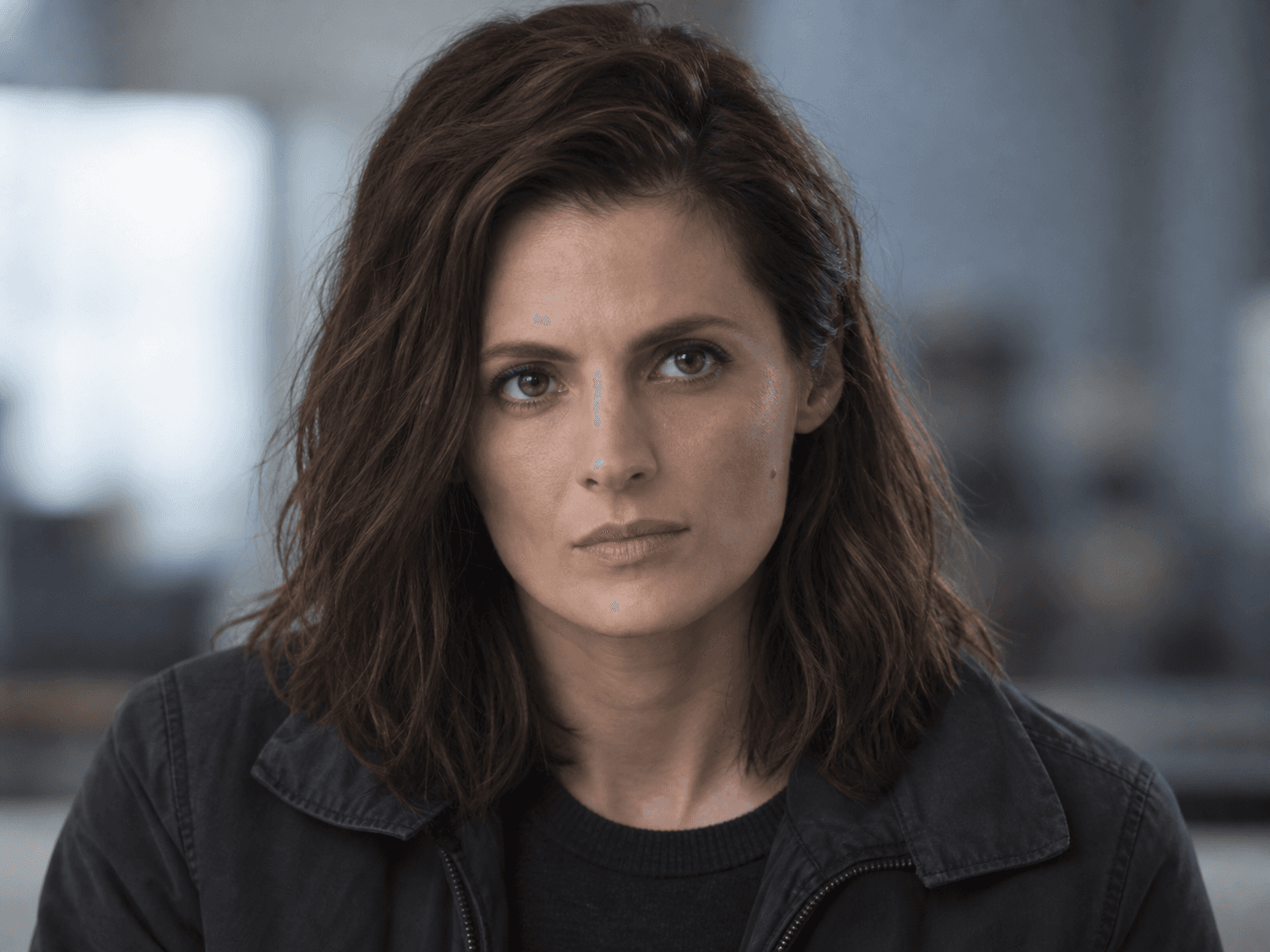
2001 - 2006
Alias ran for five seasons on ABC from 2001 to 2006, and if you only know J.J. Abrams from Lost, Star Trek, or Mission: Impossible, this is the show where he figured out how to do all of it. Before any of those. Here first.
Jennifer Garner plays Sydney Bristow, a UCLA grad student in her twenties who has quietly been working for SD-6, an organisation she believes is a black-ops arm of the CIA. The pilot detonates that premise inside its first hour. SD-6 is not the CIA. SD-6 is a criminal outfit operating under a Credit Dauphine banking front, part of a larger global syndicate called The Alliance, and Sydney has spent years doing their bidding without knowing it. When the real CIA finds her, she flips. From episode two onward she is a double agent. Every mission she runs for Arvin Sloane, the genial monster who heads SD-6, she also runs for Michael Vaughn, her CIA handler and slow-burn love interest.
That double-life engine is what every episode cranks. The cover story at SD-6. The truth at the CIA. And at home, a father she barely knows, Jack Bristow, who turns out to have his own file of buried secrets.
Garner carries this show. Full stop. She was in her late twenties when the pilot shot and her physicality is the whole look of the thing. She does most of her own stunts, and the disguise-of-the-week structure that became the show's visual signature only works because she can actually sell the kick, the grapple, the run. Pink wig. Blonde bob. Full latex face turn. She commits.
Around her, a bench that keeps paying off:
And then there is a pre-fame Bradley Cooper as Will Tippin across seasons one and two, Sydney's journalist friend who starts pulling at the SD-6 thread from the outside. Yes, that Bradley Cooper. Yes, he is very twenty-six.
Greg Grunberg turns up as CIA agent Eric Weiss, Melissa George arrives later as Lauren Reed with a rewarding heel turn, and the recurring guest list is unreasonable for a network action show. Lena Olin as Irina Derevko, Sydney's mother, a former KGB operative who was supposed to be dead and is very much alive. David Anders as the icy Julian Sark. Isabella Rossellini, Sonia Braga, and Amy Irving all cycle through the Derevko family business. Quentin Tarantino turns up as assassin McKenas Cole because the mid-2000s were a strange time. Later seasons bring in Rachel Nichols and Balthazar Getty as newer recruits.
Kevin Weisman
Marshall Flinkman
Greg Grunberg
Eric Weiss
Rachel Nichols
Rachel Gibson
Merrin Dungey
Francie Calfo
David Anders
Julian Sark
Isabella Rossellini
Katya Derevko
Jennifer Garner
Sydney Bristow
Ron Rifkin
Arvin Sloane
On the surface, Alias is a spy show with wigs. Underneath, it is Abrams working out a thesis he would spend the next decade refining: family is the thing that hurts you the most, and secrets are inherited like eye colour.
Jack Bristow lies to his daughter about everything for twenty years. Arvin Sloane plays surrogate father better than the real one. Irina Derevko reappears as the mother Sydney never knew, and the show will not tell you for two seasons whether to trust her. Project Christmas, the thread about whether Sydney was trained to be a spy as a small child without her knowledge, is the creepiest piece of serialised storytelling the show runs. It lands a long way from campy.
Then there is Rambaldi. A fifteenth-century alchemist whose prophecies and artifacts drive the mythology across all five seasons. This is Abrams' dry run at the mystery-box storytelling he would lean on for Lost. Some of it pays off. Some of it is bananas. I think the Rambaldi arc is the show's big strange swing, and even when it wobbles I would rather watch a network drama take that kind of weird ambitious gamble than play it safe. Your mileage will vary. That is fine. The Rambaldi stuff is the thing people love or the thing people fast-forward, and the show is honest enough about its own taste to commit.
Visually, Alias is built around a kinetic pilot grammar that Abrams essentially invented here. The cold open parachutes you into a mission already in progress. The edit is fast. The location graphics flash up in enormous serif type. The score leans on percussion and panic.
The disguise-of-the-week format gives every episode a visual centrepiece. Garner as a Russian mob wife. Garner as a blonde socialite with a concealed garrote. Garner in a rave wig doing a lip-sync to extract a target. It should not work as often as it does and it works almost every week in the first two seasons.
"Every Abrams show after this one is a remix of what he figured out here: cold open, family mystery, mythology that builds, a heroine who can actually kick someone."
The show looks expensive in a way network action drama rarely did in 2001. It spends money on travel plates, on prosthetics, on fight choreography, and it shows.
Critics adored it out of the gate. Garner won a Golden Globe and an Emmy nomination. The show finished the 2002 Super Bowl with a post-game special that pulled huge numbers and is still picked apart in TV-writing classes for how tight its pilot momentum is.
Seasons one and two are the peak. The mid-season-two pivot, where SD-6 is dismantled and the whole reason the show existed is blown up, is the most audacious move on network TV that year. Then the show had to deal with the problem of how to keep going, and season three's "two missing years" amnesia gambit is the first sign that Abrams and his writers had built something with a very specific engine that did not easily restart.
Seasons four and five are rougher. Garner got pregnant during the fifth, which the show worked around cleverly, but cast churn and diminishing returns on the Rambaldi arc meant the later run trades the original's danger for familiar beats. Not bad TV. Just not the same thing.
The case for Alias sits in its first two seasons, and those seasons are as good as action-drama television got in the early 2000s. Pilot to mid-S2 finale is a forty-five-episode run I would put up against anything 24 aired in the same window. Different genre. Different tone. Same level of hold.
If Lost is the Abrams show that made him famous, Alias is the one that taught him how. If you liked The Americans for its spycraft-as-marriage and its long-form moral rot, you will find an earlier, glossier, more escapist version of the same obsession here. If you liked Homeland for Carrie Mathison's divided loyalties, Sydney Bristow got there first.
Start with the pilot. Decide by the end of episode two whether the cover-story engine is doing it for you. If it is, you have roughly fifty hours of prime Alias ahead. That is plenty.
J.J. Abrams
Creator
Quentin Tarantino
McKenas Cole
Michael Vartan
Michael Vaughn
Lena Olin
Irina Derevko
Victor Garber
Jack Bristow
Melissa George
Lauren Reed
Bradley Cooper
Will Tippin
Carl Lumbly
Marcus Dixon