2020 - 2020

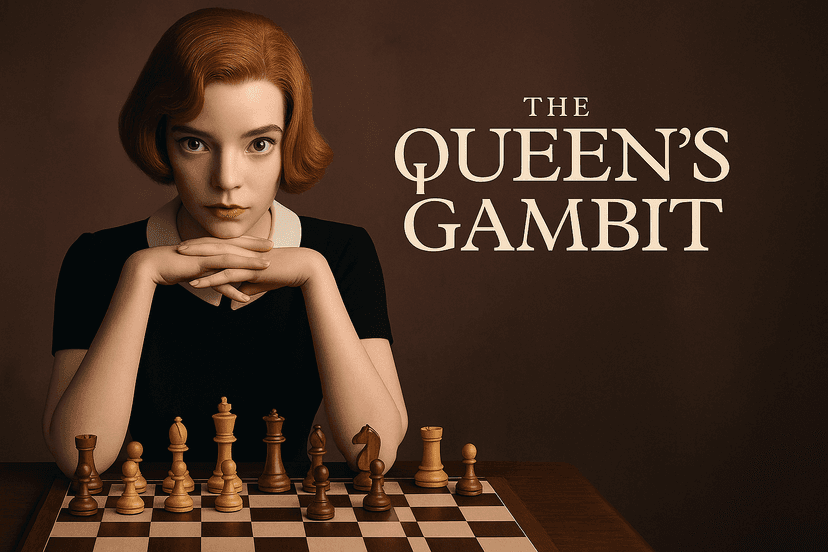
The Queen's Gambit arrived on Netflix in October 2020 as a seven-episode limited series. Scott Frank and Allan Scott adapted Walter Tevis's 1983 novel, a book that had kicked around Hollywood for decades before finally finding its shape as prestige television. The timing was almost too good. A lockdown audience with nowhere to be discovered a story about a woman alone at a chessboard, and The Queen's Gambit became one of the defining cultural events of that strange autumn.
The story follows Beth Harmon, an orphan in 1950s Kentucky who discovers a talent for chess in the basement of her Lexington orphanage. She learns from the janitor Mr. Shaibel. She is given tranquilisers by the state, develops a dependency, and carries both gifts into adulthood. The series tracks her rise through American tournaments and on to the elite Soviet circuit, with the final confrontation waiting in Moscow against the world champion Vasily Borgov.
That is the plot. The show is about something else.
The Queen's Gambit is a show about being extraordinary and lonely at the same time. Beth is a genius, and the series is honest about the specific cost of that: the rooms you end up in, the people who can actually follow your thinking, the private rituals you build to keep yourself upright. Chess turns out to be a vehicle. What the show actually cares about is what happens to a brilliant person who never learned how to need anyone.
The addiction thread is handled with a restraint that a lesser version of this show would have fumbled. No rock-bottom speeches. No tidy arc. Beth's relationship with the green pills and the wine bottle is textured and patient, and the show trusts you to see what it's showing you without narrating it. The same goes for Beth's outsider status in a male-dominated arena. She is often the only woman in the room. The series never underlines this. It just lets you watch the men react.
Core themes the show is wrestling with:
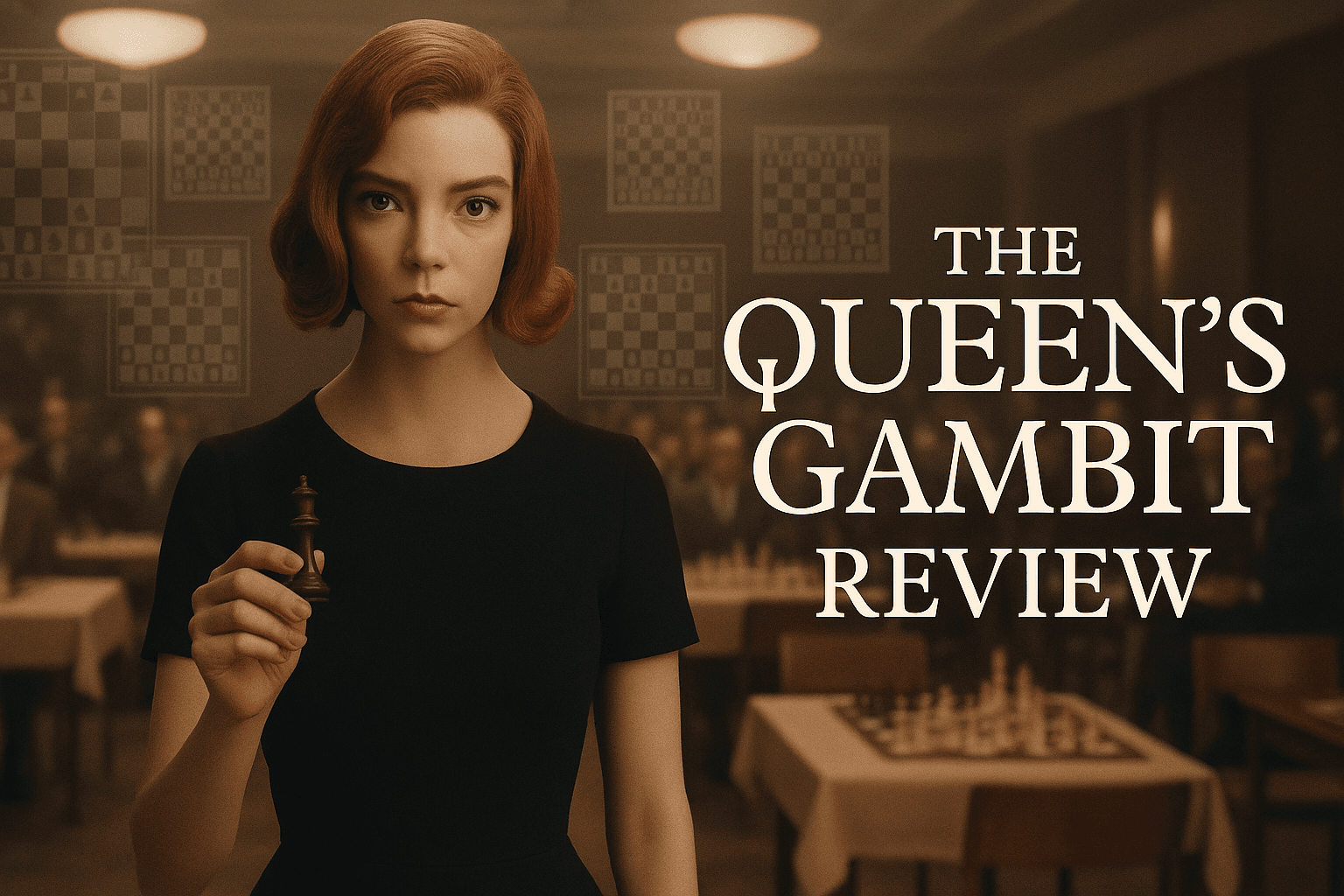
Anya Taylor-Joy is the show. I went in sceptical that anyone her age could carry ten years of Beth's life on her own, and within two episodes that scepticism was gone. She was twenty-four when she played Beth across roughly a decade of life, and she does it without any of the usual prosthetic shortcuts. The performance is mostly in her eyes. Beth is a person who plays entire games in her head while staring at a ceiling, and Taylor-Joy makes you believe the brain behind the stare.
Harry Melling
Harry Beltik
Thomas Brodie-Sangster
Supporting Actor
Bill Camp
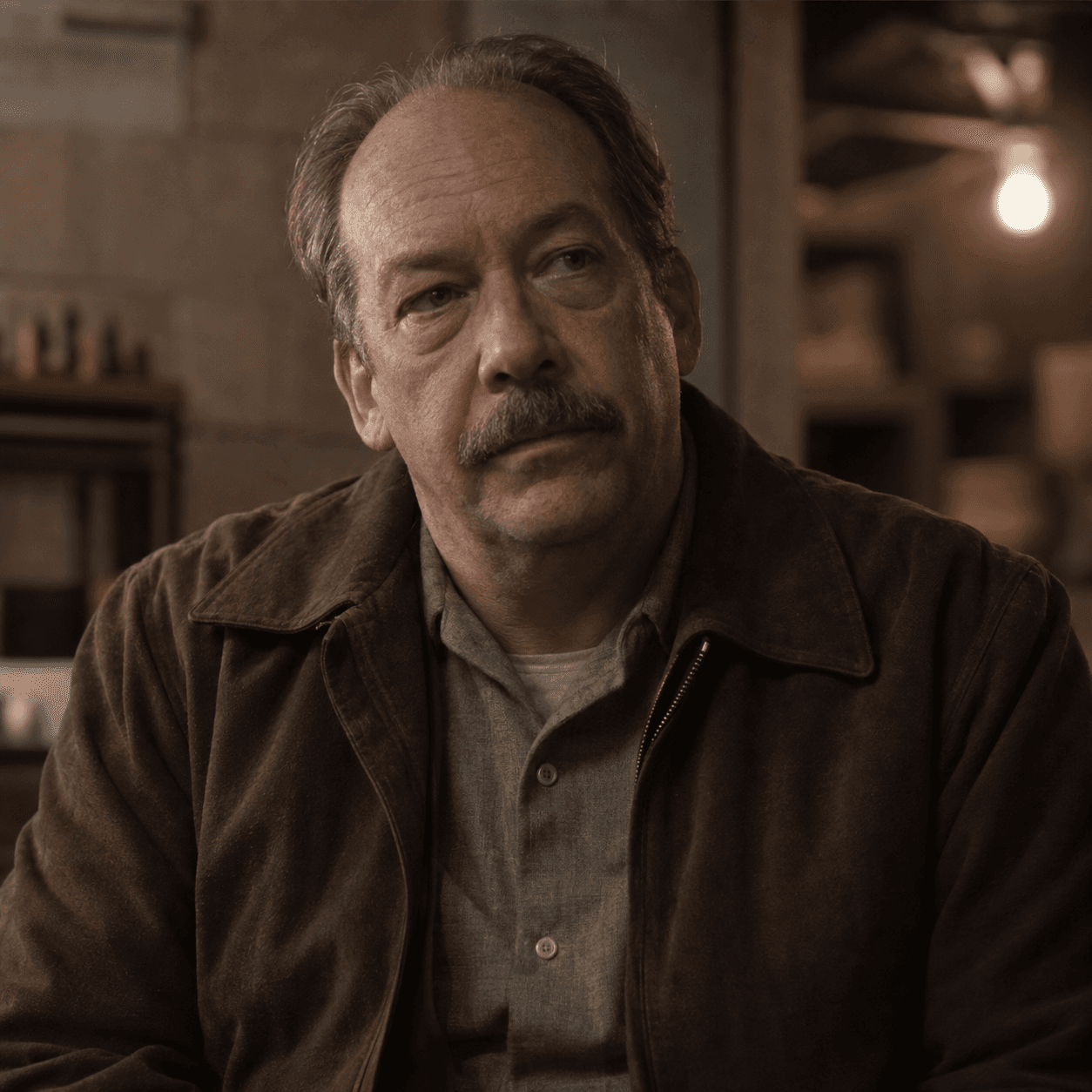
Mr. Shaibel
Moses Ingram
Supporting Actor
Scott Frank
Creator/Director
Jacob Fortune-Lloyd
Townes
Marcin Dorociński
Vasily Borgov
Anya Taylor-Joy
Lead Actor

Honest review of The Queen's Gambit (2020). A brilliant chess saga marred by a controversial woke twist. Discover our unique woke rating and final verdict.
Read MoreShe is supported by one of the best small ensembles on the service. Bill Camp plays Mr. Shaibel, the janitor who teaches Beth to play, and he does more with a raised eyebrow than most actors do with a monologue. Marielle Heller, better known as a director, is a revelation as Alma Wheatley, Beth's adoptive mother. Thomas Brodie-Sangster shows up as Benny Watts, Harry Melling as Harry Beltik, and Jacob Fortune-Lloyd as Townes, each of them sketching out a different strand of American chess culture and a different kind of relationship Beth might have if she could figure out how to be in one.
Moses Ingram plays Jolene, Beth's friend from the orphanage, and grounds the story in a warmth it otherwise might not have. Chloe Pirrie is piercingly good as Alice Harmon in the opening hour. And Marcin Dorociński as Vasily Borgov plays the world champion as a man of genuine grace, which is a deliberate and brilliant choice. The Soviet villain is not villainous. He is just better, or maybe just older.
The look is the other reason this show became a phenomenon. Production designer Uli Hanisch and costume designer Gabriele Binder built a 1960s that feels invented by memory rather than recreated from a catalogue. Emerald-green gowns against wood-panelled tournament halls. Cigarette smoke curling around tournament clocks. Hotel rooms in Mexico City, Paris and Moscow that each have their own colour temperature.
The chess itself is shot with patience. Director Scott Frank refuses to cut the games into music-video flash, and the choice pays off. A long hold on a player's face as they work through a Caro-Kann or sidestep a Sicilian Defence carries more tension than most shows' action sequences. If you do not know chess going in, you will not know chess going out, but the show makes the moves feel like argument and counter-argument, which is all you need.
The score by Carlos Rafael Rivera does the rest. Quiet, insistent, occasionally lush. It is restrained where a lot of prestige TV scoring is not.
The Queen's Gambit swept. Eleven Primetime Emmys, including Outstanding Limited Series, plus a Golden Globe for Best Limited Series and a Best Actress win for Taylor-Joy. Critics lined up. Audiences lined up faster. Netflix claimed 62 million households watched it in its first 28 days, which at the time made it their most-watched limited series to date.
The cultural knock-on was strange and genuine. Chess set sales went through the roof in the weeks after release. Chess.com signed up millions of new users. An entire generation of people picked up the game because of a Netflix show, and the competitive scene has not fully come down from that spike.
A limited series about a woman playing chess alone in a hotel room should not have been a global event. It was.
Limited series live or die on whether they feel complete. The Queen's Gambit feels complete. Seven episodes, one arc, no padding, no teased second season. That discipline is rare. It is also the same discipline you see in the great limited runs the medium has produced, from Chernobyl to Mare of Easttown. You watch it once as a story and once more as a piece of craft.
The show also works because it does not condescend. It trusts you to sit with a character who is often unpleasant, often using, often losing. It does not soften Beth into someone easier to root for. And it does not hand you its themes on a tray. I put it on thinking it would be a pretty-looking costume piece, and four hours in I realised I had been watching one of the sharpest character studies Netflix has commissioned.
If the 1960s atmosphere is what drew you in, Mad Men is the natural follow-up on this site and remains the high-water mark for that era on TV. If you want another limited series that treats addiction with the same grown-up restraint, Breaking Bad is the obvious companion, though it arrives at the subject from a wildly different angle.
Seven hours. One chessboard. A genuinely good show.
Chloe Pirrie
Alice Harmon
Marielle Heller
Supporting Actor