2020 - 2020
The Defeated arrived on Netflix globally in August 2021 under a title it did not start with. The eight-episode German-American-French co-production first aired in 2020 on Germany's ZDF Neo and France 2 as Shadowplay. The retitle happened when Netflix took it worldwide. It was produced by UFA Fiction, Tandem Productions, and Beta Film. Tangled European co-production rights meant years of delay between the European broadcast and the global streaming bow.
Created by Swedish writer Måns Mårlind (The Bridge, Midnight Sun) and co-directed with Björn Stein, the show drops into 1946 Berlin. The rubble. Four-power occupation, a shattered city carved up between the Americans, the British, the French, and the Soviets. The Nazi state is six months dead and the Allies are scrambling to build a civilian police force out of what remains, which is not much, and not clean.
Taylor Kitsch plays Max McLaughlin, a New York cop sent from the NYPD to help stand up this new Berlin force. His cover story is that. His real mission is personal. Max is hunting his estranged brother Moritz, played by Logan Marshall-Green, an American veteran who has vanished into the city as a vigilante Nazi-hunter, meting out rough justice on men the courts will not touch.
Taylor Kitsch carries the American end of the show and does it well. He plays Max with a bruised, soft-spoken gravity that fits the material better than the loud action-hero roles Kitsch is sometimes pigeonholed into. There is a quietness to the performance that lets Berlin do half the work. If you watched him in Waco and Generation Kill, you know he can do this register.
Nina Hoss is the German anchor of the show, and she is extraordinary. As Elsie Garten, the widow tasked with running the new Berlin police unit, Hoss plays a woman working every day with the foreign occupiers who bombed her husband, her home, and her country into dust. Her performance is the moral spine. She is not a clean victim, because there are no clean Germans in this show, but she is a woman trying to do the job in front of her without losing the last of herself. Hoss does more with a pause than most actors do with a speech.
Logan Marshall-Green plays Moritz McLaughlin, Max's brother. A psychopath by the book but a purposeful one, Moritz has made himself a private judge and executioner of Nazi war criminals. Marshall-Green gives him a stillness that is worse than a shout.
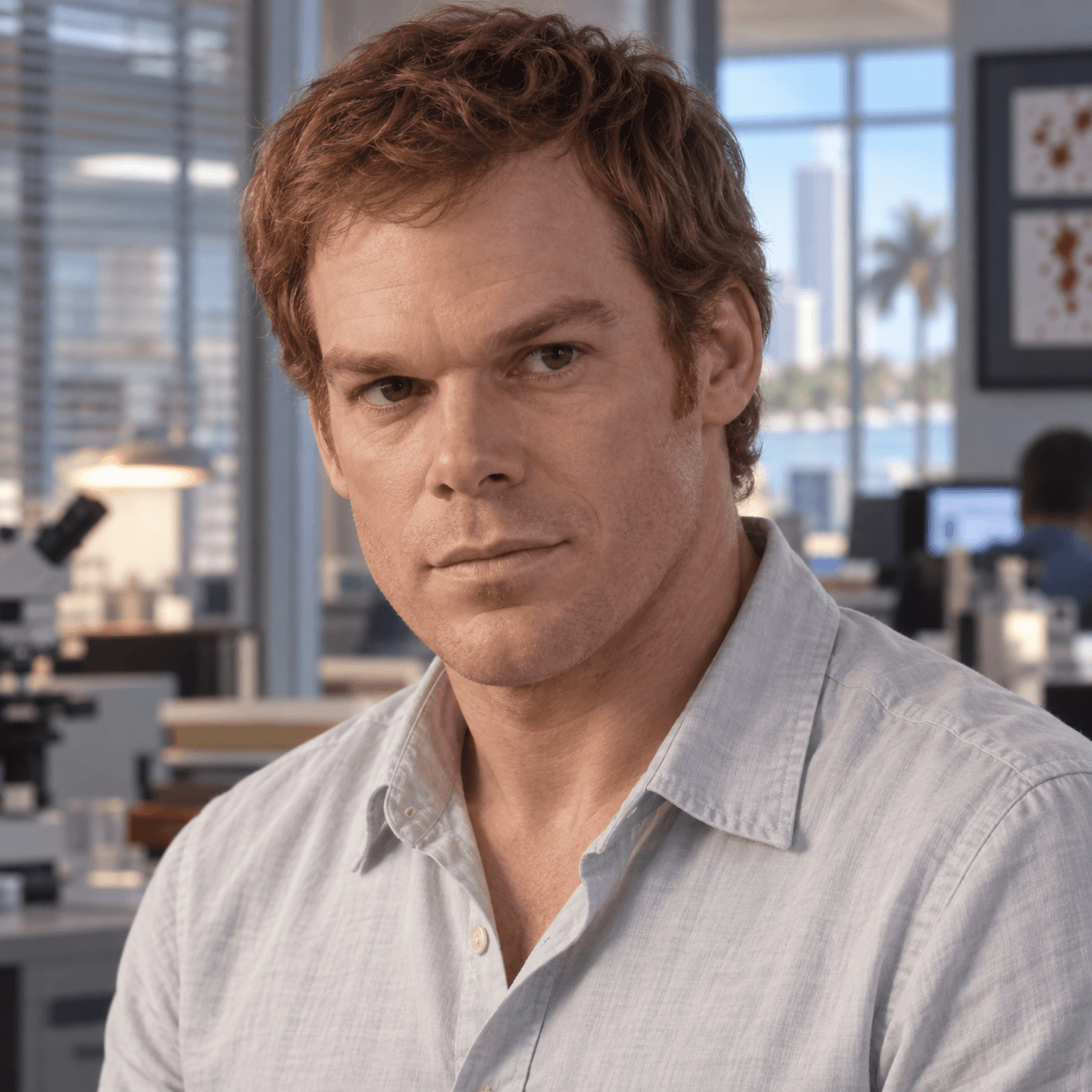
Michael C. Hall turns up as Tom Franklin, the morally grey American handler who pulls Max's strings. Hall brings that specific Dexter quality, the man smiling while he decides what you are worth, but repurposed for occupation politics rather than serial murder. He is the show's most discomforting presence because he sells the idea that the winners are already building their own crimes on the ruins of the losers' ones.
Mala Emde
Karin
Nina Hoss
Elsie Garten
Björn Stein
Director
Taylor Kitsch
Max McLaughlin
Michael C. Hall
Tom Franklin
Sebastian Koch
Soviet officer
Måns Mårlind
Creator / Director
Tuppence Middleton
Claire Franklin
Rounding out the ensemble:
The surface story is a serial-killer thriller in which Max and Elsie hunt a murderer preying on the city. That is the engine. But The Defeated is really a show about what the Germans call Stunde Null. Zero Hour. The idea that 1945 was a reset, a moment where a nation's history was supposed to be wiped clean and started again.
The show argues, quietly and firmly, that Zero Hour was a fiction. You do not clean slate a country by declaring it so. The Nazi police, Nazi judges, Nazi accountants, and Nazi neighbours were still there in 1946. The same people. A new suit, a new flag, the same bookkeeping. Watching Elsie try to recruit a police force from that manpower pool is watching a woman try to build a chair from broken chairs.
What makes the show worth your time is its refusal to let anyone off the hook. The Americans are not the good guys, and the Soviets are no cleaner. The Germans are very much not the good guys either, while the British are barely in it. Every interaction is a negotiation between people who have all done things they would rather not say out loud.
If you came to this from The Americans, you will recognise the grown-up moral register, the refusal to flatter anyone. If you came from The Spy, you will recognise the use of a single operative to carry a whole occupied country on their shoulders.
The production design is the star and everyone involved knows it. The Defeated was shot largely in Prague, and the Czech capital stands in for 1946 Berlin with a grim conviction I have not seen matched anywhere else on TV. Streets of rubble. Gutted churches. Blackout-era interiors lit by oil lamps and cigarettes. The show looks and feels like the first winter after a war, because it was built to.
The multi-lingual scripting is a genuine feature, not a marketing line. Characters slide between English, German, Russian, and Yiddish depending on who is in the room and what they want to hide. Subtitles do a lot of work and so do the performances. The Yiddish scenes, in particular, carry a weight that a monolingual production could not have bought.
A city trying to speak in four languages about crimes it cannot afford to say out loud.
If you loved the claustrophobia of Das Boot or the grown-up spy register of The Spy, you will find a version of that tone here, transposed into occupation-era drama.
The critical response was mixed, and honestly that reception was fair. Reviewers praised the production design, the multi-lingual ambition, and Nina Hoss without qualification. The complaints were about the plot engine. Some felt the serial-killer framework was too pulpy for the post-war setting, that a show with this much historical weight deserved a quieter, more political story rather than a murderer-of-the-week structure.
I think there is truth in both sides. The murder plot is occasionally more conventional than the setting deserves, and the American-brother hunt can feel grafted on to a German story that was interesting on its own terms. But the moments when the show lets its real subject breathe, the Berlin Elsie moves through, the Stunde Null fiction, the impossible daily compromises, are as good as anything the streaming era has produced in this corner of the genre.
No second season was commissioned. Whether that was because of the mixed reception, the tangled co-production rights, or a Netflix decision that the global numbers did not justify a return, it is hard to say. I would have watched more.
The Defeated is a show about the impossibility of a clean start. It works because it is made by people who took that subject seriously and hired the right actors to carry it. Nina Hoss alone is a reason to watch, and Taylor Kitsch's restraint reinforces the case, backed up by the Prague-as-Berlin production design.
Is the murder plot the strongest possible spine for a story about post-war occupation politics? Probably not. But you sit through it for the everything else. Quiet conversations in rooms where the wallpaper is still blackened. A show that refuses to let you cheer for anyone. Every frame feels like a wound nobody in the room will say out loud.
Eight episodes. One season. A show that deserved to be found, and that is worth finding on Netflix even now.
Logan Marshall-Green
Moritz McLaughlin
Lucas Reiber
Trude