2021 - Present

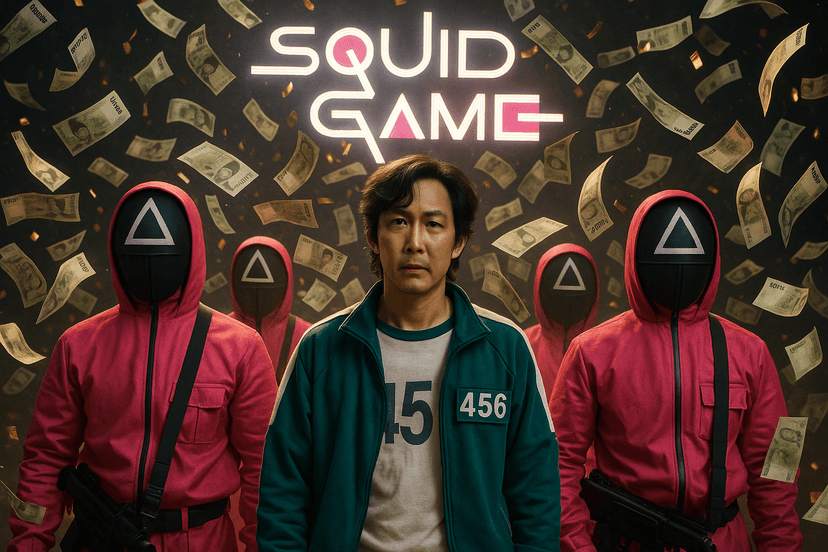
Squid Game (오징어 게임) premiered on Netflix in September 2021 and immediately became the most-watched show in the platform's history. Three seasons ran from 2021 to 2025. Season 1 was nine episodes, Season 2 cut down to seven, Season 3 closed out with six. Hwang Dong-hyuk wrote and directed every episode himself, which is rare for a show of this scale and partly explains why the tone never drifts.
The premise is simple enough to describe in a sentence. Hundreds of Koreans drowning in debt are offered a secret invitation to a tournament. Win and you walk away rich enough to erase every problem you ever had. Lose, and the cost is final. The games themselves are Korean children's playground staples. Red light, green light. Tug of war. Marbles. The ppopgi (honeycomb candy) cutting game. Each one is engineered with a lethal twist the contestants only discover once the round has started.
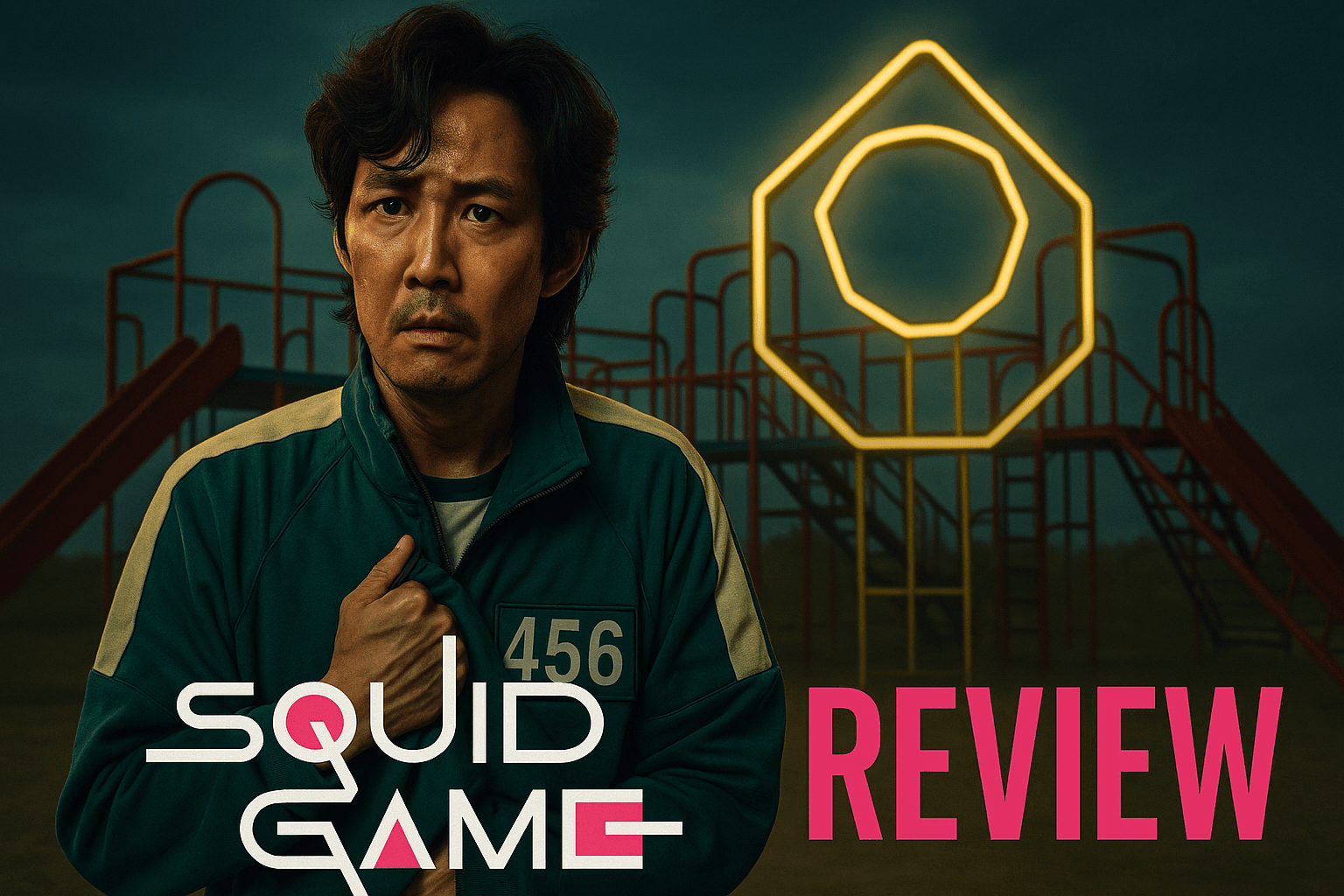
Lee Jung-jae plays Seong Gi-hun, Player 456, a broke divorced chauffeur whose gambling habit has wrecked what was left of his life. The first season follows him through the tournament. The second and third follow him after it.
Hwang built Squid Game around an ensemble that had to feel like real people before any game started, and the casting is a huge part of why the show works.
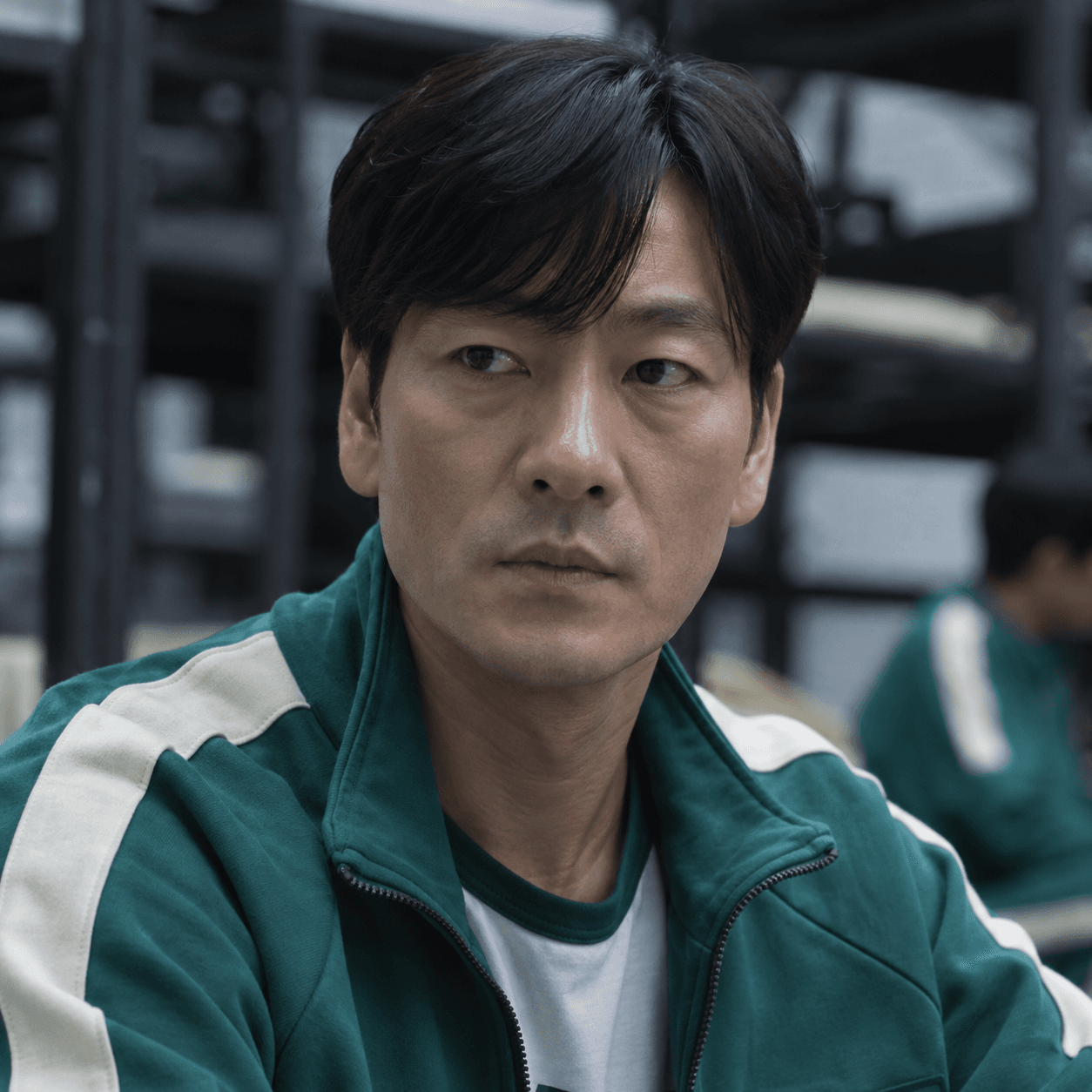
Lee Jung-jae had already been a major movie star in Korea for two decades before this, but Seong Gi-hun broke him internationally. He won the 2022 Emmy for Outstanding Lead Actor, the first Asian actor to take that prize, and his return as Player 456 across the later seasons was called one of the performances of the decade by several critics. Park Hae-soo plays Cho Sang-woo, a disgraced fund manager and Gi-hun's childhood friend, the kind of character who looks clean-cut but whose calculations run colder than anyone around him.
Jung Ho-yeon, a fashion model with no screen experience, was cast as North Korean defector Kang Sae-byeok (Player 067) and became a global star overnight. O Yeong-su, a veteran stage actor in his late seventies, plays Oh Il-nam, Player 001, the elderly man whose frailty in the dormitory makes his survival instincts all the more disarming. His Golden Globe win made him the first Korean actor to take one of those too.
The supporting players do real work. Wi Ha-joon is detective Hwang Jun-ho, whose infiltration of the island is the closest the show has to a pure thriller subplot. Heo Sung-tae plays the gangster Jang Deok-su (Player 101) with a menace so total it tips into physical comedy without losing its teeth. Anupam Tripathi, an Indian actor who learned Korean at an arts university in Seoul, plays the migrant worker Ali Abdul (Player 199) and became the show's emotional conscience. Kim Joo-ryoung is Han Mi-nyeo, a walking chaos event. Lee Byung-hun, already one of Korea's most internationally recognised actors (, ), is the masked Front Man.
Park Hae-soo
Supporting Actor
O Yeong-su
Oh Il-nam (Player 001)
Jung Ho-yeon
Supporting Actor
Wi Ha-joon
Supporting Actor
Yim Si-wan
Lee Myung-gi (Player 333)
Lee Byung-hun
The Front Man
Heo Sung-tae
Jang Deok-su (Player 101)
Lee Jung-jae
Lead Actor

Honest Squid Game review with 5/5 woke rating, deep thematic analysis and no spoilers. Find out if Netflix's Korean phenomenon is worth your time.
Read MoreSeasons 2 and 3 expand the ensemble without losing the original flavour. Yim Si-wan, Kang Ha-neul, Park Gyu-young, Park Sung-hoon, Jo Yu-ri and Lee Jin-uk all turn up as new contestants, each carrying a version of the same basic wound. Debt. A wrecked family. A plan that went wrong.
The games are the hook. Capitalism is the subject.
Hwang has been clear in interviews that he wrote the original script back in 2009, shopped it around for a decade, and no one would touch it until the streaming era made a Korean-language prestige project commercially viable. The delay is instructive. The show is not really a game show wrapped in horror. It is a long argument about what debt does to people, and about how the spectacle of watching poor people suffer becomes a commodity that wealthy spectators are happy to pay for. The VIPs, the gold-masked Western billionaires who watch the later rounds from a lounge, are not subtle. They are not meant to be.
Running underneath that is a sharper theme about consent. Every contestant signs a contract. Every contestant is told, repeatedly, that they can leave by majority vote. I think the genuine horror of the show is not that these people are being forced to play. It is that they are choosing to, because the world outside is already killing them more slowly.
Visually, Squid Game is unmistakable the second you see any still from it. The tracksuit green of the players. The fuchsia of the guards. That vast optical-illusion staircase that leads to nowhere. The game arenas borrow from M.C. Escher and from the candy-coloured sets of 1970s Korean children's shows, and the contrast between the warmth of those references and what happens inside them is the whole thesis of the design.
The score leans on baroque and classical cues. Haydn's Trumpet Concerto and Strauss's Blue Danube waltz appearing over moments of violence, a choice that has been copied so often since 2021 that it is easy to forget how jarring it felt the first time. The production design team built every arena as a practical set, which is why the games have weight that a CGI substitute would lose.
A few hallmarks that set the show apart from its imitators:
Season 1 pulled 142 million households in its first four weeks and held the Netflix record for most-watched series until Wednesday briefly dethroned it. Season 2 took that record back with 68 million views in its opening week. Season 3 then broke the three-day debut record, pulling 60.1 million views between 27 and 29 June 2025, and became the first Netflix show ever to premiere at number one in every country the platform ranks.
The awards followed. Lee Jung-jae's 2022 Emmy was historic. O Yeong-su's Golden Globe was historic. The show took Outstanding Directing for Hwang Dong-hyuk, and was the first non-English series nominated for Outstanding Drama at the Emmys. Korean production became a global premium export off the back of it, and the surge in Netflix investment in Korean content that followed is a direct line.
It also produced one of the most parodied aesthetics of the decade. Halloween costume sales of the players' tracksuits made every outlet in October 2021. The giant killer doll became a meme within a week. Seven-Eleven ran a ppopgi promotion.
The reason Squid Game works when the wave of imitators (and there are many, some quite good, like Alice in Borderland) do not, is that Hwang is not actually interested in the games. He is interested in the people playing them, and he is willing to slow the show down to prove it. The dormitory scenes between games, the flashbacks to life outside, the conversations about what each contestant is going to do with the money if they win. All of that is what makes the violence land. You know who is on the line.
If you liked Black Mirror for how it takes a single systems-level horror and sits inside it for an hour at a time, Squid Game is working a similar trick at season length. If Money Heist got you on the group-under-pressure dynamic, this does the same with less cartoon and more moral weight. And if Severance scratched the itch of a corporate dystopia rendered through unforgettable production design, the two shows make an uncanny double bill.
Three seasons. One creator, one vision. Rare for a show this big to finish on its own terms.
Hwang Dong-hyuk
Writer/Director
Anupam Tripathi
Ali Abdul (Player 199)