2002 - 2011

Spooks is the BBC One counter-terrorism drama that ran for ten series on British television from 2002 to 2011, and for a decade it was the best thing on BBC One on a Monday night. American audiences know it as MI-5 (note the hyphen in the export title). All 86 episodes were produced by Kudos for the BBC. David Wolstencroft created it. The show is set inside Section D of MI5, Britain's domestic Security Service, and the action rarely leaves London for long.
The premise is simple. A small team of officers on the Grid at Thames House fights whatever threat is waking up the country that week. Sleeper cells. Rogue states. Right-wing militias. Russian assets. Corporate blackmailers. Section D handles it before breakfast. And then the paperwork starts.
What made Spooks different from every procedural that came before it was a promise it made in its second episode and kept for ten years: nobody is safe. Not the lead. Not the love interest. Not the character you'd spent a whole series falling for. The show built its reputation on abrupt, brutal, often ugly character exits that pre-dated Game of Thrones on the shocking-death front by over a decade. I won't be specific about any of them here. But if you are coming to Spooks cold, go in warned.
The cast rotated hard over ten series. That was the point. The only constant throughline is Peter Firth as Sir Harry Pearce, head of Section D, who appears in all 86 episodes and whose moral exhaustion slowly becomes the beating heart of the show. Firth plays Harry the way a weary headmaster plays a school on fire. Quiet. Very quiet. Do not mistake that for calm.
Around Harry, the Grid fills and empties:
Anna Chancellor
Juliet Shaw
David Oyelowo
Danny Hunter
Hermione Norris
Ros Myers
Hugh Laurie
Jools Siviter
Jenny Agutter
Tessa Phillips
Keeley Hawes
Zoe Reynolds
Lara Pulver
Erin Watts
Matthew Macfadyen
Tom Quinn
The guest roster across ten series reads like a Who's Who of British telly. Hugh Laurie steps in for a memorable turn in series seven. Iain Glen, Robert Glenister, Jenny Agutter, Tim McInnerny, Anna Chancellor, Raza Jaffrey as Zafar Younis, Miranda Raison, Shazad Latif, and Timothy Spall all pass through. Even minor visitors tend to leave marks.
Every Spooks episode is, on paper, about stopping something. Defusing the bomb. Running the source. Turning the asset. That is the plot engine. But the show's real subject, the thing it kept coming back to over a decade, is what intelligence work costs the people who do it.
Officers on the Grid cannot tell their partners what they do. They cannot grieve their colleagues in public. They lie professionally and then go home and try to stop. Friendships are compromised by rank, by operational secrecy, by the awkward fact that the job sometimes requires you to burn the person sitting next to you. Loyalty in Spooks is a constantly shifting thing. Loyalty to country, to the service, to a specific colleague, to your own sense of right. Pick one. Sometimes you can only pick one.
That moral weight is what puts the show in the same conversation as Slow Horses and A Spy Among Friends a generation later. Spooks got there first, and for a long time it had the subject to itself on British TV.
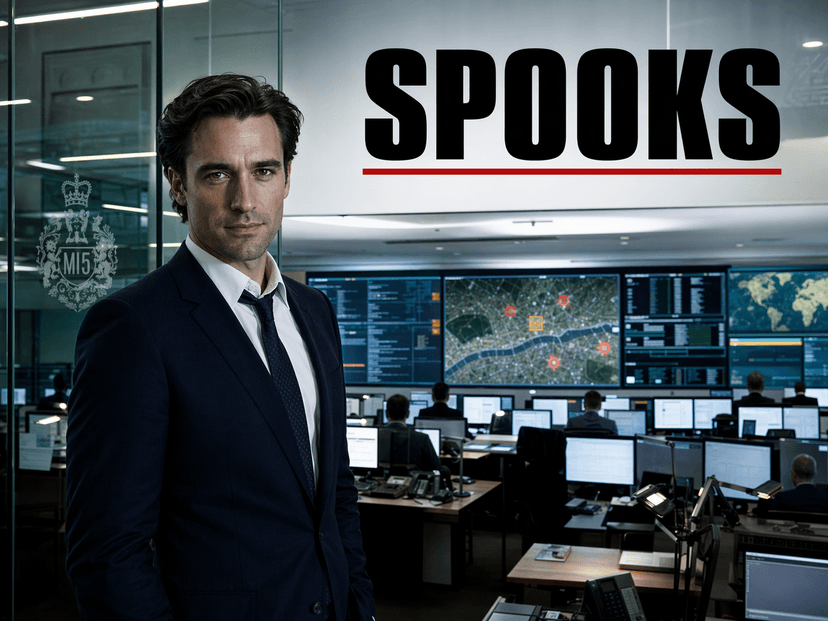
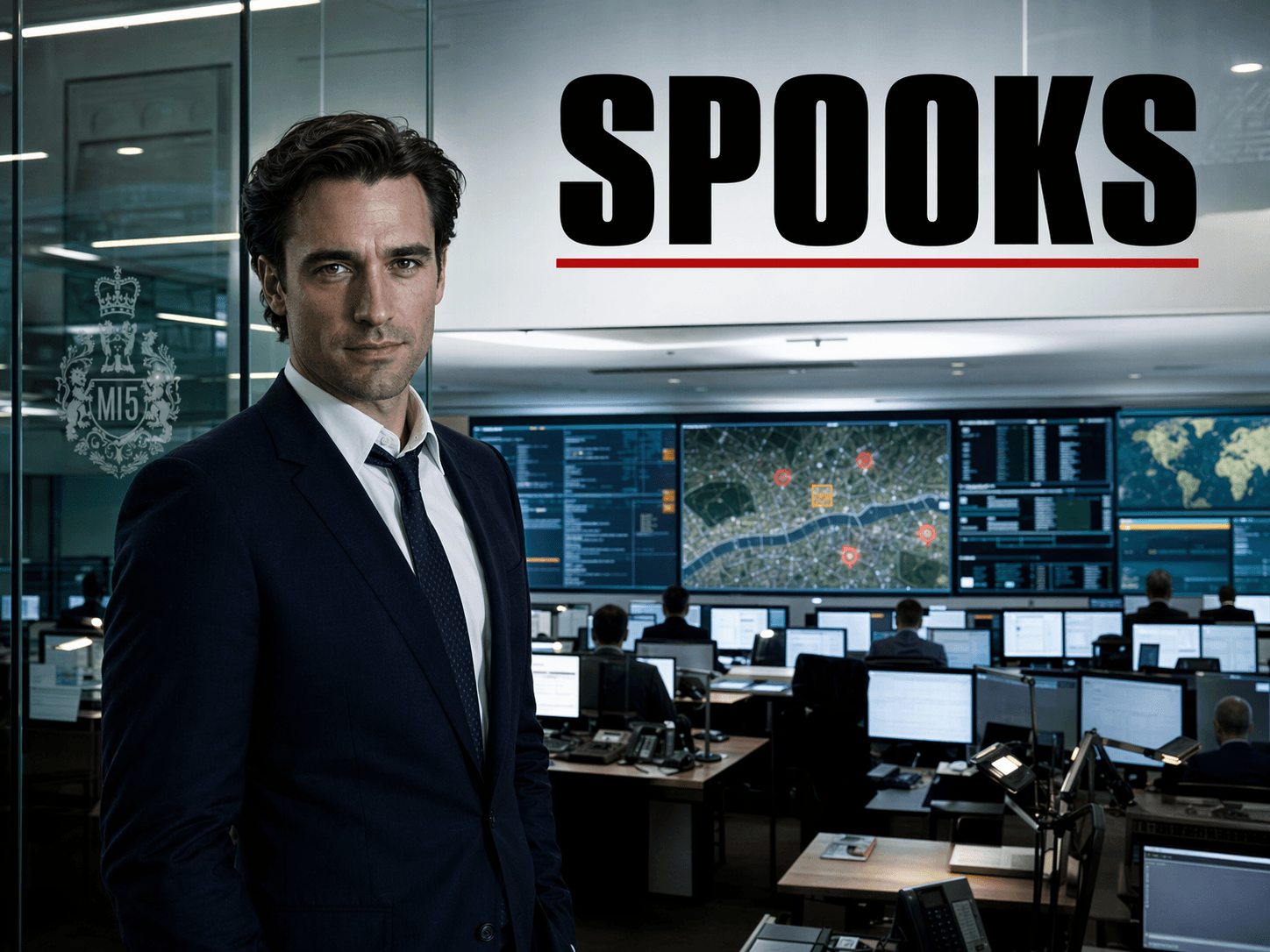
Visually Spooks committed to a look and then stuck to it for a decade. Glassy modernist interiors. Cool blue and grey colour grading. A Grid that feels less like a workplace and more like a very expensive fish tank. The title sequence is a full orchestral overture for a world of CCTV, whisper-quiet corridors, and black SUVs.
The pacing is faster than most British drama of its era. Forty-five minute episodes run like forty-minute thrillers with five minutes of emotional wreckage stapled on the end. The show leans hard into its propulsive score by Jennie Muskett and later composers, and into the small technical vocabulary of the service. The Grid. Five. Six. The Home Secretary. The cousins. The dialogue trusts you to keep up, or to Google afterwards.
Spooks won the BAFTA for Best Drama Series for its first run in 2003, beating a strong field. It picked up further BAFTAs and Royal Television Society awards over its decade on screen and was sold into more than thirty countries. By the time it ended in 2011 it was one of the longest-running original BBC One dramas of the 2000s.
Its DNA is all over British spy television that followed. The moral freight of Slow Horses and The Night Manager is unthinkable without Spooks having proved the British audience would turn up for it. Stateside, it sits in the same company as Homeland, The Americans, and 24, sharing their interest in what the work does to the worker.
A cinema continuation, Spooks: The Greater Good, arrived in 2015 with Peter Firth still at the centre. It tied a quiet bow on the television run and sent Harry Pearce off with a proper send-off.
If you like your espionage loud and flashy, stick with Jack Bauer. If you like it grey, rainy, bureaucratic, and heartbroken, the Grid is where you want to be.
The reason Spooks still holds up is that it treats intelligence work as an ordinary, grinding job done by ordinary, grinding people, and then occasionally reminds you that one of those people has a gun to their head. I went back to the first three series recently expecting them to feel dated. They don't. The phones have got bigger. The concerns have not.
If you are the kind of viewer who likes prestige spy drama with a British accent and a rotating cast, Spooks is the grandfather of the genre on television. Start at series one. Do not read the Wikipedia page first.
Max Brown
Dimitri Levendis
Miranda Raison
Jo Portman
Nicola Walker
Ruth Evershed
Peter Firth
Sir Harry Pearce
Raza Jaffrey
Zafar Younis
Richard Armitage
Lucas North
Robert Glenister
Nicholas Blake
Rupert Penry-Jones
Adam Carter
Shazad Latif
Tariq Masood
Iain Glen
Vaughn Edwards
Tim McInnerny
Oliver Mace
Timothy Spall
Guest appearance