Adewale Akinnuoye-Agbaje
About Adewale Akinnuoye-Agbaje
Adewale Akinnuoye-Agbaje is a British-Nigerian actor, writer and director whose imposing physical presence, classically trained voice and unusually wide-ranging life story have made him one of the more distinctive character performers of the past three decades. Born on 22 August 1967 in Islington, London, to Yoruba Nigerian parents who were students in the United Kingdom, he grew up at the intersection of two cultures that did not always know how to meet, and much of his subsequent career as a performer and a filmmaker has been spent giving artistic shape to that collision.
When Akinnuoye-Agbaje was just six weeks old, his biological parents placed him with a white working-class foster family in Tilbury, Essex. The arrangement was part of a then-common practice within the Nigerian student community in Britain, in which children were privately fostered out to British families so that their parents could continue their studies and save money. The practice was informally known as farming, a word that would later give Akinnuoye-Agbaje the title of his most personal work. His childhood in Tilbury was marked by warmth from his foster family but also by relentless racial abuse in a town where black faces were rare. Skinhead culture was rising in the docklands of Essex during the 1970s and early 1980s, and the young Adewale found himself a target. After enduring repeated physical attacks, he eventually earned the respect of the local gang by standing up to them, and in a painful paradox he aligned himself with the skinheads who had once tormented him, even shaving his head and adopting their dress in an effort to belong.
His birth parents briefly attempted to reclaim him at the age of eight, taking him to Nigeria, but unable to speak Yoruba or settle into the new environment he was returned to Tilbury within a short time. At sixteen, in an effort to break the cycle, his birth parents sent him to a boarding school in Surrey. There he discovered that he had a sharp academic mind, threw himself into his studies and gradually rebuilt his sense of self. He went on to read law at King's College London, eventually earning a master's degree, and for a time looked set for a conventional legal career.
The detour came through fashion. While at university Akinnuoye-Agbaje worked in a designer clothing shop in London, where his height and striking features attracted the attention of scouts. He was signed as a model and quickly found himself working in Milan, then in fashion campaigns across Europe and the United States. The catwalk became an unexpected runway into Hollywood. He landed his first screen role in 1995 in the jungle adventure Congo, and within a few years was being cast as commanding presences in films such as The Mummy Returns, in which he played the warrior Lock-Nah, and The Bourne Identity, where he was the deposed African dictator Nykwana Wombosi.
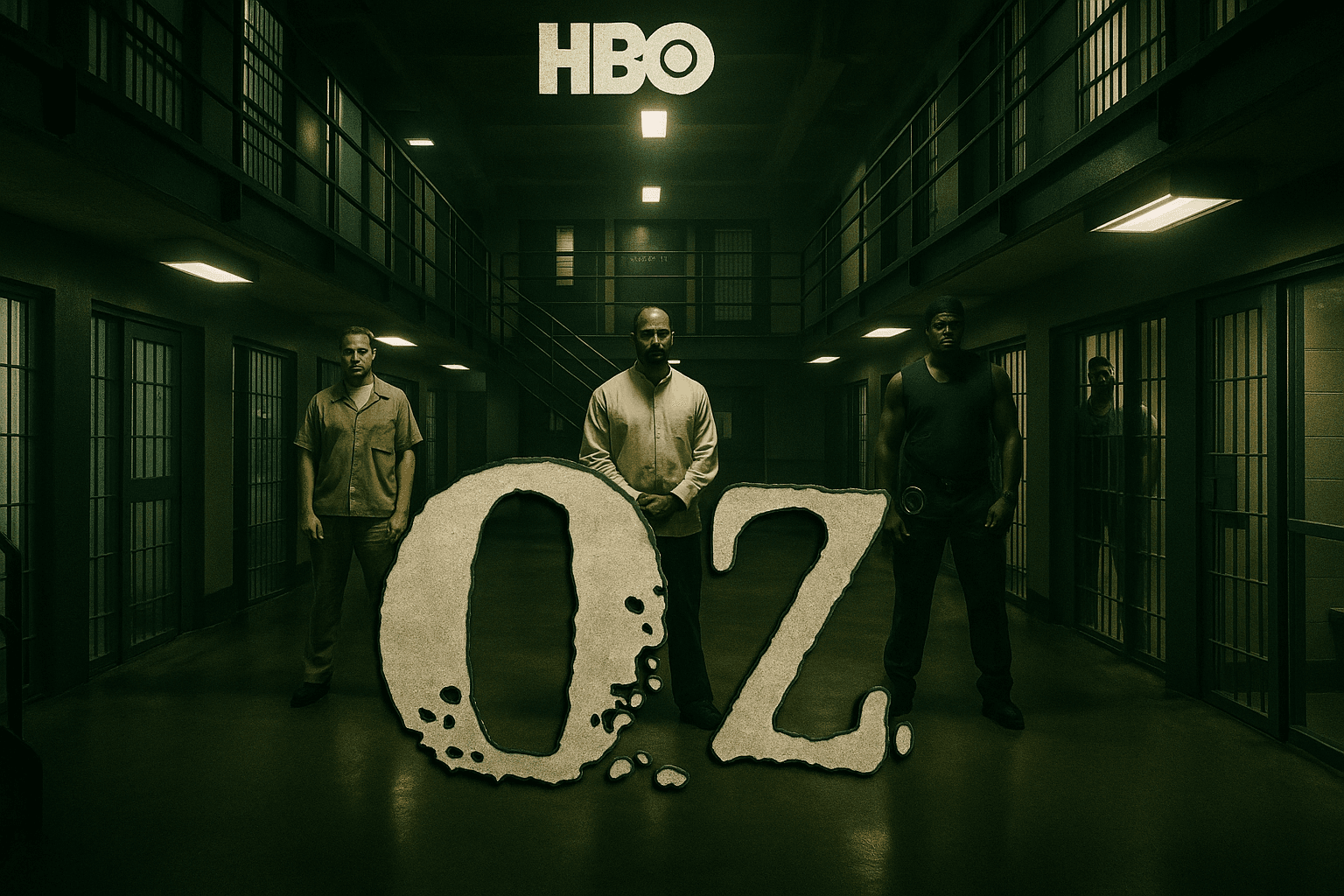
It was on television, however, that he first established himself as a performer of real depth. From 1998 he played Simon Adebisi on the HBO prison drama Oz, a role that demanded ferocity, charisma and a peculiar dignity in equal measure. Adebisi, with his lopsided knit cap and unpredictable menace, became one of the defining characters of the early prestige cable era. A few years later, on ABC's Lost, he turned in arguably his most beloved performance as Mr. Eko, a Nigerian drug lord turned priest haunted by his past on the mysterious island. Eko's quiet intensity, his battered Jesus stick inscribed with scripture, and his attempts at penitence gave the show some of its most spiritually charged moments, and Akinnuoye-Agbaje's restrained, almost monkish performance won him a devoted following.
The blockbuster work continued in parallel. He played Heavy Duty in G.I. Joe: The Rise of Cobra, the dark elf-turned-monster Kurse in Marvel's Thor: The Dark World, and the ill-fated slaver Malko in the fifth season of HBO's Game of Thrones, the man who tries and fails to capture Tyrion Lannister and Jorah Mormont. In 2016 he disappeared under prosthetics to play Waylon Jones, better known as Killer Croc, in David Ayer's Suicide Squad, bringing a wounded humanity to a character who could easily have been a one-note brute. Other notable screen credits include the doomed footballer Dave Duerson in the NFL drama Concussion, opposite Will Smith, and the African commander Lord Ogunwe in the BBC and HBO adaptation of His Dark Materials.
Throughout these years Akinnuoye-Agbaje had been quietly working on a screenplay drawn directly from his own childhood. The result, Farming, was his feature directorial debut. He wrote and directed the film, which follows a young Nigerian boy named Enitan placed with a white Essex family and drawn into a violent skinhead gang as he tries to belong. Damson Idris took the lead role, with Kate Beckinsale as the foster mother. Farming premiered at the 2018 Toronto International Film Festival and went on to win the Michael Powell Award for Best British Feature at the 2019 Edinburgh International Film Festival. Akinnuoye-Agbaje spoke openly in interviews about the film as a form of collective therapy for the many farmed children of his generation, and as a way of opening a dialogue with the Nigerian community about a piece of diasporic history that had long gone unspoken.
Fluent in English, Yoruba, Italian and Swahili, Akinnuoye-Agbaje has also become a thoughtful public voice on race, identity and the foster care system, returning regularly to King's College London as a celebrated alumnus. He continues to work prolifically across film and television while developing further projects as a writer-director, his career a steady extension of the same project, the attempt to turn a fragmented childhood into stories that other people can recognise as their own.