2022 - Present

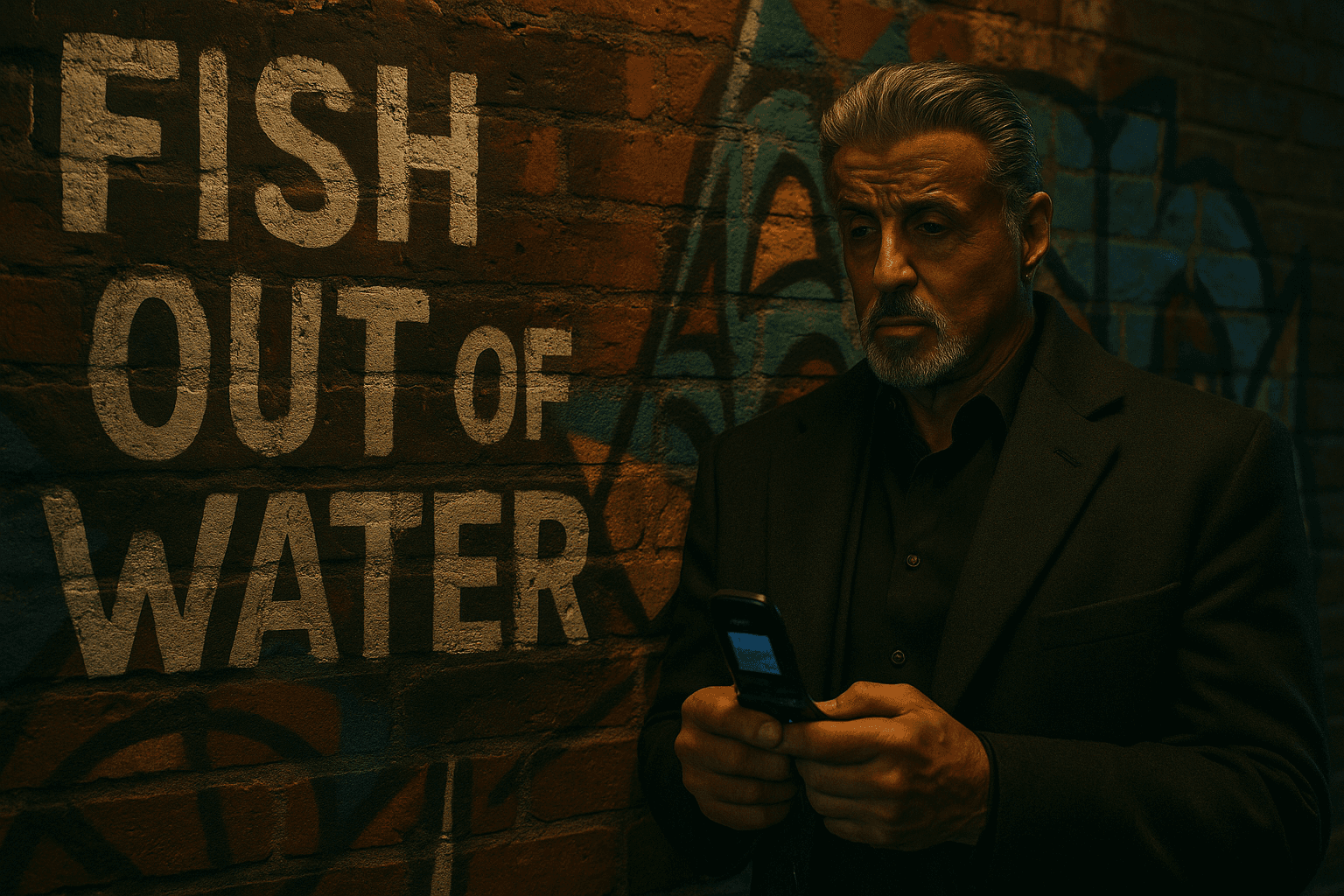
Tulsa King premiered on Paramount+ in November 2022 and returns for a fourth season after three runs that have quietly become one of the streamer's biggest hits. The premise is the whole pitch in a sentence. Dwight "The General" Manfredi, a New York mafia Capo, walks out of a federal prison after 25 years inside, expects a hero's welcome from the family he kept his mouth shut for, and instead gets shipped to Tulsa, Oklahoma. Build a new operation out there, the bosses tell him. Don't come back.
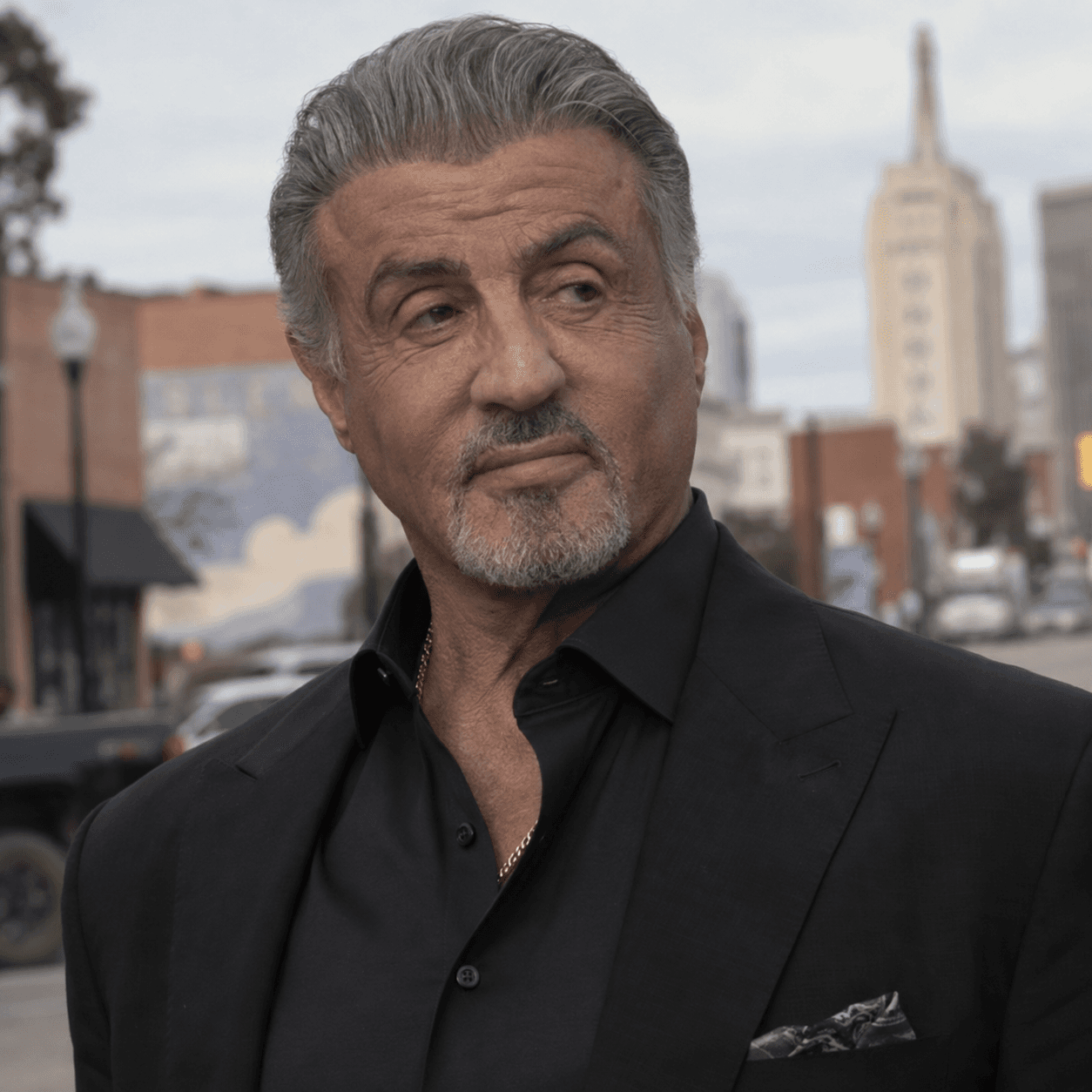
What could have been a one-joke fish-out-of-water story turns out to be the most relaxed, most watchable hour Sylvester Stallone has put in front of a camera in years. At 76 when the show started, he carries it with the easy charisma of a man who has nothing left to prove and is finally having fun.
The setup does a lot of work:
It is The Sopranos relocated to a world of pickup trucks and line-dancing bars, with the comic timing turned up and the moral self-loathing turned way down.
Stallone is the centre of gravity and he knows it. As Dwight he is courtly, quietly menacing, and funny in a way Stallone rarely gets to be on screen. He plays a man from 1997 trying to function in 2022, and he sells both halves of that gag without ever making Dwight seem stupid.
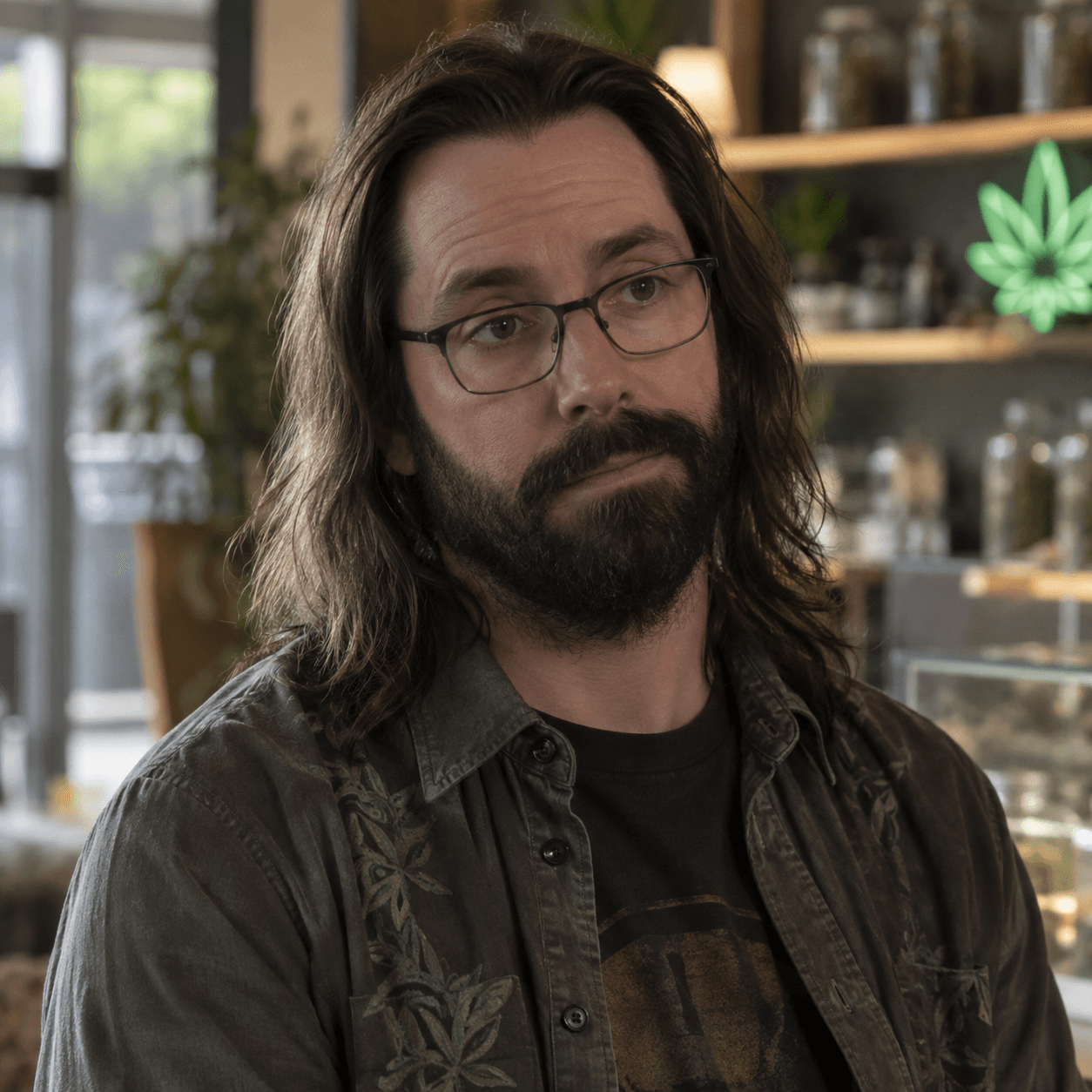
Around him the writers have built a proper ensemble. Martin Starr plays Bodhi, the dispensary owner pressed into service as Dwight's reluctant consigliere and cash launderer, a role Starr grounds in the same dry exasperation he has been perfecting since Freaks and Geeks. Jay Will plays Tyson Mitchell, the young driver who ends up as Dwight's right hand and gets the best character arc in the show, moving from bug-eyed onlooker to a man who has chosen this life. Max Casella brings a proper New York wiseguy pedigree to Armand Truisi, an ex-mobster living straight in Tulsa until Dwight finds him and pulls him back in. Garrett Hedlund plays Mitch Keller, a country singer turned horse wrangler who becomes the show's most interesting moral wildcard. Domenick Lombardozzi turns up as Goodie Carangi, an old New York friend with his own agenda.
Season two brought Neal McDonough in as Cal Thresher, a rival Tulsa businessman whose brand of cowboy menace fits the show like a glove. Vincent Piazza plays Vince Antonacci from New York, Annabella Sciorra plays Dwight's long-estranged ex, and Dana Delany and Andrea Savage round out the season-one supporting cast as a horse heiress and an ATF agent respectively. Season three adds Frank Grillo, Katherine Heigl, Beau Knapp and Bella Heathcote, broadening the show into something closer to a full prestige crime ensemble.
Sylvester Stallone
Lead Actor
Max Casella
Armand Truisi
Taylor Sheridan
Creator
Domenick Lombardozzi
Supporting Actor
Andrea Savage
Supporting Actor
Neal McDonough
Cal Thresher
Martin Starr
Bodhi
Garrett Hedlund
Mitch Keller

Unfiltered *Tulsa King* review with a 3/5 woke rating. Discover whether Stallone's Paramount+ crime dramedy is worth your time.
Read MoreOn the surface this is a crime show, but the pilot makes clear the writers are working a different register. Tulsa King is really about obsolescence. Dwight is a man whose world no longer exists. His skills, his codes, his contacts, even the accent he uses to give orders, all belong to a New York that has been gentrified into oblivion while he was inside. Tulsa is not a punishment in the way his bosses intended. It turns out to be the one place a man like him might actually still matter.
That tension runs through everything. Dwight treats an Uber app like a minor miracle. He calls people "kid" and means it. He handles disputes with a 1970s moral logic that the people around him have long stopped using. The show mines comedy out of this constantly and then, when it wants to, mines something close to melancholy.
There is also a sharp second theme about family. Dwight spent a quarter of his life in prison to protect people who no longer particularly want him. The crew he is building in Oklahoma is the family he picks, not the one he bled for. That is a very Taylor Sheridan theme, chosen loyalty against inherited loyalty, and the show handles it with a lot more lightness than Sheridan's other work.
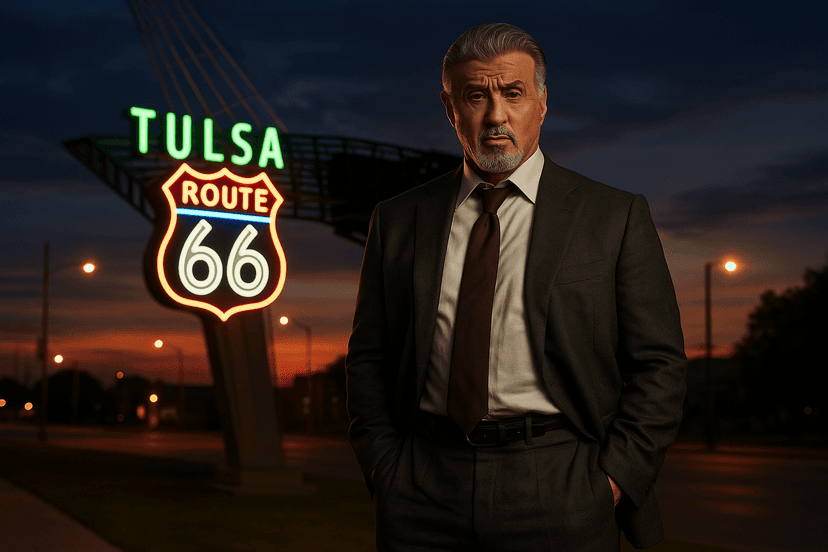
Visually the show is a mash-up and it works. You get Oklahoma sky, dusty strip malls, neon cowboy bars, and then sudden cuts to a New York restaurant shot like a scene from Boardwalk Empire with the espresso cups and the wood panelling. The contrast is the joke, but it is also what makes the Tulsa material feel genuinely lived-in rather than touristy.
The tone is lighter than you would expect from the premise. Violence, when it arrives, is quick and often ugly, but the show is not interested in wallowing. It is interested in the day after. Dwight is much more likely to be caught having an awkward coffee with a horse trainer than planning a hit. The soundtrack leans on classic country and old rock, Willie Nelson and Johnny Cash doing the thematic work a lesser show would spell out in dialogue.
Episode length is short by prestige standards, most run under 50 minutes, and the pacing reflects that. Plots move. Scenes do not linger. It is the rare modern crime show where you do not feel a streaming platform inflating an idea to fit an eight-hour slot.
Critics were polite rather than rapturous on release and audiences ignored them. Tulsa King has been a consistent top performer for Paramount+, the kind of show that gets renewed quickly and quietly. Stallone earned some of the best notices of his career for the first season, and the Sheridan-produced universe adopted the series as one of its anchor hits alongside Yellowstone, 1883, 1923, Mayor Of Kingstown and Landman.
The behind-the-scenes story is worth knowing. Terence Winter, whose Boardwalk Empire is one of the great mafia shows of this century and who wrote on The Sopranos before that, created the series with Sheridan and ran season one. Winter left after that first year, reportedly after creative disagreements about the direction. Seasons two and three have had different showrunners, and while some fans argue the first year was the tightest, the show has kept its flavour across the changeover.
Stallone, at last, in a role that fits him like a rumpled linen suit.
The short answer is Stallone. He is having the best time of any lead actor on TV right now, and it radiates out of every frame he is in. The longer answer is that the show is very deliberately uncynical. It is not The Sopranos and it does not want to be. Dwight is not an anti-hero you are meant to feel bad for liking. He is a specific old-school type of American, grown in a New York neighbourhood that no longer exists, dropped into a part of the country he had never thought about before, and choosing to make the best of it with the tools he has.
For anyone who loved the gangster shows of the golden age but has gone off the genre's more recent bleakness, Tulsa King is the correction. Funnier than it sounds. Warmer than it has any right to be. And a proper star vehicle for an actor most of us had given up expecting surprises from.
Vincent Piazza
Vince Antonacci
Terence Winter
Writer/Producer