2001 - 2003
The Office UK ran on BBC Two from 2001 to 2003. Two series of six episodes, plus a two-part Christmas Special that closes the story out. Fourteen episodes. Done. No filler, no coasting, no stretched-out arcs. Created and written by Ricky Gervais and Stephen Merchant, shot as a fly-on-the-wall mockumentary inside the Slough branch of Wernham Hogg, a mid-market paper company you would not look at twice if you drove past it on an industrial estate.
That is the premise and that is the joke. A camera crew has been granted access to the most mundane workplace in Britain, and the boss, David Brent (Ricky Gervais), has mistaken this for his big break. He performs for the camera. He riffs. He does impressions. He thinks he is making television, when what he is actually making is a permanent record of his own cringey delusion. Around him, the rest of the office tries to get through another Tuesday.
Cringe, basically. But cringe built on top of something sadder and more precise than any sitcom of its era had really tried before.
Ricky Gervais as David Brent is the centre of gravity. A regional manager who wants to be everyone's mate, everyone's mentor, and everyone's favourite comedian at the same time, and so is none of them. Gervais plays Brent with zero ego protection. The dance, the guitar, the terrible jokes, all of it is performed with the full conviction of a man who thinks he is winning the room when he is losing it. You end up cringing, laughing, and wanting him to stop, often in the same shot.
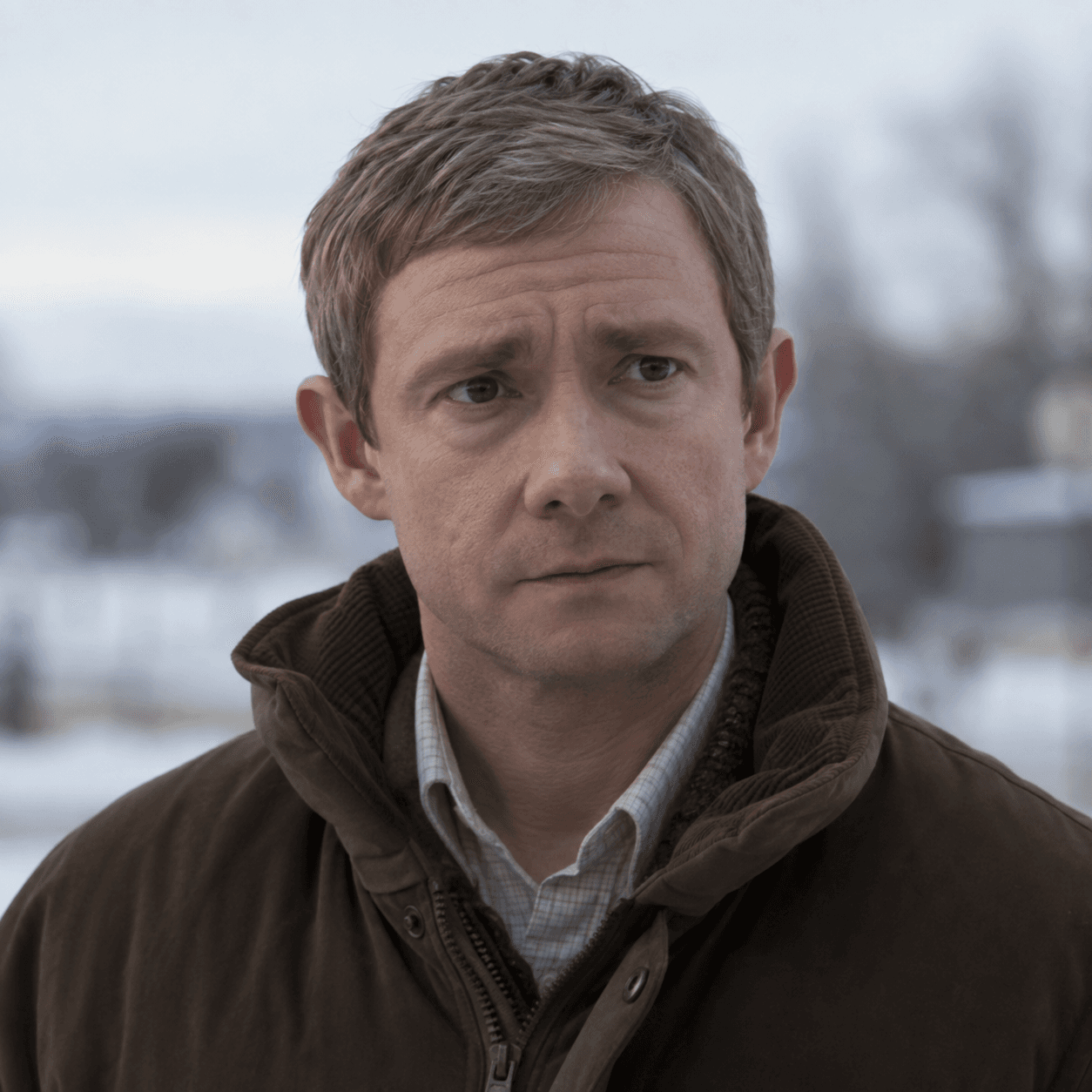
Martin Freeman as Tim Canterbury is the quiet heart of the show. A sales rep in his early thirties who told himself the paper job was temporary and is now watching temporary turn into permanent. Freeman gives Tim a look to camera that became one of the most imitated bits of acting on British TV. Lucy Davis as Dawn Tinsley is the receptionist. Engaged to a warehouse lad, stuck, drawing cartoons on a notepad when she should be working. The chemistry between her and Tim is the whole show's slow-burn secondary plot.
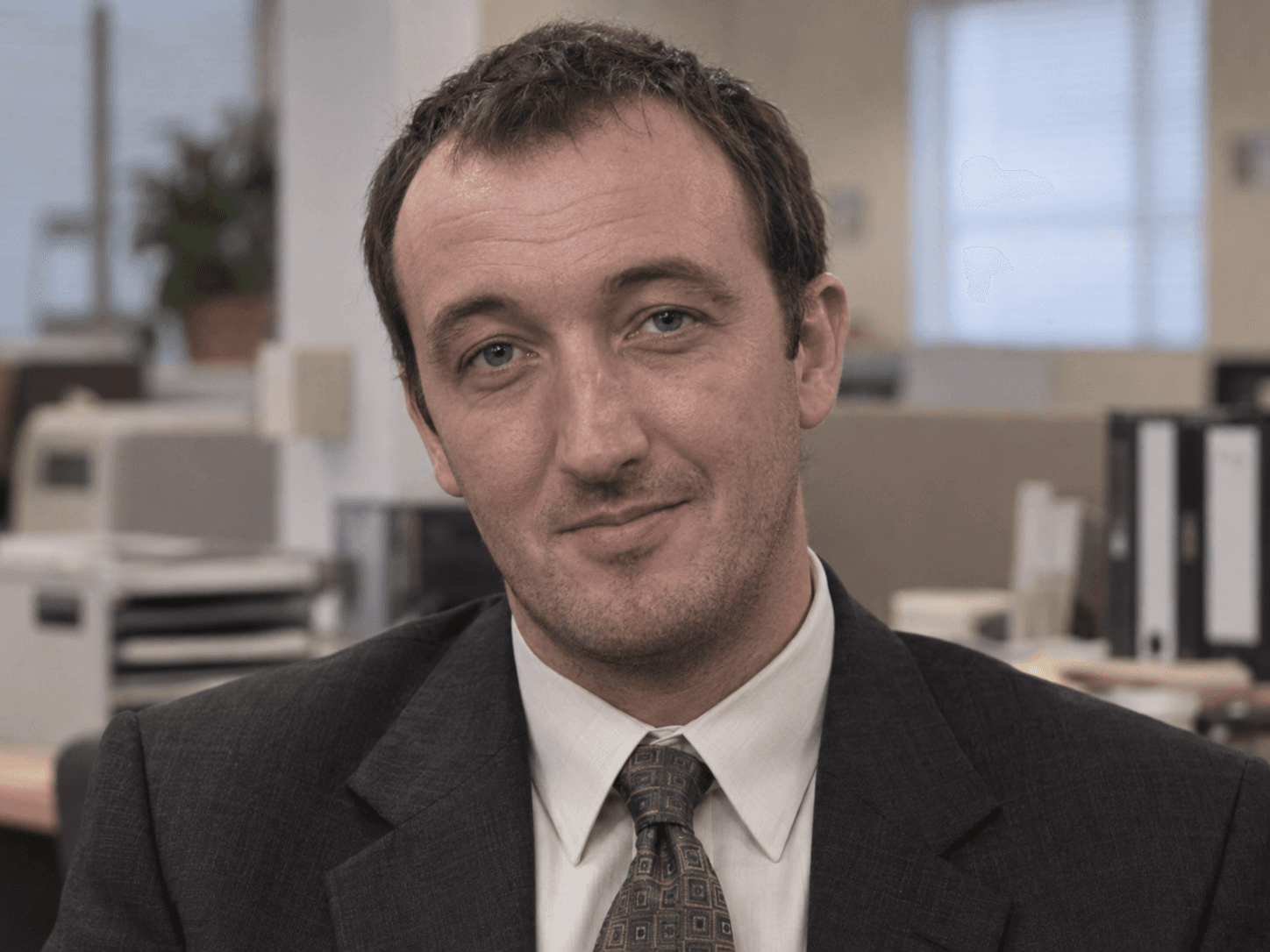
Mackenzie Crook as Gareth Keenan is the team leader and assistant to the regional manager (Gareth would like you to use the full title). Territorial Army weekend warrior, humourless, forever being wound up by Tim. Patrick Baladi as Neil Godwin arrives as the Swindon branch manager and eventually as Brent's boss, playing the infuriatingly smooth career professional Brent cannot stand. Ewen MacIntosh as "Big Keith" is a deadpan masterpiece. A man whose inner life you can only guess at, always eating, rarely speaking, utterly authentic.
The supporting bench is a murderer's row of character actors:
Stephen Merchant
Co-creator / Co-writer / Co-director
Oliver Chris
Ricky Howard
Patrick Baladi
Neil Godwin
Ewen MacIntosh
Big Keith
Stacey Roca
Rachel
Mackenzie Crook
Gareth Keenan
Ralph Ineson
Finchy (Chris Finch)
Ricky Gervais
David Brent
Every one of them is calibrated for documentary realism. No sitcom mugging, no winks. They behave like people who have forgotten the camera is there, which is exactly what the format needs.
Work, mostly. The quiet horror of it. The way an ordinary office day eats up the best hours of your twenties and thirties and hands you nothing memorable in exchange. Gervais and Merchant understood that the British workplace sitcom had to do more than mine daft bosses for jokes. It had to take the boredom seriously, treat it as the subject, and find the comedy inside it rather than stapled on top.
It is also about self-deception. Brent is the obvious study, but he is not the only one. Gareth has built an entire personality around the fiction that he is a kind of reservist special forces operator trapped in a paper merchant's office. Tim tells himself this job is a placeholder. Dawn tells herself her fiancé is going to change. Everyone at Wernham Hogg has a little story they tell themselves about the version of their life that is just about to start. The camera catches them telling the story and not believing it.
And it is about English social embarrassment as a near-religious force. The silence after a Brent joke that lands nowhere is scored like a horror film. The wince becomes a punchline in its own right. No laugh track (a genuinely radical choice in 2001 on BBC Two) means the viewer has to sit in the awkwardness with the characters, and the show gets a huge amount of mileage out of that discomfort.
The look of the show is the point. Handheld camera, natural office lighting, the faint fluorescent wash of a mid-tier industrial estate. The mockumentary conceit is played absolutely straight. Characters glance at the lens when they know they have been caught. Interview cutaways break up the action. The camera pushes in at the exact wrong moment, lingers on a face a beat too long, and you feel every second of it.
Sound design matters just as much. Tim drumming a pen on his desk. A kettle in the background. The hum of a printer. Ambient office noise sits under the dialogue the way it does in actual offices, and it does more work for the realism than any establishing shot could. The opening titles, Handbags and Gladrags performed by Big George Webley, set the mournful tone before a word is spoken. A song about wasted life over footage of a roundabout in Slough. That is the show in forty seconds.
The Office UK cleaned up at the 2004 BAFTAs, winning Best Situation Comedy and Best Comedy Performance, among others, and went on to win two Golden Globes in 2004, the first British sitcom ever to do so. Critics had it on the best-of-the-decade lists before the decade was half done.
The international remake tree is where the full scale of its influence becomes clear. The Office US is the famous one, nine seasons of warmer, broader, sweeter workplace comedy built on the Gervais/Merchant chassis. But there are also versions in France, Germany, Israel, Chile, Sweden, Finland, Canada and the Czech Republic. No British sitcom has ever been franchised on that scale. That is genuine influence, not just awards-season noise.
A fourteen-episode run that rewired what a sitcom was allowed to feel like.
For British comedy specifically, you can trace a direct line from The Office to almost everything that followed in the 2000s and 2010s, from Peep Show cranking the uncomfortable first-person gag to maximum, to The Thick of It using handheld and improvisation to sell political farce, to Derry Girls treating ordinary life as sitcom subject matter without apologising for it.
It works because Gervais and Merchant refused to let Brent off the hook and refused to hate him either. That is the hard balance, and it is the one the imitators usually miss. Brent is a bad manager and a worse comedian. He is also a lonely man who wants to be liked, and the show never loses sight of that second fact. My hunch is that the reason The Office UK still holds up, twenty years on, is that everything in it was written to be true first and funny second.
The US remake is wider, more generous, easier to rewatch on a hungover Sunday. Fair enough, and I have got nothing bad to say about it. But the UK version is tighter, harder, and more willing to sit inside the sadness. Fourteen episodes is all it needs. I rewatch the Christmas Special most Christmases and it lands harder than almost any other piece of British television I can think of. A proof of what a sitcom can do when it commits to the bit and trusts the audience to keep up.
Not a bad shout for a paper company in Slough.
Lucy Davis
Dawn Tinsley
Martin Freeman
Tim Canterbury