Archie Madekwe
About Archie Madekwe
Archie Madekwe is a British actor whose rapid ascent from London stage productions to leading roles in major Hollywood films has marked him as one of the more striking young talents to emerge from the United Kingdom in the late 2010s and early 2020s. Born on 10 February 1995 in London, Madekwe grew up in the city's diverse cultural milieu and was drawn to performance from an early age. He trained at the Identity School of Acting, the same London institution that has produced figures such as John Boyega and Letitia Wright, an environment that emphasises craft and self-reliance for actors of colour navigating an industry that has not always made space for them. That training laid the groundwork for a career that has so far spanned prestigious theatre, prestige television and effects-driven blockbusters with equal facility.
Madekwe's earliest screen work came in British television, including appearances in series such as the supernatural drama Midnight Sun and the period piece Harlots, the Hulu and ITV co-production set in eighteenth-century London's brothel culture. In Harlots he played a young man caught up in the moral and economic complexities of Georgian society, and the role offered an early showcase for the precise, watchful screen presence that would become a signature. Around the same time he was working steadily in theatre, including a celebrated turn in the Royal Court's Cyprus Avenue opposite Stephen Rea, a play whose disturbing material demanded a young performer capable of holding his own against a formidable veteran. Critics noticed, and the role helped position him for the leap into film.
That leap arrived in 2019 with Ari Aster's folk-horror feature Midsommar. Madekwe played Simon, one half of a British couple visiting the Hårga commune in rural Sweden, and his fate within the film's slowly tightening dread became one of its most discussed sequences. Although his screen time was relatively brief, the role placed him inside a culturally significant horror picture and connected him with one of the more distinctive American auteurs working in the genre. Midsommar widened his profile internationally and introduced him to the kind of audiences who follow casting choices closely.
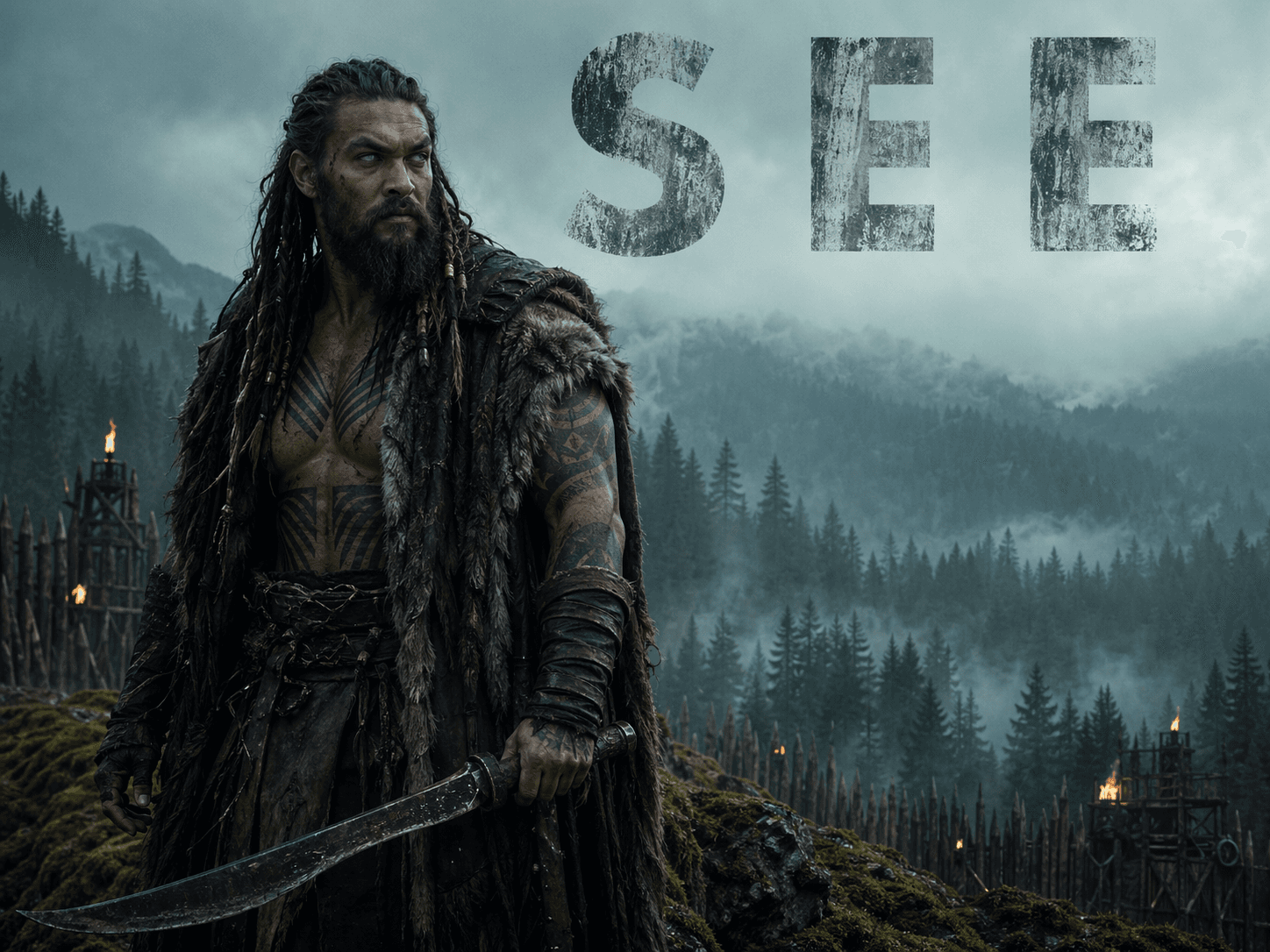
The following year he joined the Apple TV Plus dystopian drama See, created by Steven Knight and headlined by Jason Momoa. Madekwe took the role of Prince Kofun, the son of Momoa's tribal leader Baba Voss, in a post-apocalyptic world in which humanity has lost the sense of sight. Across three seasons he was given an unusually substantial arc for a young supporting actor, charting Kofun's coming of age, his troubled paternity storyline and the moral compromises forced upon him by war and politics. The role demanded extensive physical training, including swordwork and stage combat, and exposed him to long-form serialised storytelling on a prestige streaming platform. By the time See concluded in 2022 he was visibly more confident, and the work served as a bridge from supporting parts to the leading roles that followed.
Madekwe's biggest commercial breakthrough came in 2023 when Sony's Gran Turismo, directed by Neill Blomkamp, cast him as Jann Mardenborough, the real-life British gamer who improbably became a professional racing driver after winning a Nissan-sponsored competition based on the long-running PlayStation simulator. Carrying a studio film opposite David Harbour and Orlando Bloom was a significant test, and Madekwe met it by grounding the picture's sports-movie uplift in a quiet, observed performance built around Mardenborough's introversion and obsessive focus. He underwent extensive driver training to handle the racing sequences, much of which was filmed practically on real circuits including the Nürburgring, and his ability to convey concentration through small adjustments of expression while strapped into a cockpit became one of the film's quieter pleasures. Mardenborough himself worked on the production as a stunt driver, lending an unusual authenticity to the project.
The same year saw Madekwe appear in Emerald Fennell's polarising satire Saltburn, in which he played Felix's friend Farleigh Start, an American cousin of the Catton family caught between insider privilege and outsider precarity. Sharp-tongued, watchful and eventually casualty-prone, Farleigh gave Madekwe a chance to operate in a register quite different from the earnest sincerity of Gran Turismo. The role required a comic timing edged with cruelty, an ability to make snobbery seductive without endorsing it, and a willingness to be the human focus of one of the film's most uncomfortable set-pieces. Saltburn became a cultural talking point through its theatrical and streaming runs, and Madekwe's performance was widely singled out as one of its strongest.
His work has continued to span scales. He appeared in the Russo Brothers' globe-trotting Amazon Prime Video spy series Citadel, taking part in the show's intricate flashback structure and contributing to a sprawling international cast that included Richard Madden and Priyanka Chopra Jonas. Off-screen he has spoken in interviews about the importance of mentorship at the Identity School of Acting and about his enthusiasm for working with first-time and independent directors alongside major studio assignments. He has cited filmmakers such as Barry Jenkins and Steve McQueen as influences and has expressed a particular interest in roles that examine masculinity, family inheritance and class.
Madekwe maintains a relatively private personal life, rarely discussing relationships in the press and tending to direct interview attention toward the projects themselves and the collaborators around them. He is known among co-stars and crews for an unusually thorough approach to preparation, including the immersive driver training he undertook for Gran Turismo and the fight choreography that defined his work on See. Still in his early thirties, he has already accumulated a body of work that ranges across folk horror, prestige streaming, sports biography and class satire, and he stands as one of the most quietly versatile actors of his generation. Whatever the reception of any individual project, his trajectory suggests a performer interested less in stardom for its own sake than in the steady accumulation of interesting parts under interesting filmmakers, and the next decade of his career is likely to be watched closely on both sides of the Atlantic.