Anthony Boyle
About Anthony Boyle
Anthony Boyle is a Northern Irish actor whose ascent from the working-class streets of West Belfast to the marquees of London, Broadway and prestige American television has been one of the more remarkable trajectories in recent British and Irish acting. Born on 8 June 1994 and raised in the Poleglass estate on the outskirts of Belfast, Boyle grew up in a tightly knit Catholic family during the long, uneasy aftermath of the Troubles, an upbringing that has visibly informed both his choice of roles and the watchful intensity he brings to them. He has spoken openly about how unlikely a career in acting once seemed to him, the profession feeling, in his telling, like something reserved for boys from a different postcode.
His route in came through community theatre and a youth programme at the Lyric Theatre in Belfast, before he travelled across the Irish Sea to train at the Royal Conservatoire of Scotland in Glasgow, graduating in 2016. The transition from drama school to professional stage was almost immediate and almost vertiginous. Within months of finishing his training he had been cast in the original West End production of Harry Potter and the Cursed Child, the two-part stage continuation written by Jack Thorne from a story by J. K. Rowling, John Tiffany and Thorne. Boyle played Scorpius Malfoy, the bookish, anxious, wildly endearing son of Draco, and he turned what could have been a curio of a role into the show's emotional engine. Critics singled him out almost universally; audiences adopted him as the production's breakout figure.
The recognition that followed was substantial. At the 2017 Olivier Awards he won Best Actor in a Supporting Role, becoming one of the youngest performers ever to take that prize and, notably, doing so for his professional stage debut. He reprised the role on Broadway when the production transferred to the Lyric Theatre in New York in 2018, and was nominated for a Tony Award for Best Featured Actor in a Play, alongside a Drama Desk Award nomination. That early double of an Olivier and a Tony nod established him as a serious theatrical talent rather than a one-night sensation, and it gave him the leverage to be choosy about screen work as it began to arrive.
Film and television followed without ever crowding out his theatrical instincts. He had small but well-judged turns in The Lost City of Z, directed by James Gray, and Steven Spielberg's The Post, gaining an early on-set education from filmmakers at the top of their craft. He played Gavroche-adjacent youthful zeal in the BBC's lavish 2018 adaptation of Les Misérables, and brought a quiet, broken dignity to the role of an IRA volunteer in the 2019 thriller The Journey-adjacent landscape of post-conflict drama. He was a memorable presence too in Jon S. Baird's Tetris, the 2023 Apple TV+ feature about the Cold War scramble to license the Soviet puzzle game, where his coiled performance as the entitled, mercurial Kevin Maxwell provided much of the film's antagonism opposite Taron Egerton.
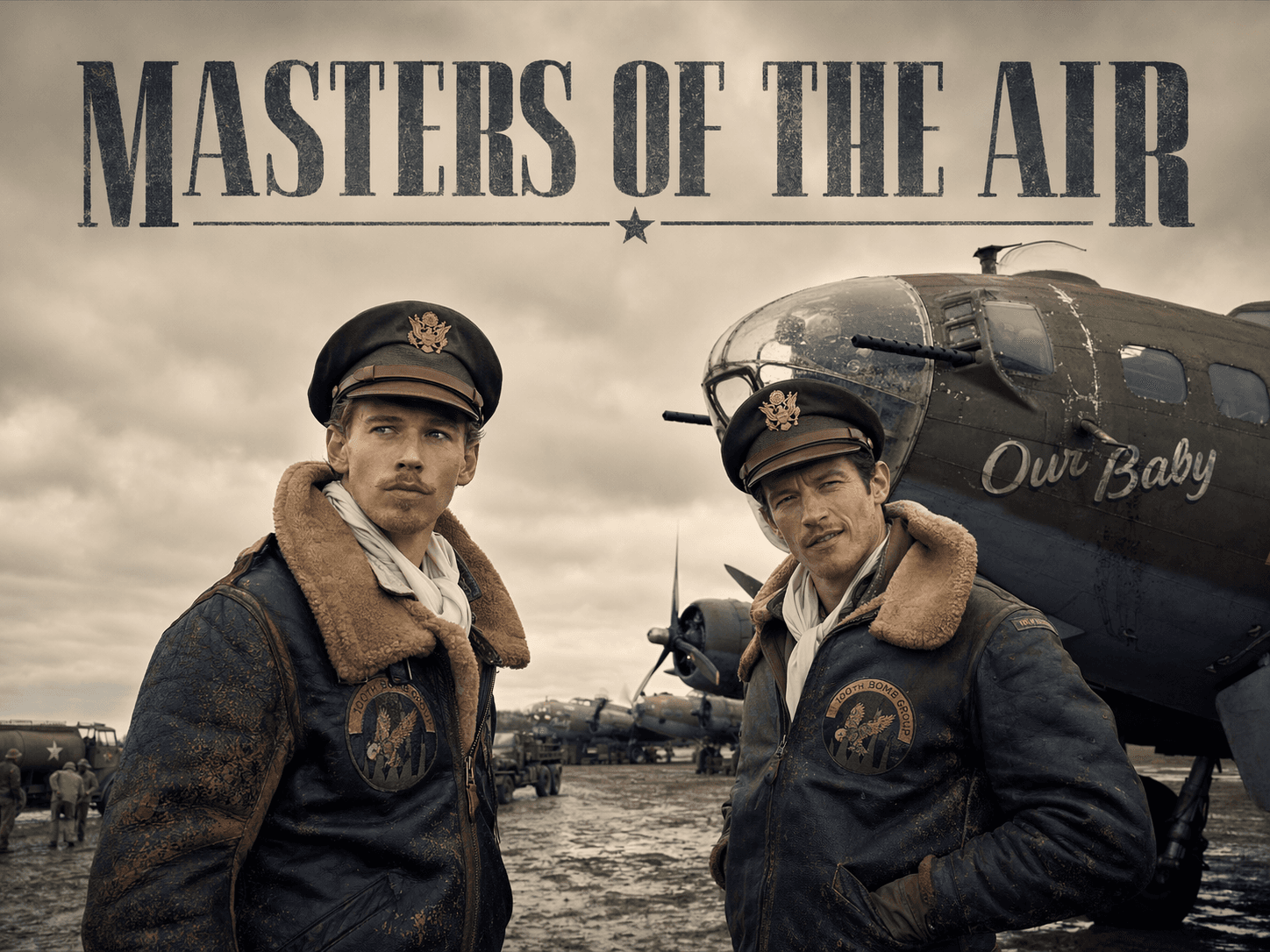
It was in 2024, however, that Boyle's screen career arrived in earnest, in the form of three near-simultaneous lead performances that effectively redrew the map of which young actor American showrunners reach for first. In Apple TV+ and Steven Spielberg and Tom Hanks's long-gestating air-war drama Masters of the Air, he played Lieutenant Harry Crosby, the bookish, airsick navigator of the 100th Bomb Group whose memoir A Wing and a Prayer formed one of the show's primary sources. Crosby is the series' narrator and conscience, and Boyle carried that responsibility with an unshowy intelligence that grounded the more spectacular sequences around him. Almost immediately afterwards, in Apple's true-crime limited series Manhunt, he disappeared into the role of John Wilkes Booth, the assassin of Abraham Lincoln, charting Booth's vanity, theatricality and twelve-day flight through the Maryland and Virginia countryside with a chilling commitment that drew strong reviews.
Then came Say Nothing, the FX and Disney+ adaptation of Patrick Radden Keefe's acclaimed non-fiction book about the disappearance of Jean McConville and the long shadow of the IRA in Belfast. Boyle played a young Brendan Hughes, the legendary Provisional commander known as The Dark, with a wiry charisma and a moral complication that anchored the series. For a Belfast-raised actor of his generation, the role was clearly more than another job, and his performance has been read as something close to a definitive statement of intent: that he intends to use his platform to interrogate the place and history that made him.
Beyond those headline projects, Boyle has continued to develop quietly across formats. He has appeared in the apocalyptic survival series The Plot Against America in supporting capacity earlier in his career, has lent his voice to audio drama, and remains a regular presence in British and Irish theatre when scheduling allows. He has been attached to several upcoming features in development, including projects with established auteurs drawn to his combination of stillness and danger. Industry profiles have repeatedly compared his discipline and range to a previous generation of Irish leading men, while noting that he resists being slotted neatly into any single category of soldier, terrorist, victim or rogue.
Off-screen Boyle has remained, by the standards of the modern publicity industry, notably private. He still talks about Belfast with the affection and ambivalence of someone who left to do something his city did not obviously offer, and he has been a thoughtful interviewee on the politics of representing the Troubles on screen, the responsibilities of working with real families' grief, and the practicalities of an actor's life on long American shoots. He has cited Stephen Rea, Liam Neeson and Ciaran Hinds among the Northern Irish actors whose careers he watches as templates, while making clear that he intends to write his own.
At thirty, with an Olivier already in the cabinet, a Tony nomination behind him, and three lead performances released in a single year, Anthony Boyle is positioned not as a promising newcomer but as one of the defining young actors of his moment.