Anna Deavere Smith
About Anna Deavere Smith
Anna Deavere Smith is an American actress, playwright, professor, and author whose singular contributions to the American stage helped invent and popularize a genre often called documentary theatre or verbatim theatre. Born on September 18, 1950, in Baltimore, Maryland, she grew up in a segregated city as the eldest of five children. Her father owned a coffee and tea business, and her mother was an elementary school principal. The cadences of family life, church, and a Black Baltimore neighborhood gave her an early ear for the rhythms of American speech, an instinct that would later become the foundation of her artistic method. She attended Beaver College, now Arcadia University, in Pennsylvania, and then moved to San Francisco to pursue acting at the American Conservatory Theater, where she earned a Master of Fine Arts in 1976.
Smith spent the late 1970s and early 1980s working as a stage actress and a teacher, gradually developing a practice that would distinguish her from her peers. She began conducting interviews with ordinary and extraordinary people, recording their words and then performing those words back, verbatim, on stage. She wore minimal costume changes, used only the props the speakers themselves seemed to evoke, and channeled the speech patterns, hesitations, repetitions, and breath of each subject. The resulting performances were neither pure journalism nor conventional acting but something in between, a form she eventually grouped under the umbrella project On the Road: A Search for American Character. Across that long-running series she has interviewed thousands of people and built solo theatrical pieces from the transcripts.
Her breakthrough came in 1992 with Fires in the Mirror, a one-woman play built from interviews she conducted in the wake of the 1991 Crown Heights riot in Brooklyn, when tensions between Black and Hasidic Jewish residents erupted after a tragic accident and a subsequent fatal stabbing. Performing more than two dozen real people, from neighborhood teenagers to civil rights leader Reverend Al Sharpton to scholar Letty Cottin Pogrebin, Smith offered audiences a layered portrait of grief, rage, history, and misunderstanding. The play won an Obie Award, was named a finalist for the Pulitzer Prize for Drama, and was later filmed for the PBS series American Playhouse. It announced her as a major theatrical voice with a method that could illuminate the country's most intractable conflicts without flattening them into argument.
She followed that success in 1993 and 1994 with Twilight: Los Angeles, 1992, drawn from interviews she conducted in the aftermath of the Rodney King verdict and the uprising that swept Los Angeles. Once again playing dozens of speakers, including former police chief Daryl Gates, talk-show host and activist Cornel West, juror Maria, scholar Mike Davis, and Korean American shop owner Mrs. Young-Soon Han, Smith stitched together a chorus of perspectives on race, policing, immigration, and class. The piece moved from the Mark Taper Forum in Los Angeles to the Public Theater and then to Broadway, earning two Tony Award nominations and a second Obie. A film version directed by Marc Levin was released in 2000.
In the years that followed, Smith continued to build solo plays out of long reporting projects. House Arrest examined the American presidency, with material drawn from interviews ranging from journalists to politicians. Let Me Down Easy, which premiered in 2008, took on illness, mortality, and the American health care system through voices that included cyclist Lance Armstrong, model Lauren Hutton, Texas Governor Ann Richards, and Cambodian human rights worker Susan Youk. Notes from the Field, first staged in 2015 and filmed for HBO in 2018, turned to the school-to-prison pipeline and racial inequity in American public life, drawing on interviews with students, teachers, public defenders, ministers, and the Reverend Bryan Stevenson. Across these works she refined a practice that combines investigative rigor with theatrical empathy.
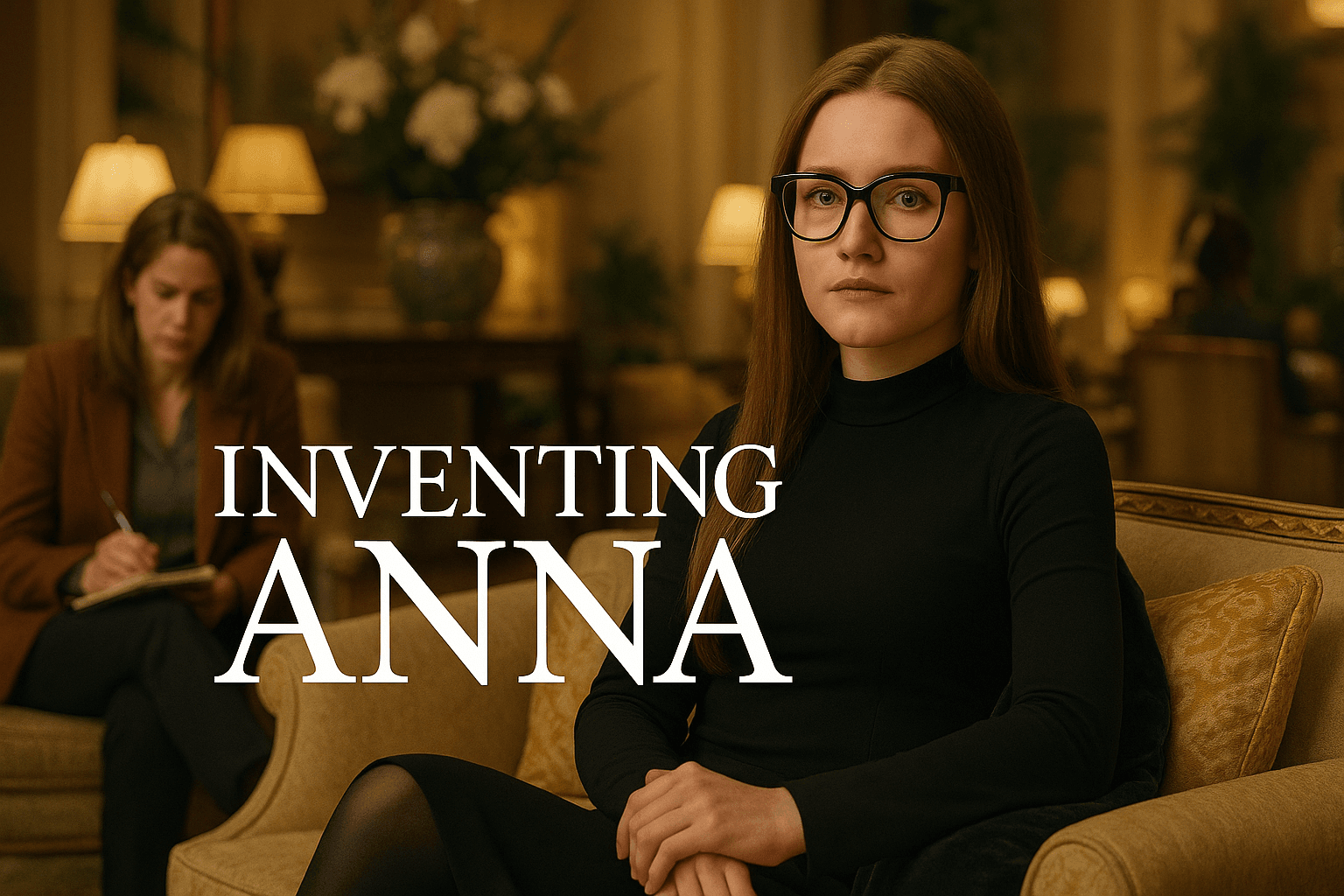
Smith's screen career has run alongside her stage work and introduced her to a much wider audience. She played National Security Advisor and later National Security Adviser to the President Dr. Nancy McNally on Aaron Sorkin's The West Wing through much of its run, beginning in 2000. She joined Edie Falco's Nurse Jackie as hospital administrator Gloria Akalitus, a role she played for the entire seven-season run from 2009 to 2015. More recently she portrayed defense attorney Todd Spodek's mother in Shonda Rhimes's Inventing Anna in 2022 and appeared as Tish Harewood, mother of the title character, in the comedy Black Monday. Her film credits include Philadelphia, The American President, The Human Stain, Rachel Getting Married, and Rebel in the Rye. She has also lent her presence to series such as Madam Secretary, For the People, and Your Honor.
Alongside her acting and playwriting, Smith has been one of America's most influential teaching artists. She has held professorships at Stanford and at New York University, where she founded the Institute on the Arts and Civic Dialogue and serves on the faculty of the Tisch School of the Arts and the School of Law. She has published books that explore her process and her thinking, including Talk to Me, Letters to a Young Artist, and Notes from the Field. Her honors are extensive. She received a MacArthur Fellowship in 1996, the National Humanities Medal from President Barack Obama in 2012, the Dorothy and Lillian Gish Prize, the George Polk Career Award for journalism, and honorary degrees from numerous universities. In 2015 she was awarded the Jefferson Lecture by the National Endowment for the Humanities, the highest honor the federal government bestows for distinguished intellectual achievement in the humanities.
Now well into her seventies, Smith continues to write, perform, teach, and act on screen. She has spoken often about her belief that listening is a civic act and that careful attention to other people's words is a form of resistance to the flattening of public discourse. Whether playing a White House adviser on television, a hospital bureaucrat in a comedy, or a chorus of strangers on a bare stage, she has spent her career insisting that American identity is plural, contested, and worth hearing in full.