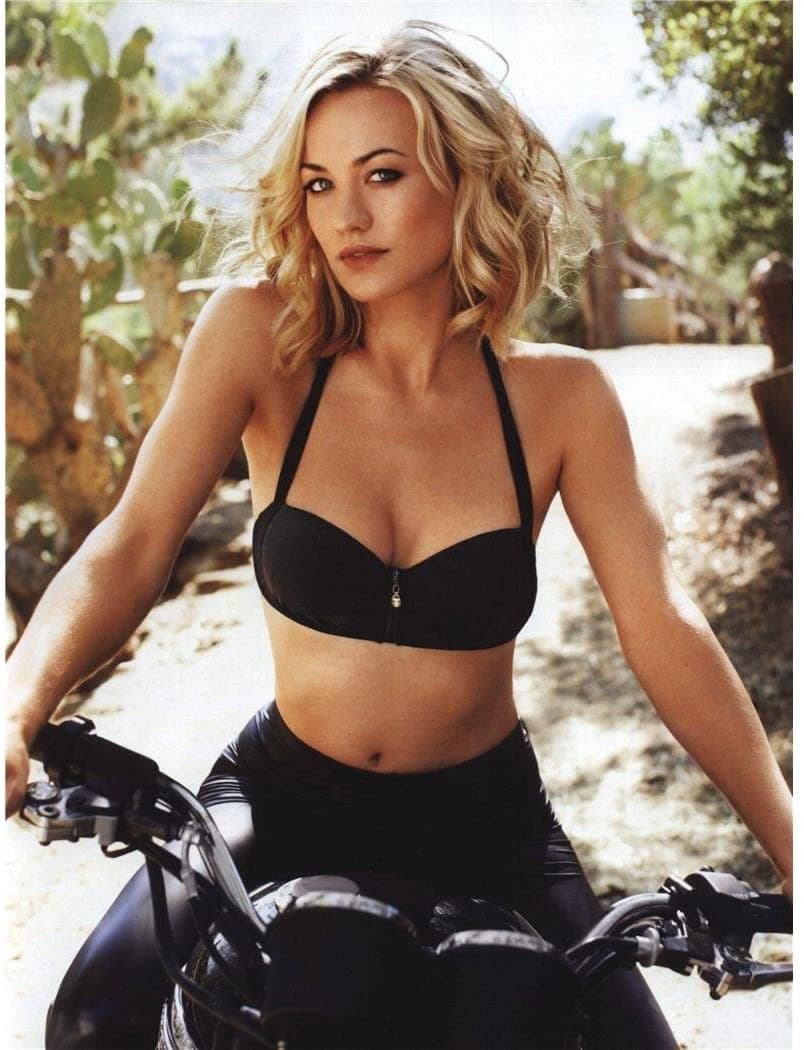
Ann Dowd
About Ann Dowd
Ann Dowd is an American character actress whose late-blooming film and television career has produced some of the most quietly devastating performances of the twenty-first century. Born on January 30, 1956, in Holyoke, Massachusetts, she was the third of seven children in a large Irish-Catholic family. Her father, John Dowd, ran a pharmacy, and her mother, Dolores, raised the children while contending with mental illness, an experience Dowd has spoken about openly as formative to her capacity for empathy on screen. She attended the College of the Holy Cross in Worcester, where she initially studied pre-medicine with the intention of becoming a doctor. A theatre course taken almost on a whim redirected her ambitions, and after graduating she enrolled at the Goodman School of Drama at DePaul University in Chicago, where she trained in the demanding classical repertoire that has underpinned her work ever since.
Dowd spent more than a decade in Chicago theatre during the 1980s, performing with the Goodman Theatre, Steppenwolf, and Wisdom Bridge, and earning a Joseph Jefferson Award nomination for her stage work. She moved to New York in the early 1990s and began accumulating small but memorable screen credits, often cast as nurses, neighbours, mothers, or weary professionals whose plain exteriors concealed deep wells of feeling. She appeared in Sidney Lumet's Garbo Talks, in Lorenzo's Oil, Philadelphia, and The Manchurian Candidate remake, and in television procedurals including Law & Order and its various spin-offs. For more than twenty years she worked steadily without ever quite breaking through, a journeywoman actor whose face was familiar but whose name remained unknown to most viewers.
The performance that changed her trajectory came in 2012 with Craig Zobel's micro-budget independent film Compliance, in which she played Sandra, a fast-food restaurant manager manipulated by a phone caller posing as a police officer into committing escalating acts of cruelty against a young employee. The role demanded a wrenching combination of authority, gullibility, and slowly dawning horror, and Dowd's unflinching commitment to the character's painful ordinariness drew rapturous reviews. When the film's distributor lacked the budget for a traditional awards campaign, Dowd famously spent thousands of dollars of her own money sending screeners to critics. The gamble paid off when she won the National Board of Review's Best Supporting Actress prize, and she was named on numerous critics' top-ten lists. Hollywood, belatedly, took notice.
Television soon offered the kind of substantial roles that had eluded her in film. From 2014 to 2017 she played Patti Levin, the chain-smoking leader of the nihilist Guilty Remnant cult, on Damon Lindelof's HBO series The Leftovers. The role asked her to embody a character who barely speaks for entire episodes, communicating menace, grief, and zealotry through stillness and a relentless gaze, and her work was repeatedly cited by critics as among the finest on television. The Leftovers established Dowd as a master of the unsettling close-up and gave her an enthusiastic cult following that would soon expand exponentially.
In 2017 she was cast as Aunt Lydia Clements in Hulu's adaptation of Margaret Atwood's The Handmaid's Tale, the indoctrinator and enforcer of the theocratic regime of Gilead. The character, only sketched in the novel, became under Dowd's interpretation a fully dimensional portrait of a true believer whose cruelty is inseparable from a warped maternal tenderness. She won the Primetime Emmy Award for Outstanding Supporting Actress in a Drama Series for the first season in 2017 and received further Emmy and Golden Globe nominations across the show's six-season run, alongside Critics' Choice and Screen Actors Guild recognition. Aunt Lydia became one of the defining television antagonists of the streaming era, and Dowd's willingness to locate humanity in her without ever excusing her made the performance unusually rich.
Her newfound prominence reopened the film world to her. She appeared as Joan, the bewildered and grieving mother of a school shooter, in Ari Aster's Hereditary in 2018, and she has spoken of the role and the film with characteristic candour about the emotional toll of such material. The same year she played a kindly grandmother in Marielle Heller's Can You Ever Forgive Me? and a small but pivotal role in American Animals. In 2021 she delivered what many consider the finest performance of her career in Fran Kranz's chamber drama Mass, playing Linda, the mother of a high-school shooter who meets the parents of one of her son's victims for a long, halting conversation in a church basement. The film required her to inhabit shame, love, and unanswerable guilt simultaneously, and her work earned her the Independent Spirit Award nomination and a place on a great many year-end lists; many observers felt she was unjustly overlooked at the Oscars.
Dowd's other credits are extensive and varied. She has appeared in Masters of Sex as the conservative mother of William Masters, in True Detective, Olive Kitteridge, The Path, Good Behavior, and Quiz, and she had a recurring role on St. Elsewhere far earlier in her career. She voiced the menacing Auntie in the animated Spirited Away dub revisits and lent her distinctive voice to several audiobooks. She made her superhero debut in 2024 as Mary Walker in Deadpool & Wolverine, demonstrating her range in a register far removed from prestige drama. She continues to work on stage when schedules permit, including off-Broadway productions at the Atlantic Theater Company.
Dowd lives in New York with her husband, the actor Lawrence Arancio, whom she married in 1984; they have three children. She is known among colleagues for her warmth, her unfussy professionalism, and a generous habit of crediting collaborators rather than herself. In interviews she speaks frequently about the long apprenticeship that preceded her recognition and about the spiritual dimension of acting as an exercise in attention. Her career stands as a reassuring rebuttal to the assumption that screen stardom must come young, and her late-arriving body of work has secured her a place among the most respected American character actors of her generation.