Anant Mahadevan
About Anant Mahadevan
Ananth Narayan Mahadevan, professionally credited across his career as either Anant or Ananth Mahadevan, was born on 27 October 1960 in Thrissur, in what was then the state of Travancore-Cochin and is now Kerala. Born into a Tamil Brahmin family with roots in the south, he was raised largely in Mumbai, where his schooling in the central suburb of Matunga drew him toward the city's busy amateur and professional theatre circuit. That early grounding in stagecraft, particularly in English and Hindi productions, would prove formative, giving him both the discipline of a working actor and the editorial instincts that later allowed him to step behind the camera. By the time he began appearing on screen in the mid-1980s he had already accumulated years of stage experience, and he would go on to build one of the most quietly versatile careers in Indian entertainment, moving fluidly between television, film acting, screenwriting, direction and, eventually, authorship.
Mahadevan's first prolonged exposure to a national audience came through television, where the Doordarshan-era boom of the late 1980s and early 1990s offered character actors steady, visible work. He was a regular presence in landmark serials such as Dekh Bhai Dekh and the Hindi-Urdu sitcom Zabaan Sambhalke, and he later returned to the medium as both performer and director on shows including Aadat Se Majboor. Television was not merely a paycheque for him; he treated it as a craft school, and he would much later distil those years into a memoir, Once Upon A Prime Time, My Journey On Indian Television, published in 2020, which doubled as an affectionate history of the small screen's transformation in India.
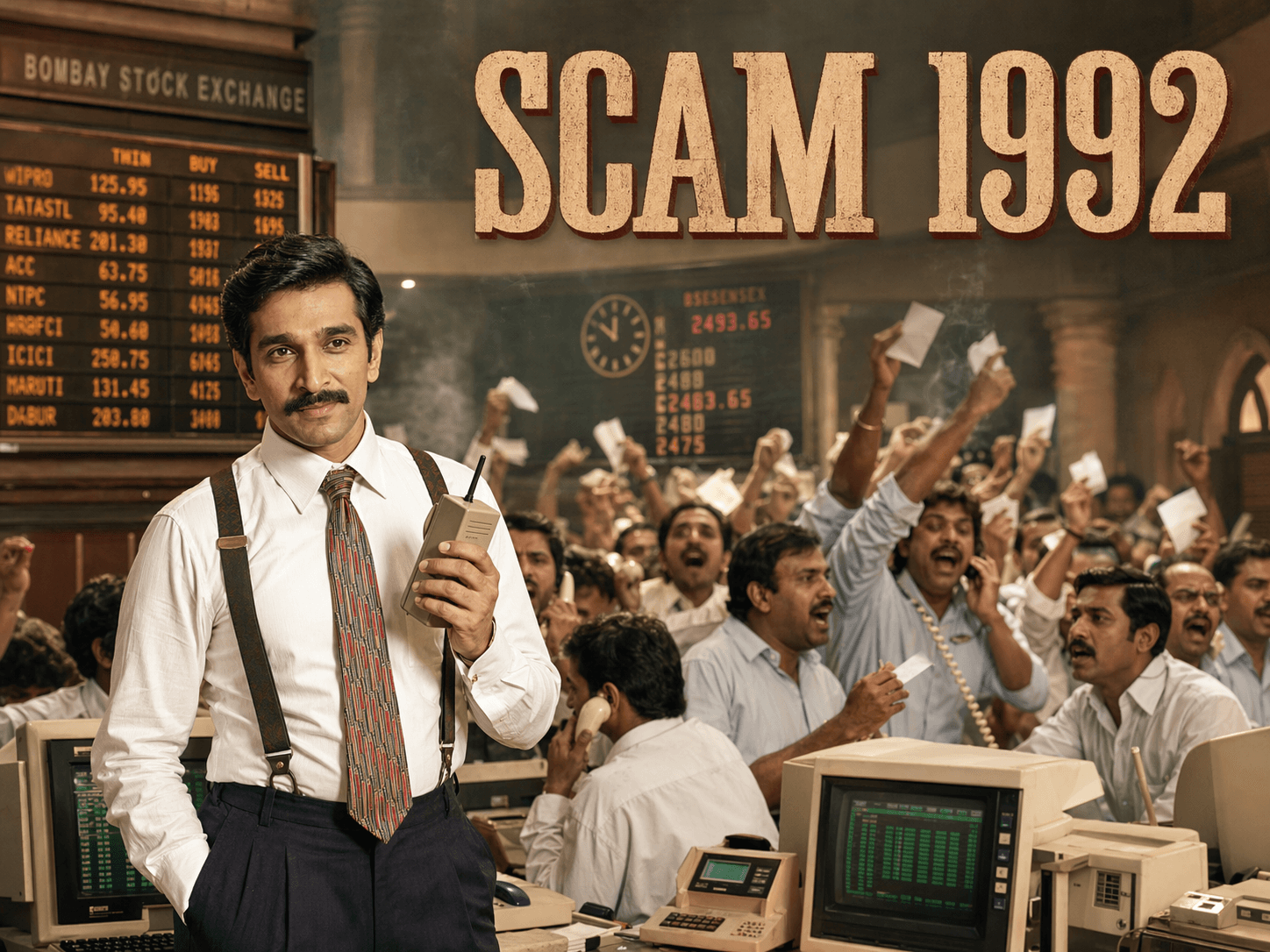
In parallel with his television work, Mahadevan began accumulating film credits, slipping into supporting and character parts that rarely sought the spotlight but consistently found it. He appeared in Yash Chopra's romantic touchstone Chandni in 1989, in Abbas-Mustan's breakthrough thriller Baazigar in 1993 and in dozens of mainstream Hindi pictures across the 1990s and 2000s. His cinematic range eventually extended well beyond Hindi: he worked in Tamil, Telugu and Marathi productions, and in 2018 he turned up in Shankar's enormous bilingual science-fiction spectacle 2.0 opposite Rajinikanth and Akshay Kumar. A later generation of viewers came to know him through Hansal Mehta's acclaimed financial-crime drama Scam 1992: The Harshad Mehta Story in 2020, where his measured, lived-in screen presence fit neatly into the series' restrained period texture. He has also been associated with the anthology Dus Kahaniyaan and with appearances in projects spanning Richie Mehta's Delhi Crime universe and Karan Johar's family epic Rocky Aur Rani Kii Prem Kahaani, the kind of glossy contemporary work that sits comfortably alongside his more austere directorial output.
It is as a director, however, that Mahadevan has most clearly defined his artistic identity. He made his feature debut at the end of the 1990s and broke through with Dil Vil Pyar Vyar in 2002, a nostalgic musical homage to the songbook of R. D. Burman and the romantic Hindi cinema of the 1970s. He followed it with the erotic thriller Aksar in 2006, a commercial success that later spawned the 2017 sequel Aksar 2, and in between he made the politically charged Red Alert: The War Within in 2009, which dramatised the moral compromises of Naxalite insurgency in central India. These mainstream credits, however, sit alongside a parallel body of small, principled, often regional-language films that have come to be the defining strand of his work.
The most celebrated of these is Mee Sindhutai Sapkal, his 2010 Marathi biographical drama about the social activist Sindhutai Sapkal, widely revered as the "Mother of Orphans" for her decades of work raising abandoned children. The film travelled extensively on the festival circuit and brought Mahadevan and his co-writer Sanjay Pawar a National Film Award for their screenplay and dialogue, along with a special jury recognition; it remains, for many critics, the clearest statement of his sensibility, marrying restrained visual storytelling with a deep curiosity about overlooked Indian lives. He pursued a similar register in Gour Hari Dastaan: The Freedom File in 2015, the true story of an unsung freedom fighter battling bureaucratic indifference to have his contribution officially recognised; the film was selected for the Indian Panorama at the International Film Festival of India in Goa and screened at festivals abroad. He also contributed additional screenplay work to R. Madhavan's biographical drama Rocketry: The Nambi Effect in 2022, about the wronged ISRO scientist Nambi Narayanan, extending his recurring interest in real-life figures whose stories had been buried by institutional neglect.
More recent years have seen Mahadevan continue to alternate between languages and registers with notable consistency. Bittersweet, his unsparing drama set among female sugarcane workers in rural Maharashtra, drew international festival attention, and The Storyteller, his Hindi-language adaptation of a Satyajit Ray short story starring Paresh Rawal and Adil Hussain, premiered at the Busan International Film Festival before a wider release. Across this run of films he has been recognised not only by national juries in India but at festivals from Cairo to Shanghai, often picking up awards in writing and direction categories.
Now in his mid-sixties, Mahadevan continues to work prolifically, frequently appearing as a character actor in projects directed by younger filmmakers while shepherding his own quieter productions through development. He is married, has spoken in interviews about a long shared life in Mumbai, and is regularly invited onto festival juries, including international youth-film panels. Taken together, his career spans more than four decades and almost every format Indian screen culture has produced, and yet the through-line is consistent: a craftsman's loyalty to the script, an actor's empathy for unfashionable subjects, and a director's preference for the small true story over the large shiny one.