Alison Wright
About Alison Wright
Alison Wright is a British actress whose quietly devastating work on prestige television has made her one of the most respected character performers of her generation. Though she spent years as a working stage actress before American audiences learned her name, her portrayal of Martha Hanson on FX's The Americans transformed her into a television institution, anchoring one of the most painful and unforgettable arcs of the peak-TV era. She has since built a career defined by emotionally precise, often heartbreaking performances, moving fluidly between period drama, prestige cable thriller, black comedy, and science fiction.
Wright was born on 12 July 1976 in Sunderland, in the north east of England. She grew up in a working-class household and developed an early fascination with performance, though her path into the profession was anything but direct. After finishing school she worked a series of ordinary jobs, including stints in retail, before moving to London to pursue acting in her twenties. She eventually relocated to New York City, where she trained at the William Esper Studio under the Meisner-influenced teacher Maggie Flanigan, and spent years building a career on and off Broadway, in regional theatre, and in small screen roles. That long grounding in theatre is visible in the architecture of her screen work, which tends to favour stillness, listening, and tiny physical calibrations over showy emotional effects.
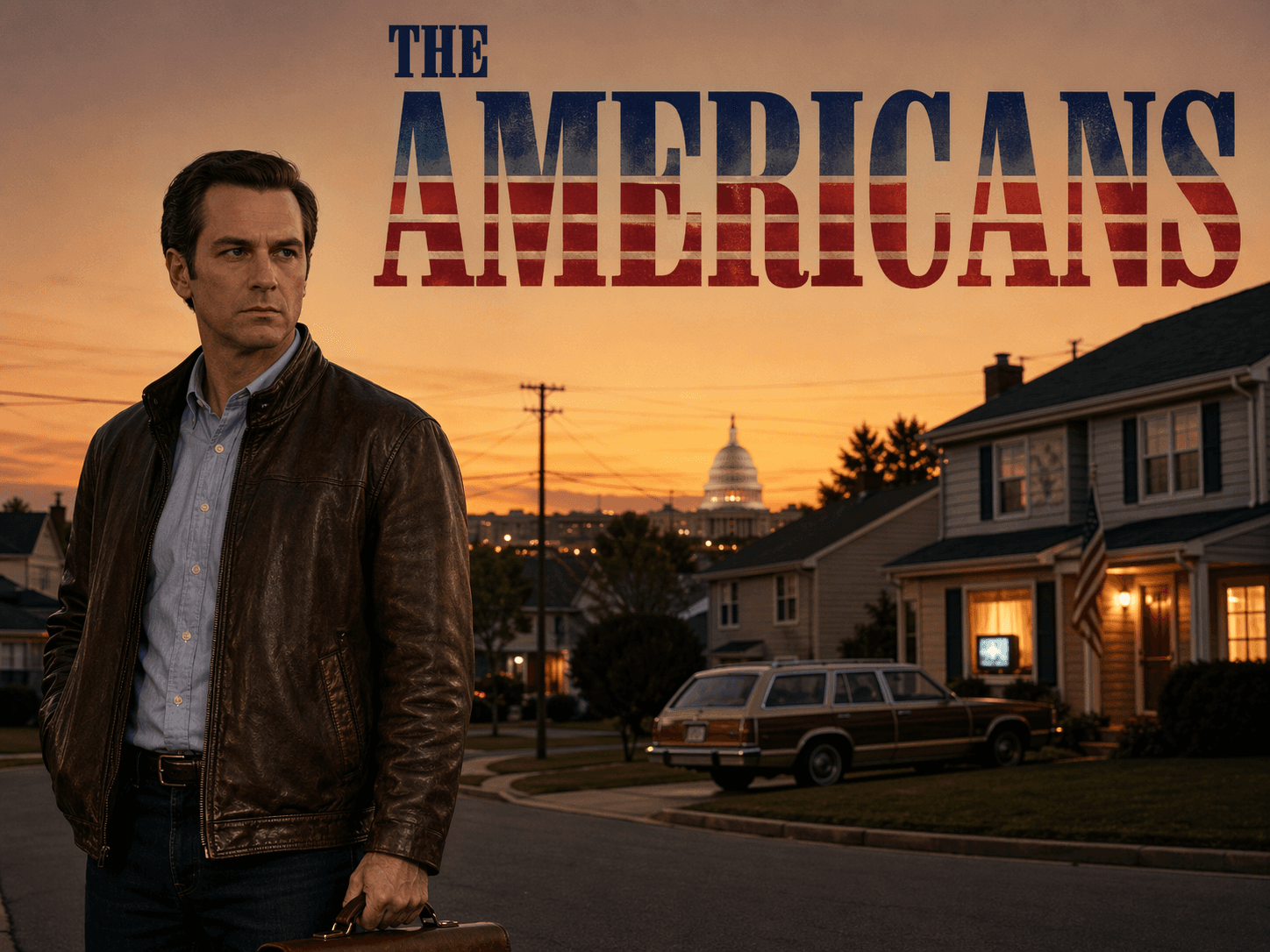
Her television breakthrough came in 2013 when Joe Weisberg and Joel Fields cast her as Martha Hanson in The Americans, FX's Cold War spy drama about two KGB illegals posing as suburban Washington, D.C. travel agents. Martha, the lonely secretary to an FBI counter-intelligence chief, is seduced and married under a false identity by Philip Jennings (Matthew Rhys), who convinces her he is an internal affairs officer named Clark. Over four seasons, Wright traced Martha's slow-motion awakening from trusting new wife to compromised asset to exiled fugitive with a delicacy that critics and fellow actors repeatedly singled out as the show's emotional engine. The 2016 episode in which Martha finally recognises the depth of the deception, and chooses exile in Moscow rather than prison, is widely regarded as one of the finest pieces of acting on any drama of the decade. The performance earned her a Critics' Choice Television Award nomination for Best Supporting Actress in a Drama and a devoted audience campaign for Emmy recognition, and it permanently reframed how casting directors thought of her.
Wright followed The Americans with a run of sharply chosen supporting roles. In 2017 she joined Ryan Murphy's Feud: Bette and Joan as Pauline Jameson, the aspiring writer-director working under Robert Aldrich, a part that allowed her to explore the frustrations of mid-century women boxed out of creative authority. The same year she took the lead in Amazon's Sneaky Pete, the Bryan Cranston and David Shore con-man drama created by Graham Yost, stepping into the role of Julia Bowman, the proprietor of a rural bail-bond business entangled with her sister-in-law's long-lost brother. Across three seasons she gave the show a flinty, lived-in centre, matching Giovanni Ribisi's grifter charm with a bruised competence that felt bracingly unglamorous for a streaming lead.
She reunited with the prestige-cable world in 2020 as Ruth Wardell, later Melanie Cavill's rival and eventual ally, on TNT's Snowpiercer, the post-apocalyptic adaptation of Bong Joon-ho's film, where she stayed for multiple seasons as one of the series' most morally slippery figures. Earlier in her career she had already logged a notable period credit as Lady Anne Hastings in Showtime's The Tudors, and she has continued to weave in and out of historical drama, including a recurring role on Steven Knight's The Serpent Queen for Starz, in which she plays the pragmatic lady-in-waiting Aabis navigating the court of Catherine de' Medici.
Wright has been equally active on film, typically in ensemble work from distinctive auteurs. She appeared in Jim Jarmusch's deadpan zombie comedy The Dead Don't Die (2019), Liz Garbus's missing-persons drama Lost Girls (2020) for Netflix, and Ricky Gervais's After Life-adjacent black comedy Special Correspondents (2016). She had a small but memorable turn in Paul Thomas Anderson's Licorice Pizza (2021) and joined the ensemble of M. Night Shyamalan's Old (2021) as one of the beach's rapidly ageing visitors. She also surfaces regularly in independent features, including the horror drama The Dark and the Wicked (2020) from Bryan Bertino, which earned a strong genre-festival reception. Her voice work on animated and audio projects, including audiobook narration, is a smaller but steady strand of her output.
Theatre has remained part of her identity even as her screen profile has grown. She has worked extensively off-Broadway with companies such as the Atlantic Theater Company and the New Group, appearing in new plays by writers including Ethan Coen, and she made her Broadway debut in Martin McDonagh's Hangmen in its pandemic-delayed 2022 run, playing the publican's wife Alice Wade opposite David Threlfall. Colleagues have spoken often about her preparation, her generosity as a scene partner, and her Sunderland-rooted lack of pretension, qualities that have kept her in demand across tonally very different rooms.
Off screen Wright has kept her personal life largely private. She became a mother in 2017, has spoken in interviews about balancing single parenthood with a working actor's itinerant schedule, and divides her time primarily between New York and Los Angeles, returning regularly to the north east of England to see family. She has been an articulate advocate in the trade press for more roles written for women over forty and for working-class British performers in American television, subjects she often connects to her own long, unglamorous climb.
What unites Wright's best work, from Martha Hanson's wounded stoicism to Julia Bowman's cornered resourcefulness, is a refusal to beg the audience for sympathy. She tends to play women who have already absorbed a great deal of disappointment and are simply deciding what to do next, and she trusts viewers to meet her in the quiet. It is a discipline that has made her, across two decades of steady work, one of contemporary television's most dependable truth-tellers.