Alfred Enoch
About Alfred Enoch
Alfred Lewis Enoch was born on 2 December 1988 in Westminster, London, the son of English actor William Russell and Brazilian actress Balbina Gutierrez. His father, best known to British audiences as Ian Chesterton in the earliest episodes of Doctor Who and as Ted Sullivan in Coronation Street, gave Enoch a front-row view of a working actor's life from childhood, while his mother's Brazilian heritage instilled a fluent command of Portuguese and a cultural dual-identity that has shaped both his career and his public persona. Raised bilingually and later described by interviewers as thoughtful, bookish and slightly shy of the spotlight, Enoch spent parts of his early life between London and Barra do Piraí in Rio de Janeiro state, a connection he has returned to repeatedly in his professional choices.
Educated at the prestigious Westminster School in central London, Enoch went on to read Portuguese and Spanish at The Queen's College, Oxford, graduating in 2010. The combination of classical schooling, Oxbridge language training and a bicultural upbringing produced an actor unusually comfortable with verse, dialect and translation, traits that would later serve him well on the stages of Stratford-upon-Avon and in the accent-fluid world of American network television. Even as a student he was juggling coursework with film sets, having already made his screen debut while still a teenager in one of the most recognisable franchises of the era.
That debut came in 2001, when a thirteen-year-old Enoch was cast as Dean Thomas, the Gryffindor classmate of Harry, Ron and Hermione, in Chris Columbus's Harry Potter and the Philosopher's Stone. He would return to the role, intermittently and with steadily increasing maturity, in Harry Potter and the Chamber of Secrets, Prisoner of Azkaban, Goblet of Fire, Order of the Phoenix, Half-Blood Prince and both parts of Deathly Hallows, becoming one of the very few cast members to appear across the entire eight-film run. Dean's arc, from nervous first-year to a Dumbledore's Army fighter captured by Snatchers, gave Enoch a rare opportunity to grow up on screen alongside his character, and he has often spoken of the Harry Potter set as his informal film school.
After Oxford, Enoch set about building a stage and screen career in his own right. He appeared in the ITV drama Broadchurch in 2013, playing barrister's aide Lee Ashworth's associate, and took supporting parts in British procedurals such as Sherlock and BBC Radio productions before American television intervened dramatically. In 2014, Shonda Rhimes's production company cast him as Wesley "Wes" Gibbins, the quietly intense law student at the centre of How to Get Away with Murder, ABC's Thursday-night companion piece to Scandal and Grey's Anatomy. Opposite Viola Davis's Oscar-winning Annalise Keating, Enoch carried much of the show's moral weight, his watchful stillness offsetting the series' more baroque plotting. Wes was killed off in a cliffhanger at the end of the third season in 2017, a departure that stunned the show's fanbase; Enoch returned for guest appearances in flashbacks during the fourth season, but has been candid in interviews that the exit was a producer-driven creative choice rather than his own.
Rather than chase another network lead, Enoch redirected his energies toward the stage. He joined the Royal Shakespeare Company for the 2015 summer season, playing Edgar in Gregory Doran's widely praised production of King Lear opposite Antony Sher, a performance that earned him an Ian Charleson Award commendation for classical work by an actor under thirty. He followed that with Timothy Sheader's Red Velvet at the Garrick Theatre in the West End, stepping into the role of nineteenth-century African American tragedian Ira Aldridge in Lolita Chakrabarti's acclaimed play, a part previously originated by Adrian Lester. Critics singled out his ability to sustain long, thickly argued speeches without losing the character's interior life, and the production cemented his reputation as a serious stage actor rather than a film-franchise alumnus dabbling in theatre.
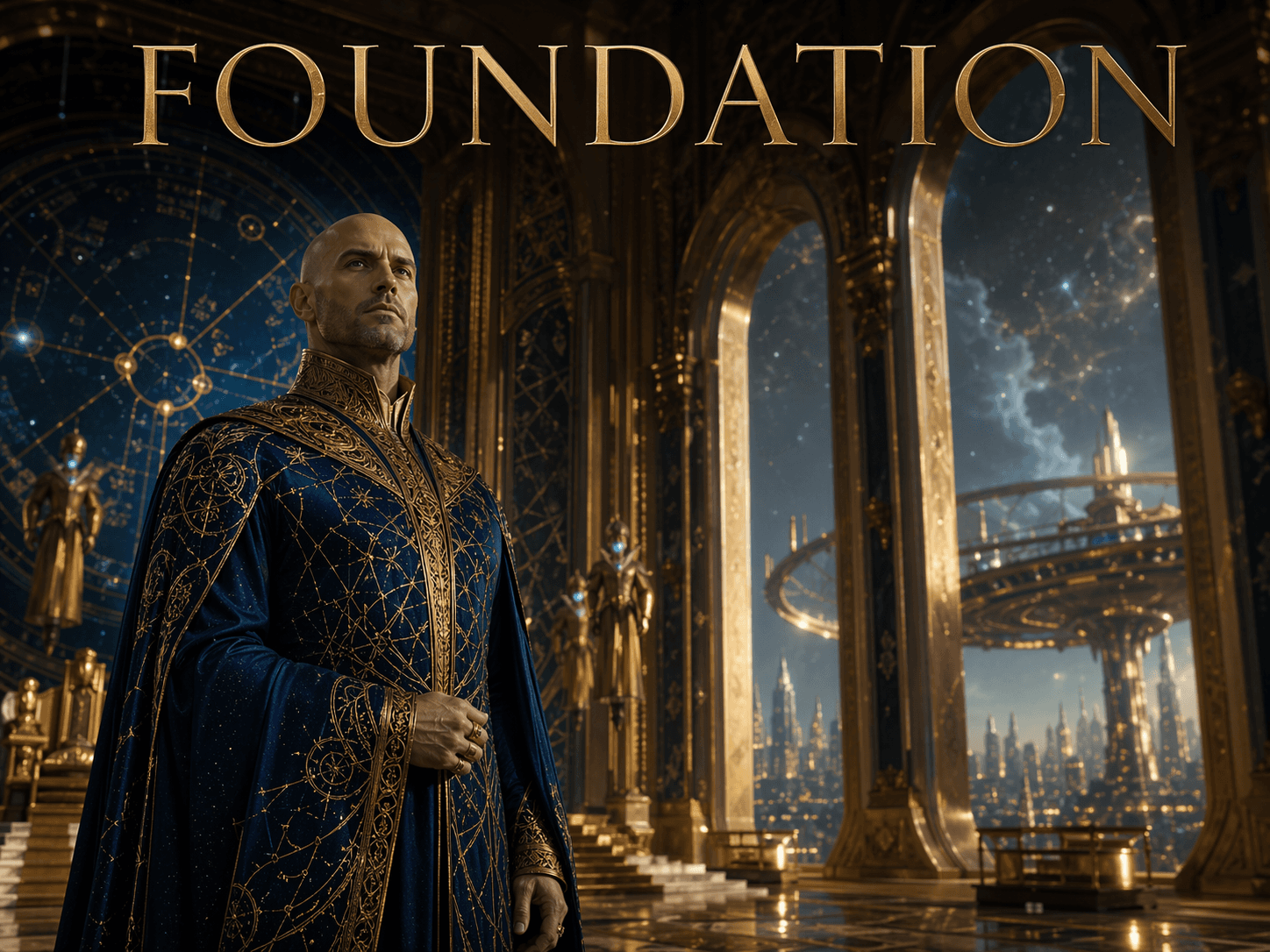
Subsequent theatre credits have included Coriolanus at the Sheffield Crucible and a return to classical work on screen and stage that has punctuated his television assignments. On television, he took the role of Prince Constantin in the Amazon Prime Video adaptation of John Connolly's Charlie Parker sequence as well as the recurring part of Raych Foss in Apple TV+'s lavish Foundation, David S. Goyer's adaptation of Isaac Asimov's novels. As Raych, the adopted son of Jared Harris's Hari Seldon, Enoch appeared prominently in the opening season broadcast from 2021 and returned in flashback and subsequent narrative threads, anchoring some of the show's most emotionally charged sequences against its vast galactic canvas.
He has also worked extensively in Brazil, using his mother tongue to bridge two industries. Roles in the 2019 Globoplay miniseries Ilha de Ferro and in the feature Medida Provisória, directed by Lázaro Ramos and released internationally as Executive Order in 2022, gave him leading-man status in Brazilian cinema and drew attention to issues of race and civil liberties in the country. Fluent Portuguese and a surname that is partly Portuguese-speaking have made him a recognisable face at festivals in Rio and São Paulo, and he has spoken publicly about the importance of anti-racist storytelling in Brazil as well as in the United Kingdom.
Off camera Enoch is notably private. He has lent his voice to audiobooks, most prominently reading works by Jason Reynolds, and has supported literacy and refugee charities. Unlike many of his Harry Potter contemporaries he has largely avoided social media spectacle, preferring long-form interviews in which he discusses classical theatre, language and the politics of representation with an articulate, slightly donnish warmth. That combination, a child-star pedigree, classical training, network-television profile and transatlantic bilingual career, has made Alfred Enoch one of the more quietly versatile British actors of his generation, equally at home declaiming Shakespeare in Stratford, delivering closing arguments in a Philadelphia courtroom, or orbiting a fictional galaxy tens of thousands of years in the future.