Alfonso Dosal
About Alfonso Dosal
Manuel Alfonso Castro Dosal, known professionally as Alfonso Dosal, is a Mexican actor whose career has traced a distinctive arc from the gilded world of Televisa telenovelas to prestige streaming drama and acclaimed art-house cinema. Born on March 13, 1985, in Mexico City, he spent roughly eight formative years of his childhood in Querétaro before returning to the capital, where the density of the theatre and television scene would eventually pull him toward the craft. He trained at Casa Azul, the respected Mexico City acting school founded by Daniel Giménez Cacho and Fernando Bonilla, an institution that has produced a steady stream of young performers equipped for both stage and screen. That technical grounding, unusual among the telenovela ingénues of his generation, would shape the restrained, interior quality that defines his later work.
Dosal made his professional debut in 2006 in the Televisa telenovela Marina, a sprawling romantic drama set on the Mexican Caribbean coast, where he played Ricardo Santibáñez, nicknamed Chuy, across roughly 169 episodes. Coming off that long commitment, he took a short hiatus before returning in 2010 as Sebastián Longoria Andrade in Para Volver a Amar, a role that anchored the series over more than 120 episodes and won him the TVyNovelas Award for Best Young Lead Actor in 2011. That prize, one of the most visible honours in Mexican commercial television, marked him as a rising leading man. In 2012 he was also recognised with a Premios Bravo for Male Revelation in Theatre for his work in the Spanish-language production of John Logan's Rojo, a play about the painter Mark Rothko that required the kind of sustained two-hander discipline rarely asked of telenovela actors. The combination of televisual reach and theatrical credibility gave him an unusual profile for his age.
Through the middle of the 2010s he continued to build his telenovela résumé while edging toward more substantial fare. He co-starred in A que no me dejas in 2015 and 2016, playing Camilo Fonseca opposite Camila Sodi and Osvaldo Benavides across a fifty-plus-episode run, and he began appearing in features including Todos queremos a alguien and the ensemble comedy 3 idiotas in 2017, a Mexican adaptation of the Bollywood hit 3 Idiots. These projects kept him commercially visible but, more importantly, widened the range of registers he was being asked to play. By the time Netflix's aggressive investment in Spanish-language originals began reshaping the industry, Dosal was well positioned to move from network melodrama into the grittier, more internationally oriented productions that would define the next phase of his career.
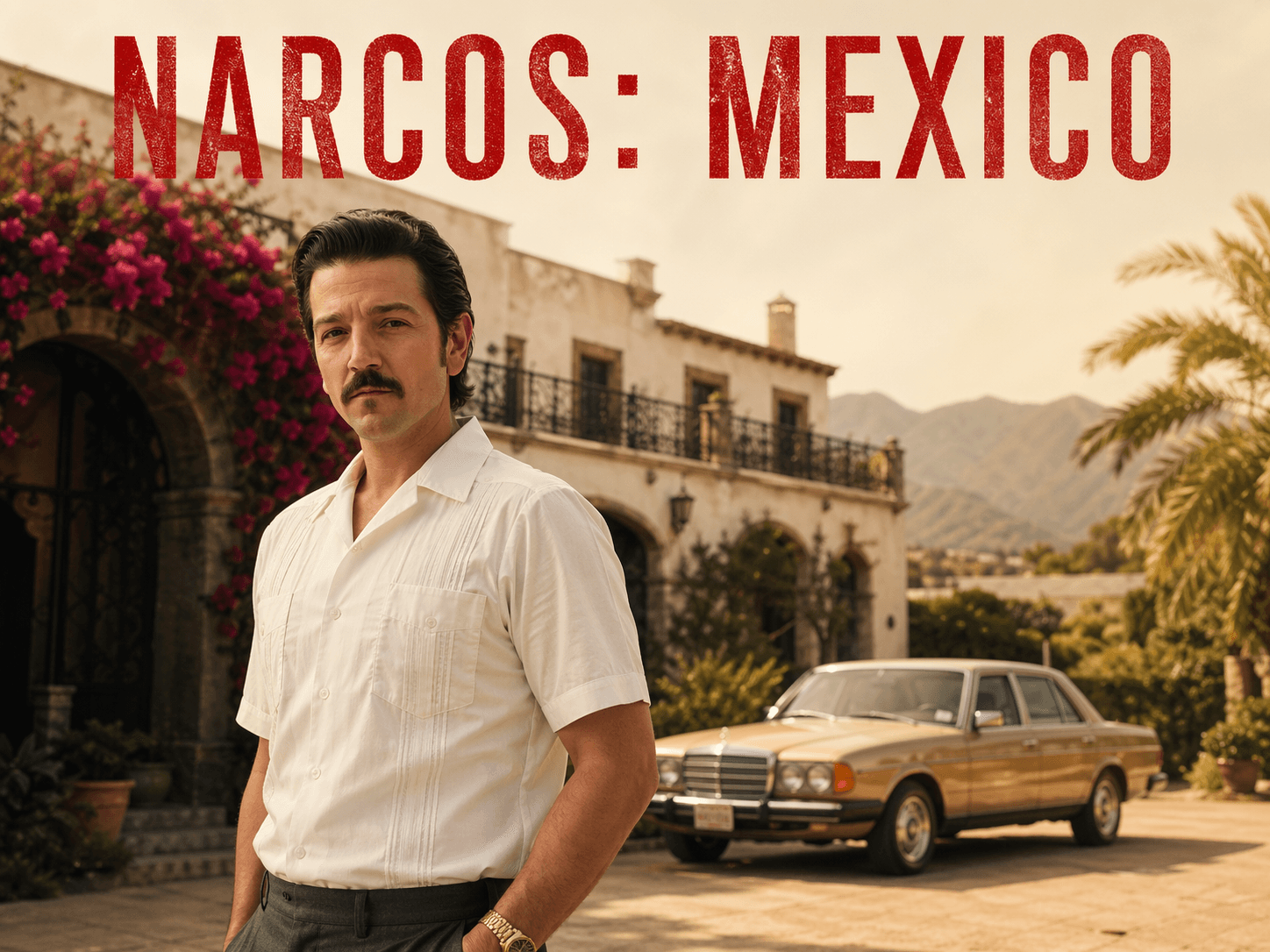
That transition crystallised with Narcos: Mexico, the spinoff and continuation of Netflix's flagship cartel franchise. Introduced as a recurring figure in the first season in 2018 and promoted to the main cast for the second and third seasons in 2020 and 2021, Dosal played Benjamín Arellano Félix, the eldest brother and strategic mind of the Tijuana-based Arellano Félix Organization. Across twenty-plus episodes he had to render one of the most feared figures in modern Mexican organised crime as something more than a stock villain, building a man who reads as quiet, devout and watchful even as he oversees the ruthless consolidation of a cartel. The role required him to hold his own opposite Diego Luna's Miguel Ángel Félix Gallardo and later Scoot McNairy's DEA narrator, and it introduced Dosal to an English-speaking audience that had largely missed his telenovela years. The performance is widely credited with cementing his reputation as a dramatic leading man rather than a romantic lead.
He has also been a frequent presence in the long-running narco saga El señor de los cielos, the Telemundo tentpole that began in 2013 and continued rolling out new seasons into the 2020s, as well as in Netflix's teen thriller Control Z, which ran from 2020 to 2022 and deals with a hacker exposing secrets at a Mexico City high school. His willingness to move fluidly between youth-skewing streaming drama, border-region crime series and prestige film has made him one of the more flexible Mexican actors of his cohort, equally at home in the moody aesthetics of a Netflix original and the heightened world of a telenovela.
His film work in the 2020s has further complicated the picture. In Huesera: The Bone Woman, Michelle Garza Cervera's 2022 psychological horror feature, Dosal played Raúl, the nominally supportive but increasingly alienated husband of a pregnant woman haunted by a folkloric bone-cracking presence. The film became one of the most internationally celebrated Mexican genre debuts of its year, and his recessive, watchful performance was praised as a counterweight to Natalia Solián's consuming lead. He followed it with a leading role as the volatile Daniel Zavala in the 2023 comedy Bad Actor, a performance that earned him a Best Actor win from the Mexican Cinema Journalists association and a 2025 Ariel Award nomination in the same category, the national film academy's highest recognition. The same year he took the lead in the Netflix Western series Bandidos as Miguel Morales, headlining a treasure-hunt ensemble that was among the platform's bigger Spanish-language launches.
Away from the work, Dosal has been notably candid for an actor in the Mexican mainstream. In December 2010, at the height of his first wave of telenovela fame, he publicly came out as bisexual, a disclosure that drew attention both because of his leading-man status and because the industry around him had tended to discourage such openness. He has been in a relationship with Solana Azulay since 2012, and the couple have two children. That stable private life, combined with a steady refusal to stay locked into any single genre, has given his trajectory a quieter coherence than the usual Televisa-to-Hollywood pipeline suggests. Now in his forties, he stands as one of the more interesting mid-career Mexican actors working across the Spanish-language television, streaming and independent film worlds at once.