Alberto Ammann
About Alberto Ammann
Alberto Ammann is an Argentine-Spanish actor whose career has straddled two continents and two languages, building a reputation for intense, internalised performances in some of the most acclaimed Spanish-language productions of the past two decades. Born on 20 October 1978 in Cordoba, Argentina, he grew up in a household steeped in the arts and politics. His grandfather was the celebrated Argentine poet and essayist Jorge Enrique Ramponi, and his family lived through the upheavals of the country's military dictatorship, an experience that contributed to his eventual relocation to Spain. Ammann moved to Madrid in his early twenties to pursue acting more seriously, eventually obtaining Spanish citizenship and laying down roots that would make him a fixture of both Iberian and Latin American screens.
Before his breakthrough on film, Ammann trained extensively in theatre, studying with respected teachers in Buenos Aires and later refining his craft in Madrid at workshops led by Juan Carlos Corazza, the same school that shaped figures such as Javier Bardem. That grounding in stagecraft is often credited with the controlled stillness he brings to the camera, an ability to suggest danger or grief without resorting to histrionics. His earliest screen work consisted of small Argentine television roles and short films, but the part that announced him to a wider audience arrived in 2009, when Spanish director Daniel Monzon cast him as Juan Oliver in the prison drama Cell 211. Playing a young guard accidentally trapped inside a riot on his first day at work, Ammann had to embody fear, improvisation and moral collapse in close to real time, opposite Luis Tosar's monstrous inmate Malamadre. The film became a phenomenon, sweeping the Goya Awards and earning Ammann the Goya for Best New Actor. He has often described the role as the one that opened every subsequent door.
Following Cell 211, Ammann moved fluidly between Spanish auteur cinema and commercial projects. He appeared in Manuel Martin Cuenca's La mitad de Oscar in 2010, a quiet, unsettling piece about siblings and secrets that confirmed his appetite for interior, unshowy work. He took a leading role in Daniel Calparsoro's action thriller Combustion in 2013 and reunited with Monzon for El Nino the following year, an ambitious story of drug trafficking across the Strait of Gibraltar that further established his comfort within Spain's mainstream genre output. Around the same time he featured in Eduardo Chapero-Jackson's dystopian thriller Verbo and the historical drama Lope, in which he portrayed the youthful Felix Lope de Vega, demonstrating a romantic, charismatic register quite different from the haunted men he often played elsewhere.
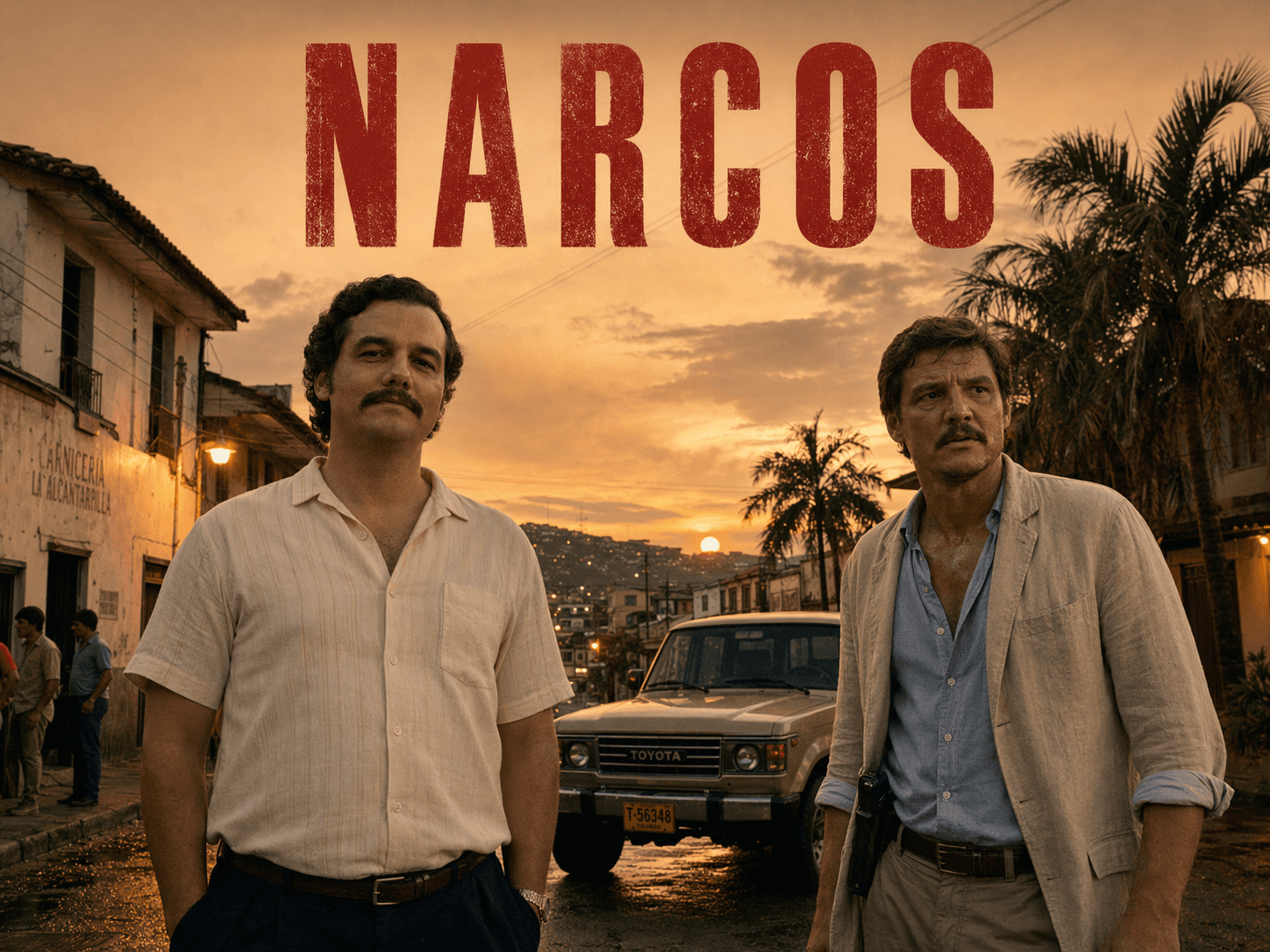
His career took on an international dimension in 2015 when Netflix cast him as Helmer "Pacho" Herrera in Narcos, the streaming service's flagship drama about the Colombian cocaine wars. As one of the four leading figures of the Cali Cartel, Pacho was written as a flamboyant, openly gay enforcer whose composure masked extraordinary violence. Ammann's performance, which began with a memorable scene of mafia justice in the second season and expanded into a co-leading role across the third, was widely praised for its restraint and unexpected tenderness. He continued the part into Narcos: Mexico, briefly reprising Pacho in flashback, and the role brought him a substantial English-speaking audience for the first time. Around the same period he joined the cast of National Geographic's hybrid drama-documentary Mars, playing astronaut and biochemist Javier Delgado across both seasons of the series, which imagined the first human colony on the red planet alongside interviews with real-world scientists.
In Spain his television profile rose with the period thriller Apaches in 2017, an adaptation of Miguel Saez Carral's novel about a group of childhood friends from Madrid's working-class outskirts whose lives spiral into organised crime. As Miguel, the conscience of the group, Ammann anchored the series and earned strong reviews for charting a slow descent from idealism into compromise. He followed it with appearances in the cult thriller series La Casa de Papel and other Spanish-language projects, while continuing to take film roles such as Lino Escalera's No se decir adios, the Argentine drama Animal opposite Guillermo Francella, and the survival film Despite the Falling Snow. He has also worked in Latin American auteur cinema with directors such as Lucia Puenzo and Pablo Aguero, contributing to films exploring Argentina's recent history and the legacies of dictatorship.
More recent credits include the Spanish Civil War drama Mientras dure la guerra directed by Alejandro Amenabar, in which he played the Falangist officer Millan-Astray's adversary in a brief but charged turn, and a string of streaming projects including Hache, the Netflix period crime series in which he played Inspector Vinuesa opposite Adriana Ugarte's heroin-trafficking heroine in 1960s Barcelona. He has lent his voice to animation, narrated documentaries, and continued to take stage roles when scheduling allows. Critics tend to describe him as one of Spain's most reliable leading men, a performer trusted with material that requires moral ambiguity rather than easy charisma.
Off screen, Ammann is notably private. He has spoken in interviews about the influence of his Argentine upbringing on his political outlook, his admiration for writers and poets including his own grandfather, and his commitment to the immigrant communities he became part of in Madrid. He has supported causes related to memory and human rights in the Southern Cone and has been vocal about the responsibilities of public figures who hold dual nationality. He shares his life with the Argentine actress Clara Mendez-Leite, with whom he has children, and divides his time between Madrid and Buenos Aires depending on production schedules. At the threshold of his late forties he remains in steady demand on both sides of the Atlantic, collaborating with new generations of directors while continuing to be associated, almost two decades on, with the watchful, wounded young guard who walked into Cell 211 and never quite walked out.