Albert Jones
About Albert Jones
Albert Jones is an American character actor whose steady, unflashy work across nearly two decades of prestige television and independent film has made him one of the more recognisable supporting faces in New York-based production. Born around 1971 in the United States, Jones came to acting through a classical theatre route rather than the more familiar Los Angeles audition mill, and that grounding in stage work has remained the spine of a career that has stretched from David Milch westerns to glossy Netflix thrillers.
Jones graduated from the University of Notre Dame in 1997, where he was active in the campus theatre community before relocating to New York to pursue acting professionally. He arrived in the city during a period when the Off-Broadway and regional Shakespeare circuits were absorbing a wave of young African-American classical actors, and he quickly aligned himself with companies that prized text-driven, ensemble-based work. His early stage credits established him as a versatile leading man capable of carrying language-heavy roles, and that reputation has shadowed his on-screen work ever since.
His Broadway debut came in 2003 with the Lincoln Center Theater revival of Henry IV, an enormously ambitious staging of Shakespeare's history plays directed by Jack O'Brien and starring Kevin Kline as Falstaff. Jones appeared in the ensemble and understudied the role of Nym, gaining a working education in large-scale classical production alongside some of the most experienced Shakespeareans in the American theatre. The production won the Tony Award for Best Revival of a Play and remains one of the most celebrated Shakespearean stagings of its era.
Jones returned repeatedly to Theatre for a New Audience, the Off-Broadway company that has long served as a hub for serious classical acting in New York. He played the title role in a 2008 production of Aphra Behn's Oroonoko, a demanding seventeenth-century text rarely revived, and in 2011 he took on Macduff in Arin Arbus's acclaimed staging of Macbeth at The Duke on 42nd Street, opposite John Douglas Thompson in the title role. Earlier work for the company had included Pericles, and his sustained presence with Theatre for a New Audience helped cement his reputation as a stage actor of substance rather than a screen actor who occasionally dabbled in theatre.
On screen, Jones built his early film career through small but visible roles in major studio pictures shot around New York. He appeared in Paul Greengrass's The Bourne Ultimatum in 2007 and in Ridley Scott's American Gangster the same year, two films that anchored him in the kind of grounded, procedural-realist American cinema that suited his presence. He followed those with appearances in Cadillac Records in 2008, Phillip Noyce's Salt in 2010, the Michael Douglas comedy And So It Goes in 2014, the indie boxing drama Glass Chin the same year, and Liesl Tommy's Aretha Franklin biopic Respect in 2021. He has also worked extensively in television guest spots, including memorable turns on The Good Wife, Madam Secretary, Person of Interest, The Americans, Treme and Deadwood, the kind of varied resume that comes from being a reliable, prepared, stage-trained actor whom New York casting directors return to again and again.
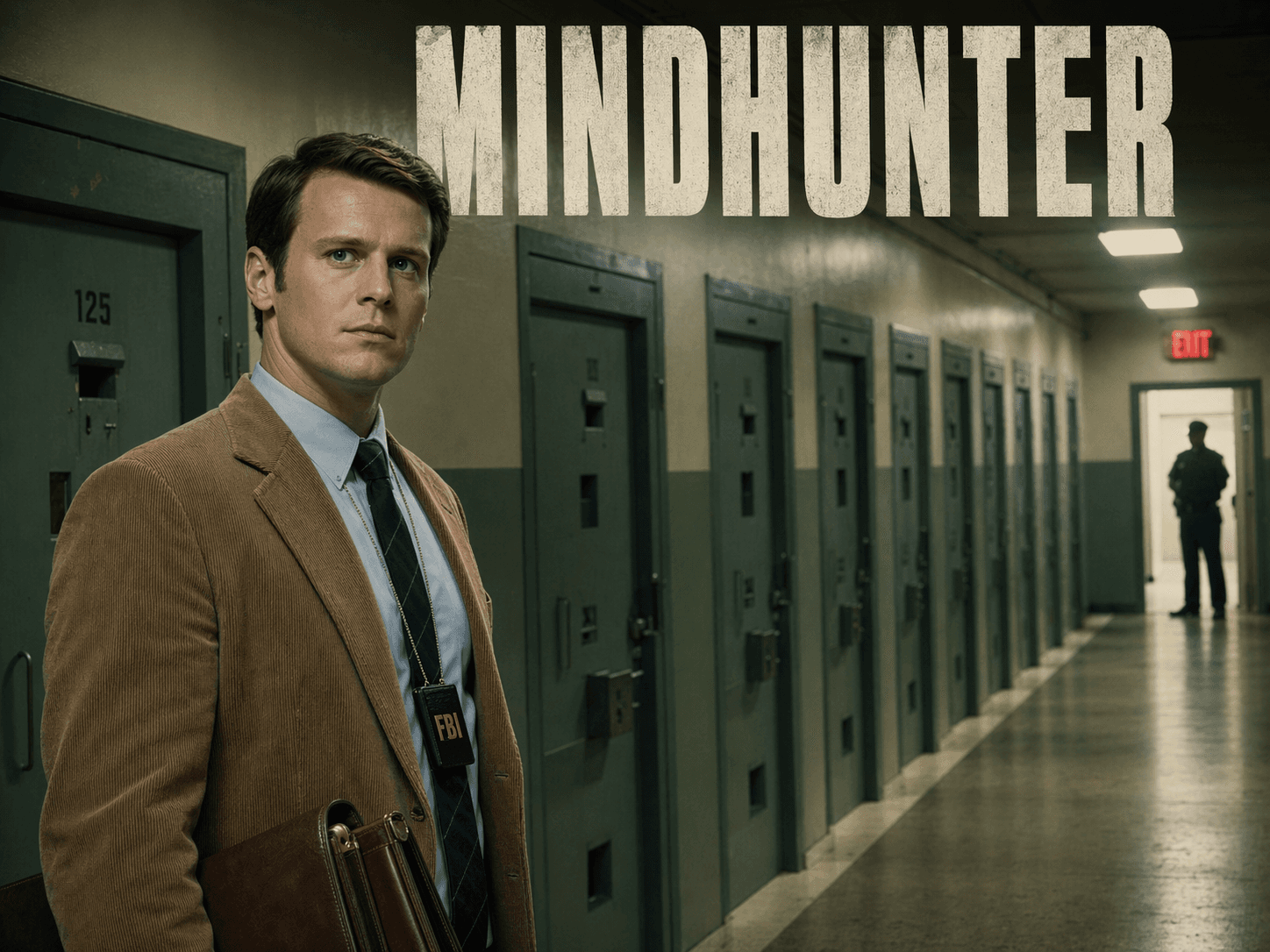
Two longer television arcs have raised his profile considerably. The first was David Fincher's Mindhunter on Netflix, in which Jones played Special Agent Jim Barney across both seasons between 2017 and 2019. Barney joins the FBI's Behavioral Science Unit as it expands its work in Atlanta during the second season's investigation of the Atlanta child murders, and the role gave Jones extended scenes opposite Jonathan Groff and Holt McCallany in some of the show's most charged interrogation sequences. Although the character is composite rather than directly historical, Jones grounded him with the unshowy authority that has become his signature, and the part is widely cited by viewers as one of the show's most quietly impressive performances.
The second is Netflix's hit conspiracy thriller The Night Agent, where Jones plays Aiden Mosley, the Deputy Director of the FBI and the supervisor of the agency's Night Action programme. He recurred in the second season before being upgraded to series regular for the third season in early 2025, with his role expanding as the show's plotting moves further into the upper levels of the bureau. The promotion marked a notable shift for Jones from prolific guest player to regular cast member on one of Netflix's most-watched original series.
Other television credits across his career have included Law & Order and Law & Order: Special Victims Unit, House of Cards, Elementary, The Following, The Spiderwick Chronicles and the HBO limited series The Night Of, where his work with Steven Zaillian added another layer of prestige-television credibility. He has also voiced and physically played Arthur Spiderwick in the Spiderwick Chronicles television adaptation, demonstrating a willingness to step outside the gritty New York-procedural mode that much of his on-screen work inhabits.
Jones keeps a low public profile, rarely giving interviews and maintaining minimal social media presence, which fits the picture his work suggests of a craft-focused actor more interested in the next role than industry noise. Colleagues across a string of productions have described him as one of the most reliable scene partners working in New York television, an actor whose homework is invariably done before he reaches set and whose generosity in ensemble scenes raises the work around him.
His appearance in Michael Pearce's psychological thriller Echo Valley opposite Julianne Moore and Sydney Sweeney in 2025 was further evidence of his continuing trajectory into substantial supporting parts in serious dramatic features. The role placed him alongside one of contemporary American cinema's most respected leading actresses and one of its biggest emerging stars, in a film aimed squarely at adult audiences and prestige reviewers.
Across stage, film and television, Jones's career stands as a quiet argument for the durability of classical theatre training in the American screen industry, and for the value of an actor who is consistently prepared, intelligent and unshowy in roles that ask for exactly those qualities. His long relationship with Theatre for a New Audience, his Broadway pedigree, his Notre Dame education and his patient accumulation of credits across the highest-profile prestige television of the past two decades together describe a model of working actorhood that is increasingly rare.