Alan Ball
About Alan Ball
Alan Ball is an American screenwriter, playwright, director, and television producer whose work across film and premium cable has made him one of the most distinctive voices in modern American storytelling. Best known for writing the Academy Award-winning film American Beauty and for creating the landmark HBO series Six Feet Under and True Blood, Ball has built a career that probes the hidden anxieties, appetites, and absurdities of suburban life, family dysfunction, mortality, sexuality, and the American search for meaning. His scripts combine mordant humor with unflinching emotional honesty, and he is widely credited with helping to expand the creative ambition of prestige television in the early twenty-first century.
Born on May 13, 1957, in Atlanta, Georgia, Ball grew up in the nearby town of Marietta in a Southern middle-class household. His childhood was shaped by a formative tragedy: when he was thirteen, his older sister Mary Ann was killed in a car accident in which he was a passenger, on the day of her twenty-second birthday. The loss profoundly influenced his later preoccupation with death, grief, and the fragile seams holding ordinary families together, themes that would surface repeatedly in his writing. Ball attended Florida State University, where he studied theater arts and graduated in 1980. Soon after, he moved to New York City and began working in the theater, first as a performer and designer and then, increasingly, as a writer.
Through the 1980s and into the early 1990s, Ball was a working Off-Off-Broadway playwright in New York. He co-founded the General Nonsense Theater Company and wrote a string of dark, often bitingly comic plays, including Five Women Wearing the Same Dress, which drew attention for its sharp observations about womanhood, marriage, and Southern manners. The play was later adapted for television and helped mark Ball as a writer with a distinctive voice. His stage work, with its blend of wit, social satire, and emotional rawness, effectively served as the training ground for everything that would follow.
In the mid-1990s Ball made the move from theater to television writing, taking staff positions on the sitcoms Grace Under Fire and Cybill. Those years were by his own account difficult: he has frequently described the network sitcom environment as creatively stifling, with on-set personalities and studio mandates that left him frustrated and disillusioned. That frustration, combined with his long-standing interest in the corrosive undercurrents of suburban American life, fed directly into the script that would change his career.
That script was American Beauty. Directed by Sam Mendes and released by DreamWorks in 1999, the film follows Lester Burnham, a middle-aged suburban father undergoing a desperate midlife awakening, and the neighbors, family members, and strangers whose parallel crises collide with his. Ball drew on his own observations of suburban unease, celebrity culture, repressed sexuality, and the elusive nature of beauty to create a story that felt both specific and archetypal. The film became a critical and commercial sensation, winning five Academy Awards, including Best Picture, Best Director, and Best Original Screenplay for Ball. It also won him a Writers Guild of America Award and a Golden Globe, instantly establishing him as one of the most sought-after writers in Hollywood.
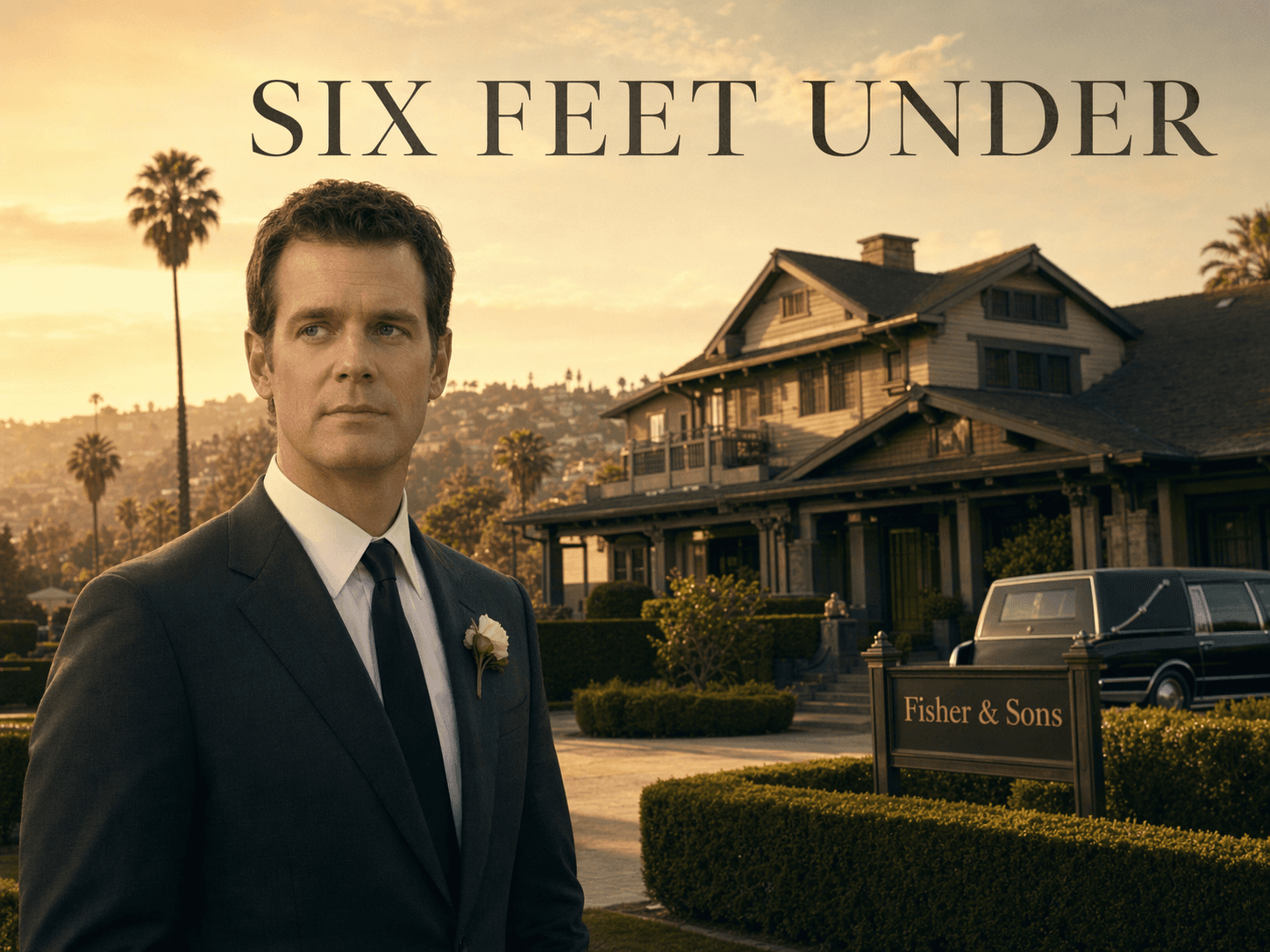
Rather than move into a conventional film career, Ball took his newfound clout to HBO, where he created Six Feet Under, which premiered in 2001. Set in a family-run Los Angeles funeral home, the series follows the Fisher family as they cope with death on a daily basis while grappling with their own fractured lives, desires, and identities. Over five seasons, Six Feet Under became one of the defining series of its era, praised for its unblinking treatment of mortality, grief, sexuality, and faith, as well as for its formal daring. Its 2005 series finale, which Ball directed and wrote, is widely regarded as one of the finest endings in television history. The show earned him multiple Emmy, Golden Globe, and Directors Guild nominations, and a Directors Guild Award for the pilot.
In 2008, Ball returned to HBO with True Blood, a very different project adapted from Charlaine Harris's Southern Vampire Mysteries novels. Set in a small Louisiana town where vampires have come out of the coffin and into mainstream society, the series used genre trappings to explore civil rights, religion, sexuality, and Southern identity. It became a breakout pop-cultural hit, running for seven seasons through 2014, although Ball stepped back from day-to-day showrunning duties after the fifth season to pursue other projects. True Blood demonstrated his ability to move beyond realism into gothic, sensual, and sometimes campy territory while keeping a firm grip on character.
Ball's subsequent projects have been more intimate. He wrote and directed the 2007 independent film Towelhead, adapted from Alicia Erian's novel, a provocative coming-of-age story about a young Lebanese American teenager in suburban Texas. In 2018, he returned to HBO with Here and Now, a contemporary drama about a multiethnic adopted family in Portland grappling with identity, politics, and metaphysical visions; the series ran for a single season. In 2020, Amazon Studios released Uncle Frank, which Ball wrote and directed. Set in 1973, the film follows a closeted gay literature professor and his niece on a road trip from Manhattan back to their conservative South Carolina hometown for a family funeral. Personal, gentle, and autobiographical in spirit, it drew on Ball's own experiences as a gay man who grew up in the American South.
Throughout his career, Ball has been an openly gay public figure and a thoughtful advocate for richer, more honest representations of LGBTQ lives onscreen. His work consistently returns to a set of core preoccupations: how families wound and sustain one another, how Americans conceal themselves behind the routines of domestic life, how death reshapes the living, and how sex and desire both liberate and complicate. Widely admired by peers and protégés in television, Alan Ball has influenced a generation of prestige-TV creators and continues to write and produce projects that blend humor, empathy, and a clear-eyed view of the strange country he has spent his career observing.