Al Pacino
About Al Pacino
Alfredo James Pacino was born on April 25, 1940, in the East Harlem neighborhood of Manhattan, the only child of Italian-American parents Salvatore and Rose Pacino. His parents divorced when he was two, and he was raised by his mother and maternal grandparents in the South Bronx. The young Pacino, nicknamed Sonny, spent much of his childhood reenacting scenes from the movies his mother took him to see, an early sign of the immersive instinct that would later define his craft. He struggled academically but thrived in the drama programs at the High School of Performing Arts, which he attended before dropping out at seventeen to pursue acting full time while working a series of odd jobs, including as a theater usher, a messenger, and a mail sorter.
Pacino trained at the Herbert Berghof Studio under Charles Laughton, who became a lifelong mentor, and then at the Actors Studio under Lee Strasberg, where the Method became the foundation of his approach. His early years were marked by poverty and hustle, but also by steady work in off-Broadway productions. He won an Obie Award in 1968 for his performance in Israel Horovitz's The Indian Wants the Bronx, and a Tony Award the following year for his Broadway debut in Does a Tiger Wear a Necktie?, playing a heroin-addicted drifter. Those performances announced a new kind of American actor, feral and interior, and they caught the attention of director Francis Ford Coppola.
Coppola's insistence on casting the little-known Pacino as Michael Corleone in The Godfather (1972) was one of the most contentious decisions in Hollywood history. Paramount executives wanted a star; Coppola wanted the haunted face he had seen on a New York stage. The gamble produced one of cinema's defining performances, a slow-burning transformation from war-hero outsider to ice-cold don. Pacino received the first of what would become nine Academy Award nominations. He followed it with Serpico (1973), Sidney Lumet's fact-based portrait of a whistleblowing New York cop, and The Godfather Part II (1974), widely regarded as one of the greatest sequels ever made. A year later came Dog Day Afternoon (1975), again with Lumet, in which his volcanic, improvisatory turn as a bank robber negotiating with police on a sweltering Brooklyn afternoon produced the indelible cry of Attica, Attica. In a span of four years he received four consecutive Oscar nominations, a feat matched by few actors in the medium's history.
The late 1970s and early 1980s were rockier. ...And Justice for All (1979) earned him another nomination, but Cruising (1980) and Author! Author! (1982) underperformed, and his 1985 historical drama Revolution was so poorly received that Pacino stepped away from film for four years, returning to the stage and to private study. When he came back it was with Brian De Palma's Scarface (1983), a film initially reviled and later enshrined as a pop-culture monument. His Tony Montana, a Cuban refugee who claws his way to the top of a Miami cocaine empire, remains one of the most quoted and imitated performances in American cinema.
His comeback gathered force through Sea of Love (1989) and Dick Tracy (1990), which earned another supporting nomination, and The Godfather Part III (1990). Then came 1992's Scent of a Woman, in which his performance as the blind, suicidal, tango-dancing retired Army officer Frank Slade finally delivered the Academy Award for Best Actor that had eluded him. Michael Mann's Heat (1995) paired him with Robert De Niro for their first on-screen conversation, a coffee-shop standoff that has been parsed by cinephiles ever since. The decade also produced Glengarry Glen Ross (1992), Carlito's Way (1993), Donnie Brasco (1997), and The Insider (1999), a run that confirmed him as one of the defining American screen presences of his generation.
In the 2000s Pacino worked prolifically across studio films, independents, and television. His portrayal of attorney Roy Cohn in HBO's Angels in America (2003) brought him an Emmy and a Golden Globe, and further awards followed for his turn as Jack Kevorkian in You Don't Know Jack (2010) and as Phil Spector in David Mamet's Phil Spector (2013). He also continued returning to Shakespeare and to the stage, directing and starring in the idiosyncratic documentary Looking for Richard (1996) and later performing The Merchant of Venice on Broadway. Though he has not won a competitive Grammy or Tony since his early career, his combined theater, film, and television honors place him close to the rarefied EGOT circle.
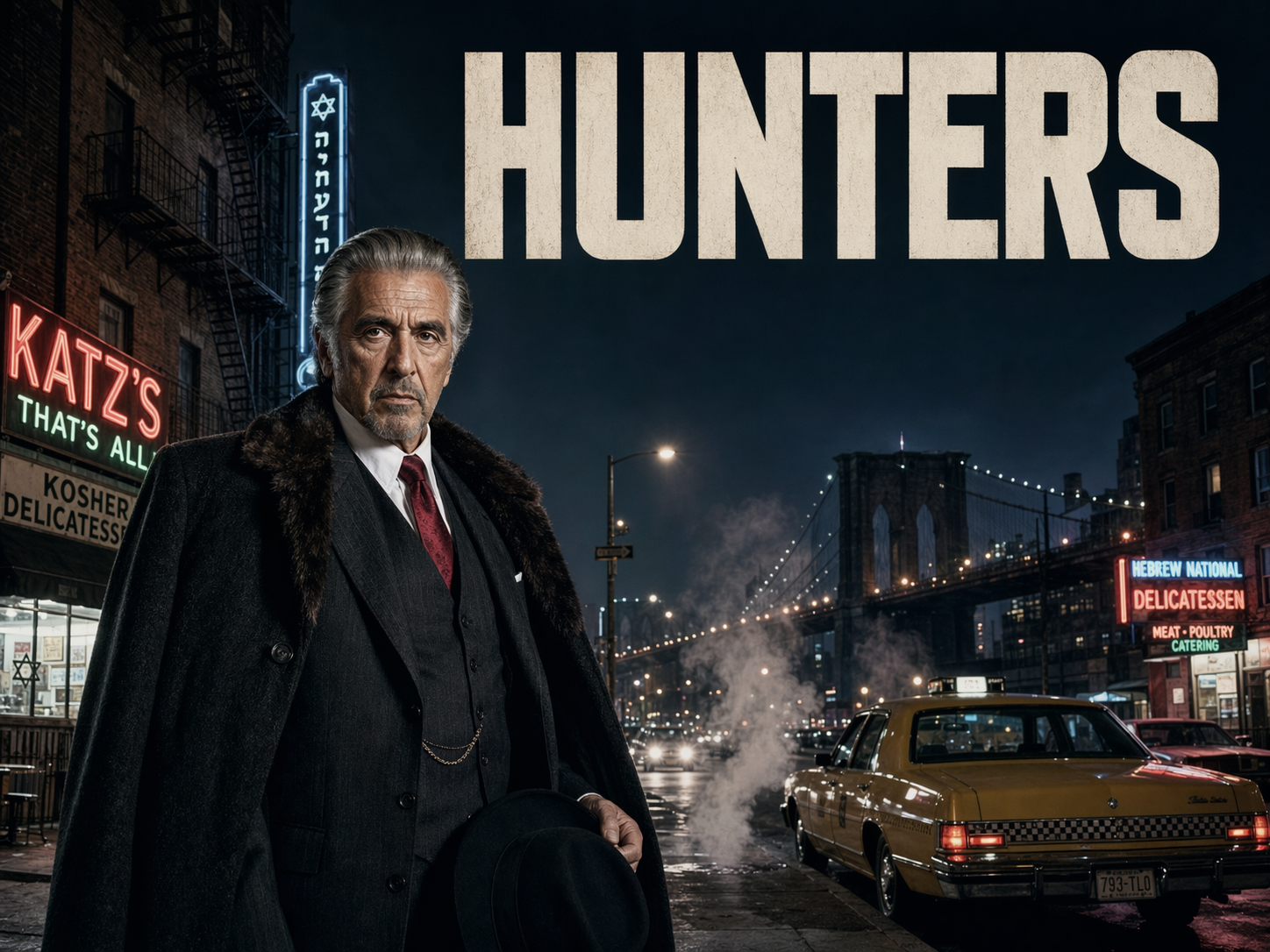
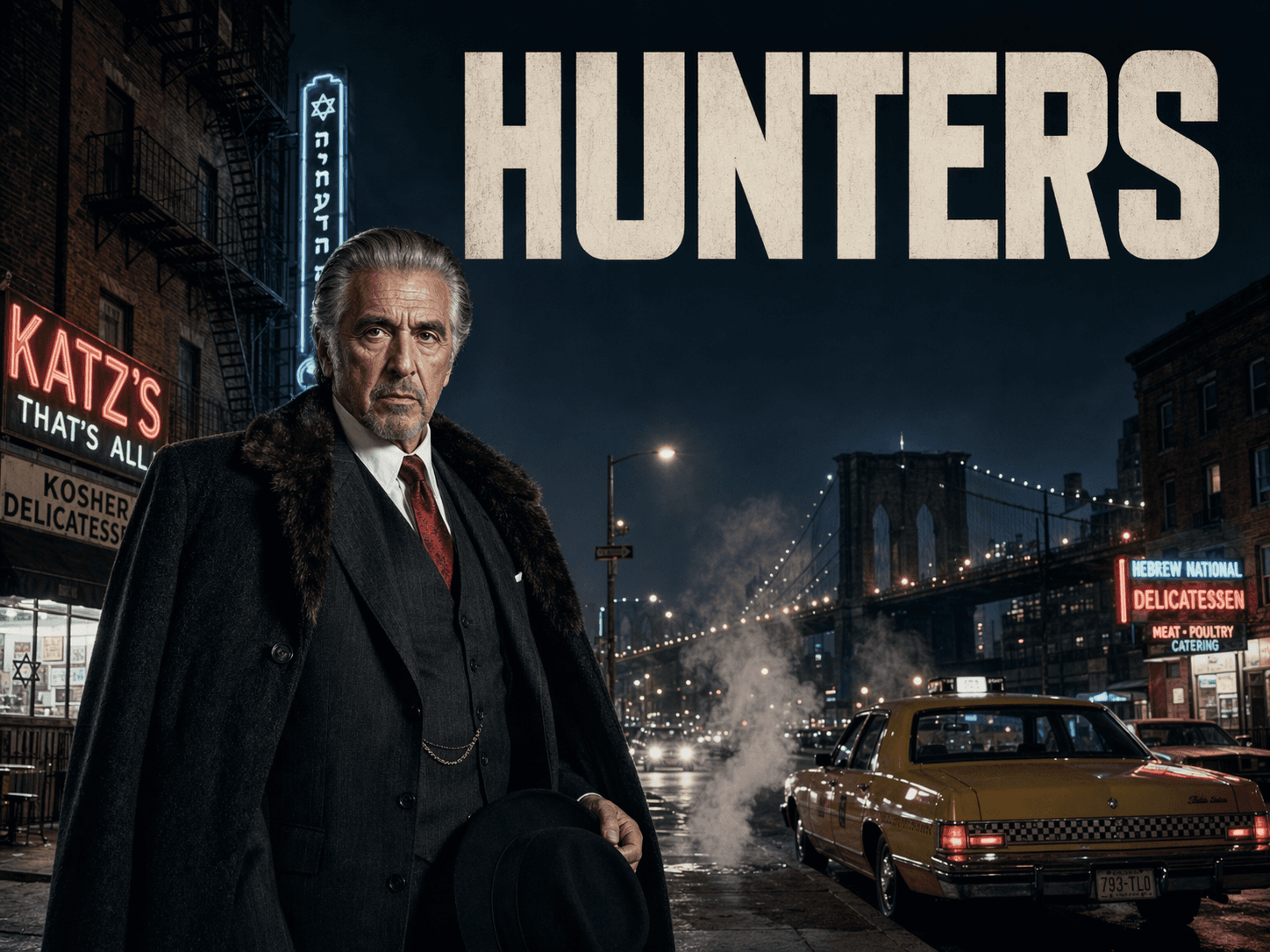
A late-career renaissance arrived with Martin Scorsese's The Irishman (2019), in which he played Teamsters boss Jimmy Hoffa opposite De Niro and Joe Pesci and earned his ninth Oscar nomination. That same year he appeared in Quentin Tarantino's Once Upon a Time in Hollywood, and in 2020 he headlined the Amazon series Hunters, playing the enigmatic leader of a team of Nazi hunters in 1970s New York. He has since appeared in projects including House of Gucci (2021) and continues to develop film and stage work into his eighties.
Pacino's personal life has been notably private given his fame. He has never married but has four children with three partners, including daughter Julie Marie with acting coach Jan Tarrant, twins Anton and Olivia with actress Beverly D'Angelo, and a son, Roman, born in 2023 with producer Noor Alfallah. He has been open about earlier struggles with alcohol, which he gave up in the late 1970s, and about financial troubles in the 2010s that he attributed to a trusted accountant's mismanagement, a situation he resolved by returning to heavy workloads. Friends and collaborators describe him as obsessive about text, generous with younger actors, and stubbornly devoted to theater even when screen work paid better.
More than half a century after Michael Corleone closed a door on Kay Adams, Pacino remains a touchstone for what American screen acting can be: internal yet eruptive, classical yet streetwise, shaped equally by Shakespeare and by the South Bronx. His career is inseparable from the New Hollywood generation that rewrote the studio system in the 1970s, and his continued willingness to risk, to fail, and to return has made him not merely a survivor of that era but one of its last great working emissaries.
Shows
Images