Adrian Rawlins
About Adrian Rawlins
Adrian John Rawlins is an English actor whose career spans more than four decades of theatre, television, and film. Although he is most widely recognised by international audiences for two very different roles, James Potter in the Harry Potter film series and the doomed plant director Nikolai Fomin in the HBO and Sky miniseries Chernobyl, Rawlins has built a far broader body of work grounded in the British repertory tradition. He is the kind of dependable, quietly authoritative character actor who has become a familiar face on British screens without ever being pulled into the machinery of celebrity, a performer whose reputation rests on craft rather than fame.
Rawlins was born on 27 March 1958 in Stoke-on-Trent, Staffordshire, the son of Mavis, née Leese, and Edward Rawlins, a market trader. He grew up in the Potteries, attending Stanfield Technical High School and then Stoke VI Form College, before leaving the Midlands to train in art and acting at what was then Manchester Polytechnic, now Manchester Metropolitan University. The city's theatre school had a strong reputation for producing working actors rather than stars, and Rawlins emerged from it in the early 1980s ready for a career shaped by regional repertory, studio television, and fringe stage work rather than by West End musicals or Hollywood auditions.
His early professional years unfolded largely in the theatre. He worked at respected venues such as the Royal Exchange in Manchester and the Royal National Theatre in London, taking on parts in classical and contemporary pieces alike, from Chekhov's Three Sisters to Shakespeare's Hamlet. One of the stage roles he has singled out as a favourite was Rodolpho in Arthur Miller's A View from the Bridge at the National Theatre, opposite Michael Gambon. That grounding in ensemble stagecraft, and in plays that demanded emotional restraint rather than flash, would shape the screen persona he developed over the following decades: watchful, thoughtful, often a little haunted.
Television quickly followed. Rawlins became a regular presence in the kind of serious British single dramas and serials that flourished in the late 1980s and 1990s, appearing in productions for the BBC, ITV, and Channel 4. His breakthrough screen role came in 1989, when he played Arthur Kidd, the young solicitor sent to a remote coastal town to settle an estate, in the original ITV television adaptation of Susan Hill's The Woman in Black. Scripted by Nigel Kneale and directed by Herbert Wise, the film became a cult favourite of British horror, partly because of its restrained, genuinely frightening approach to the supernatural and partly because of Rawlins's sympathetic central performance. Twenty-three years later, Daniel Radcliffe, who had played Rawlins's son on screen in the Harry Potter films, took on essentially the same role in the 2012 cinema version, an odd piece of casting symmetry that has followed Rawlins ever since.
Throughout the 1990s he worked steadily in British television drama, with appearances in series such as Soldier Soldier, Kavanagh QC, The Bill, Peak Practice, Casualty, and Inspector Morse. He also developed a significant film career, including two collaborations with the Danish director Lars von Trier. In Breaking the Waves (1996) he appeared opposite Emily Watson in the severe, emotionally unsparing drama that brought von Trier international attention, and he later worked with him again on Wilbur Wants to Kill Himself (2002), the Scotland-set tragicomedy directed by von Trier's frequent collaborator Lone Scherfig. These projects confirmed Rawlins as an actor comfortable in material that refused easy emotional beats, willing to serve a director's vision rather than push for conventional leading-man turns.
His casting as James Potter in Harry Potter and the Philosopher's Stone in 2001 came almost by accident for a performer of his generation. The part is small but iconic, a ghostly image of the father Harry never knew, appearing in the Mirror of Erised, in flashbacks, in Patronus memories, and in the resurrection sequence at the climax of Harry Potter and the Deathly Hallows in 2011. Rawlins returned to the role throughout the decade-long run of the franchise, with Geraldine Somerville playing his on-screen wife Lily. His quiet, warm presence in those fragmentary scenes gave the Potter parents a humanity that their limited screen time might otherwise have denied them, and the part introduced him to a generation of viewers who had never seen The Woman in Black.
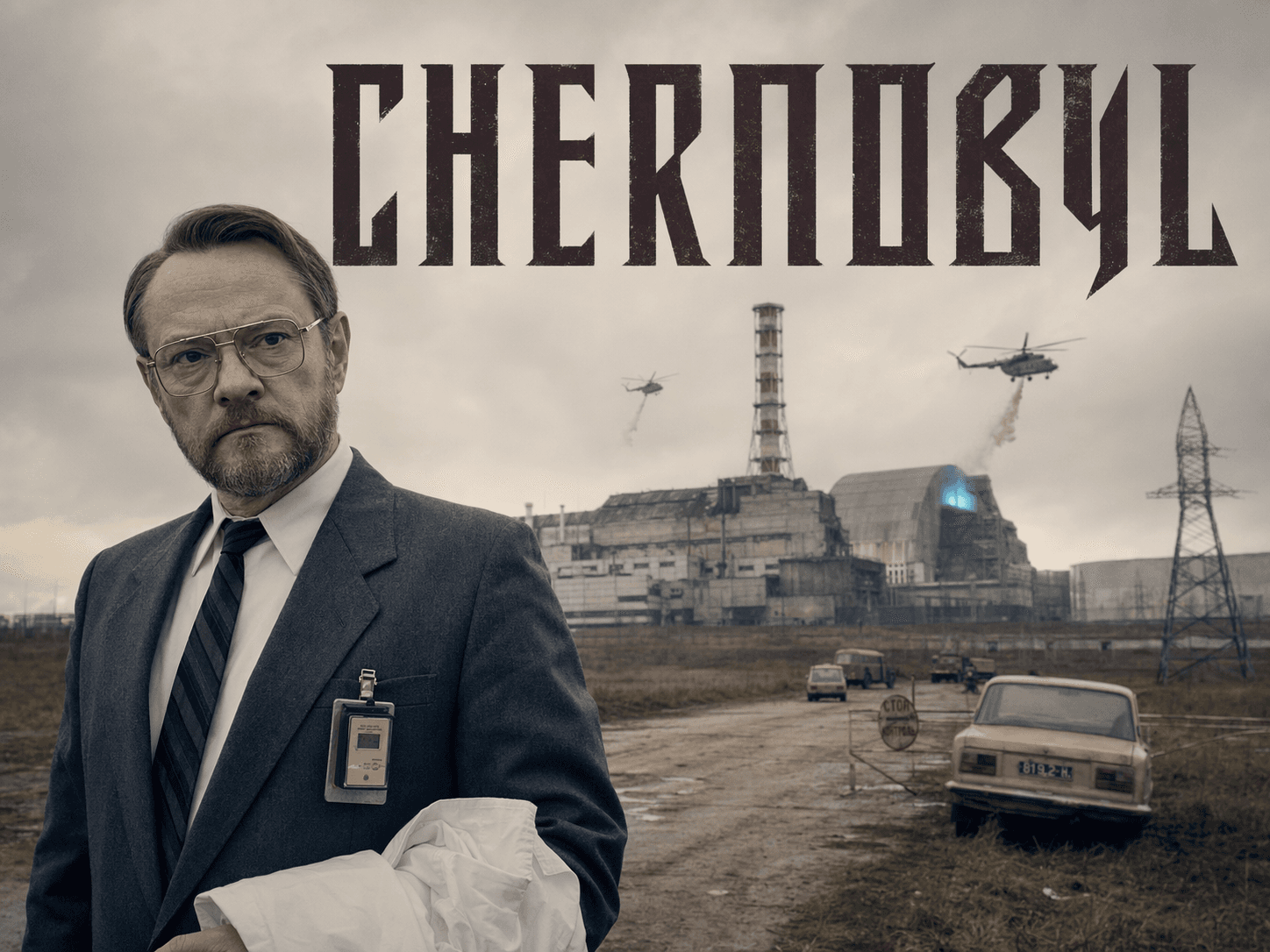
After the Potter films, Rawlins continued to work prolifically in British television, including appearances in Lewis, Whitechapel, Vera, Midsomer Murders, Parade's End, and Doctor Who, as well as in period dramas such as the BBC adaptation of War and Peace. His portrayal of Nikolai Fomin, the chief engineer of the Chernobyl nuclear plant, in Craig Mazin's 2019 miniseries Chernobyl gave him his highest-profile screen role in years. Alongside Paul Ritter's Anatoly Dyatlov and Con O'Neill's Viktor Bryukhanov, Rawlins contributed to one of the most unsettling ensemble performances in recent prestige television, and the production won multiple Emmys, BAFTAs, and Golden Globes, including ensemble and cast honours that recognised the group effort around him.
Away from the larger productions, Rawlins has remained committed to the regional and independent theatre he came from. Since 2014 he has been closely involved with the East Riding Theatre in Beverley, Yorkshire, a small venue housed in a former Methodist chapel, and he has served as its artistic director since 2017. In that role he has championed new writing, local productions, and community engagement, a notably unshowy continuation of the repertory ethos that shaped him. He has spoken in interviews about the satisfactions of that kind of work, and about his preference for acting as a job rather than a personality.
Rawlins tends to keep his personal life private, and his public profile has always been modest compared with the reach of the projects he has appeared in. Taken as a whole, his career offers a useful reminder that British screen culture still depends on actors like him, performers who can disappear into a haunted young solicitor, a quietly grieving father, a Soviet engineer facing the unthinkable, and make each of them feel entirely credible.