2021 - 2021

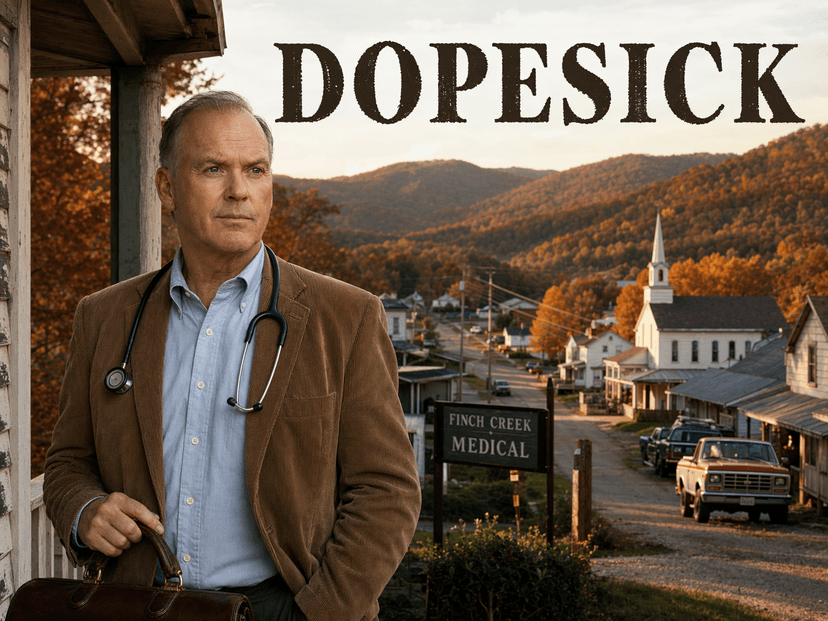
Dopesick is an eight-episode Hulu limited series that aired from October to November 2021, created and written by Danny Strong and adapted from Beth Macy's 2018 non-fiction book Dopesick: Dealers, Doctors, and the Drug Company That Addicted America. The subject is the origin of the American opioid epidemic, and the show puts one company at the centre of the frame: Purdue Pharma, owned by the Sackler family.
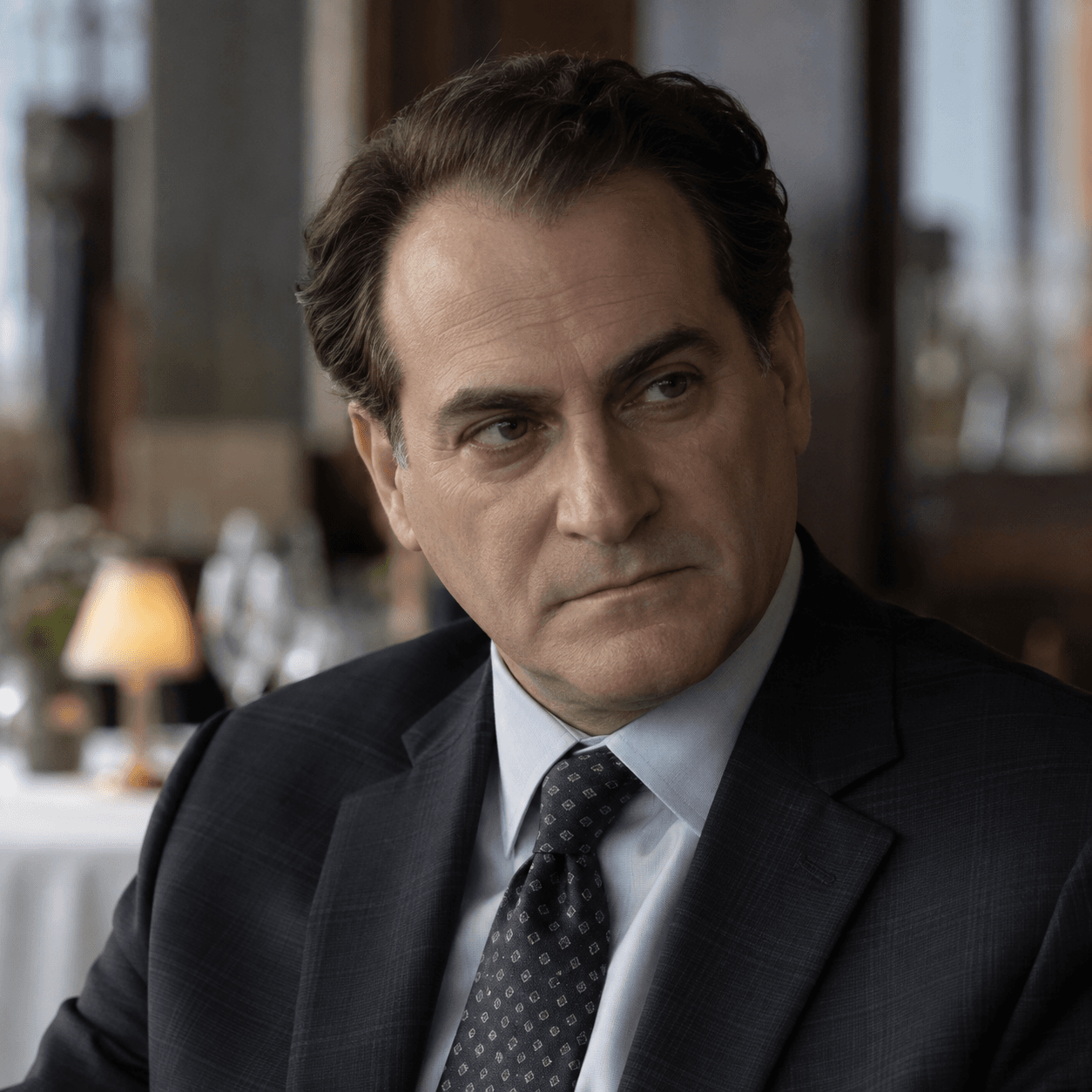
The series braids four storylines that move across different scales at once. In Virginia coal country, Dr. Samuel Finnix (Michael Keaton) is a small-town Appalachian GP who starts prescribing OxyContin in 1996 on the word of a Purdue sales rep and a stack of company literature. Betsy Mallum (Kaitlyn Dever) is one of his patients, a young coal miner injured on the job whose life unravels after he puts her on the pill. Up in Stamford, Connecticut, Richard Sackler (Michael Stuhlbarg) sits in boardrooms and drawing rooms running the marketing operation that will make OxyContin a household name. In a Virginia federal building, US Attorney Rick Mountcastle (Peter Sarsgaard) and DEA investigator Randy Ramseyer (John Hoogenakker) spend years building a case against Purdue, with DEA agent Bridget Meyer (Rosario Dawson) working a parallel Washington thread.
Those four threads are not decorative. They are the argument.
Danny Strong's thesis is direct. The opioid crisis was not an accident of pharmacology or a tragedy of personal weakness. It was a marketing campaign. OxyContin, released in 1996, was sold to American doctors as a safer, less-addictive painkiller on the basis of a single sentence from a decade-old letter to the editor in the New England Journal of Medicine. Purdue built a sales force around that sentence. The company trained reps to push higher doses. It funded pain-management seminars. It sent doctors to weekend conferences in Arizona. It knew, and suppressed, what the drug was doing.
Dopesick lays that case out with journalistic rigour. Strong came up in political drama, writing HBO's Recount and Game Change, and the show has the same forensic feel. You watch a marketing phrase get stress-tested in a Stamford conference room, then you watch the same phrase arrive in a clinic in Finch Creek, Virginia, and then you watch what happens to a patient a year later. The chain of cause and effect is the story.
The show is not interested in both-sides framing. It names the villains. Richard Sackler sits at the top of that list, with the wider family right behind him. The sales reps who knew and kept selling, the doctors who flipped their practices into pill mills, and the federal regulators who waved the approvals through all get their turn in the frame. Over 500,000 Americans have died from opioid overdoses since the crisis began. never lets you forget that number is a policy outcome, not a statistic, and I think that moral clarity is the thing that separates it from the dozen other "based on a true story" limited series of the last five years.
Michael Keaton
Dr. Samuel Finnix
Will Poulter
Billy Cutler
Phillipa Soo
Amber Collins
Peter Sarsgaard
Rick Mountcastle
Rosario Dawson
Bridget Meyer
Ray McKinnon
Jerry Mallum
Michael Stuhlbarg
Richard Sackler
John Hoogenakker
Randy Ramseyer
Michael Keaton won the Emmy for Dr. Finnix and the award was deserved. His work here is a case study in how to play a decent man failing slowly. Finnix is a widower, a small-town doctor who has known his patients since they were children, and Keaton lets you watch the slow turn of a man who believes what he is told, then starts to suspect, then starts to want the pill himself. For my money it is the best thing Keaton has done on television and one of the best performances of the decade in the limited-series format.
The ensemble around him is the reason the show works as a whole.
Mare Winningham and Ray McKinnon, as Betsy's parents Diane and Jerry Mallum, fill out the Virginia community with texture and lived-in ease.
Directed primarily by Barry Levinson in the early episodes and by Danny Strong and others later, Dopesick looks like a prestige journalistic drama and moves like one. In the Virginia scenes the colour palette goes warm and wooden, shot in clinics and kitchens and the underground of a coal mine. Cut to Stamford and everything goes cold glass and Connecticut modern. The DEA office sits somewhere in between, all fluorescent light, beige carpet, paper on every surface.
The show jumps across a fifteen-year span without ever feeling jumbled. Act-style chapter headings and year cards keep you oriented. The cross-cutting technique is simple and effective: a Sackler pronouncement in 1998 crashes straight into its consequence in 2005. You feel the arc accumulating.
The music is restrained. The violence is mostly chemical, which is to say invisible, which is to say harder to watch.
Dopesick was a major critical hit and a major Emmys winner. Fourteen nominations at the 74th Primetime Emmy Awards, including Outstanding Limited or Anthology Series. Keaton won Lead Actor. The show was widely credited with bringing the Sackler story into mainstream cultural consciousness at the exact moment the family was negotiating bankruptcy and settlement terms with US attorneys general.
Netflix released its own dramatisation, Painkiller, in 2023, covering similar ground with a different cast and a more stylised tone. I watched them back to back and Dopesick is the better show by some distance. It has the advantage of Keaton, the advantage of Stuhlbarg, and the advantage of Strong's direct adaptation of Macy's reporting.
If Chernobyl is the definitive limited series about institutional denial killing ordinary people through chemistry they cannot see, Dopesick is its American cousin. It belongs in the same conversation as The Dropout, Inventing Anna, and The Playlist as part of the recent wave of fact-driven limited series about corporate villainy, though it hits harder than any of them because the body count is real and ongoing. We Own This City makes a good companion piece for its matching interest in how institutional rot becomes policy.
Because it is angry, and the anger is earned. Most prestige-TV takes on big public scandals end up smoothing the edges, seeking balance, making the villain sympathetic, making the victim complicit. Dopesick refuses. It holds the family responsible by name. It holds the sales reps responsible. It gives you a doctor and a patient you care about and then shows you exactly who did this to them and why.
A show that reads like a long piece of investigative journalism and plays like a crime drama, and knows the difference between the two.
Limited series as a format have had a strong decade. This one sits near the top of the stack for me. Watch it in a run of three or four sittings if you can. The cumulative effect is the point.
Jake McDorman
John Brownlee
Mare Winningham
Diane Mallum
Kaitlyn Dever
Betsy Mallum