Ato Essandoh
About Ato Essandoh
Ato Essandoh is an American actor whose three-decade career has spanned independent film, blockbuster cinema, and the premium television boom, building a reputation for quietly commanding performances that add gravity to ensemble work. Born on 29 July 1972 in Schenectady, New York, he is the son of Ghanaian immigrants who had come to the United States for university study, and he grew up in the nearby town of Rotterdam. His upbringing stressed academic achievement, and he attended Cornell University with the intention of pursuing a conventional professional path, graduating in 1995 with a degree in chemical engineering. For a time he worked in the field, but the stage had taken hold during his undergraduate years, and after a stint in a New York office he committed to acting full time, training in classical technique and scene study while auditioning around the city's fringe theatre scene.
His breakthrough came not through television but through a play he helped develop with the director and writer Dan Reed. Jesus Hopped the 'A' Train, the 2000 work by Stephen Adly Guirgis that Essandoh originated in workshop form, was followed by the more personally significant Drummer Wanted, which opened off-Broadway in 2002 and which he co-wrote and starred in. The autobiographical piece, about a young Black man from an immigrant family navigating his ambitions against family expectation, drew strong reviews and announced him as an actor with range beyond the types Hollywood often offered performers of his background. He continued to work in the New York theatre throughout the 2000s, appearing in productions at the Public Theater and the Atlantic Theater Company, and his stage pedigree would later inform the understated, listening-based style that became his on-screen signature.
Film work followed steadily if not spectacularly. He made his feature debut in small roles before being cast by Jim Jarmusch in Coffee and Cigarettes in 2003, playing one half of an awkward New York meeting opposite Alex Descas in a vignette that showcased his gift for deadpan timing. Parts in Garden State, Kinsey, and Hitch followed, and by the end of the decade he had become a recognisable character face, often cast as the thoughtful professional, the sympathetic witness, or the voice of reason in crowded scenes. Quentin Tarantino gave him one of his most visceral turns in 2012's Django Unchained, in which he played D'Artagnan, a runaway slave torn apart by dogs in a sequence that remains among the most harrowing in the director's filmography. The brief but searing role brought him to a much larger international audience and confirmed his willingness to embrace difficult material.
On television, he had built a parallel career in procedurals and guest roles on series such as Law & Order, CSI: Miami, and Blue Bloods, but his first sustained run as a regular came with BBC America's Copper in 2012. The period drama, set in the Five Points neighbourhood of 1860s Manhattan, cast him as Matthew Freeman, a formerly enslaved doctor whose medical expertise and quiet dignity placed him at the heart of the show's examination of race and immigration in post-Civil War New York. He played Freeman across both seasons of the series until its cancellation in 2013, and the role remains one of the fullest showcases of his ability to carry emotionally complex material without resort to melodrama. Around the same period he appeared in Paul Greengrass's Jason Bourne in 2016, playing a CIA operative in the Matt Damon-led fifth instalment of the franchise.
The second half of the 2010s brought a string of substantial television assignments that entrenched him as a dependable presence on prestige platforms. He joined Netflix's cyberpunk adaptation Altered Carbon in 2018 as Vernon Elliot, a grieving former military medic working alongside Joel Kinnaman's resleeved protagonist, and the part allowed him to bring a battered tenderness to a genre often dominated by noise and spectacle. He became a regular cast member on NBC's Chicago Med the same year, playing Dr Isidore Latham, a brilliant cardiothoracic surgeon whose Orthodox Jewish faith and candid discussions of being on the autism spectrum gave the long-running medical drama some of its most distinctive storylines. He departed the series in 2020 after several seasons, with the door left open for return appearances. Parallel to that work he joined the Starz drama Hightown as the DEA agent Alan Saintille, a role he has continued across the show's multiple seasons and which has given him some of his most morally shaded material to date.
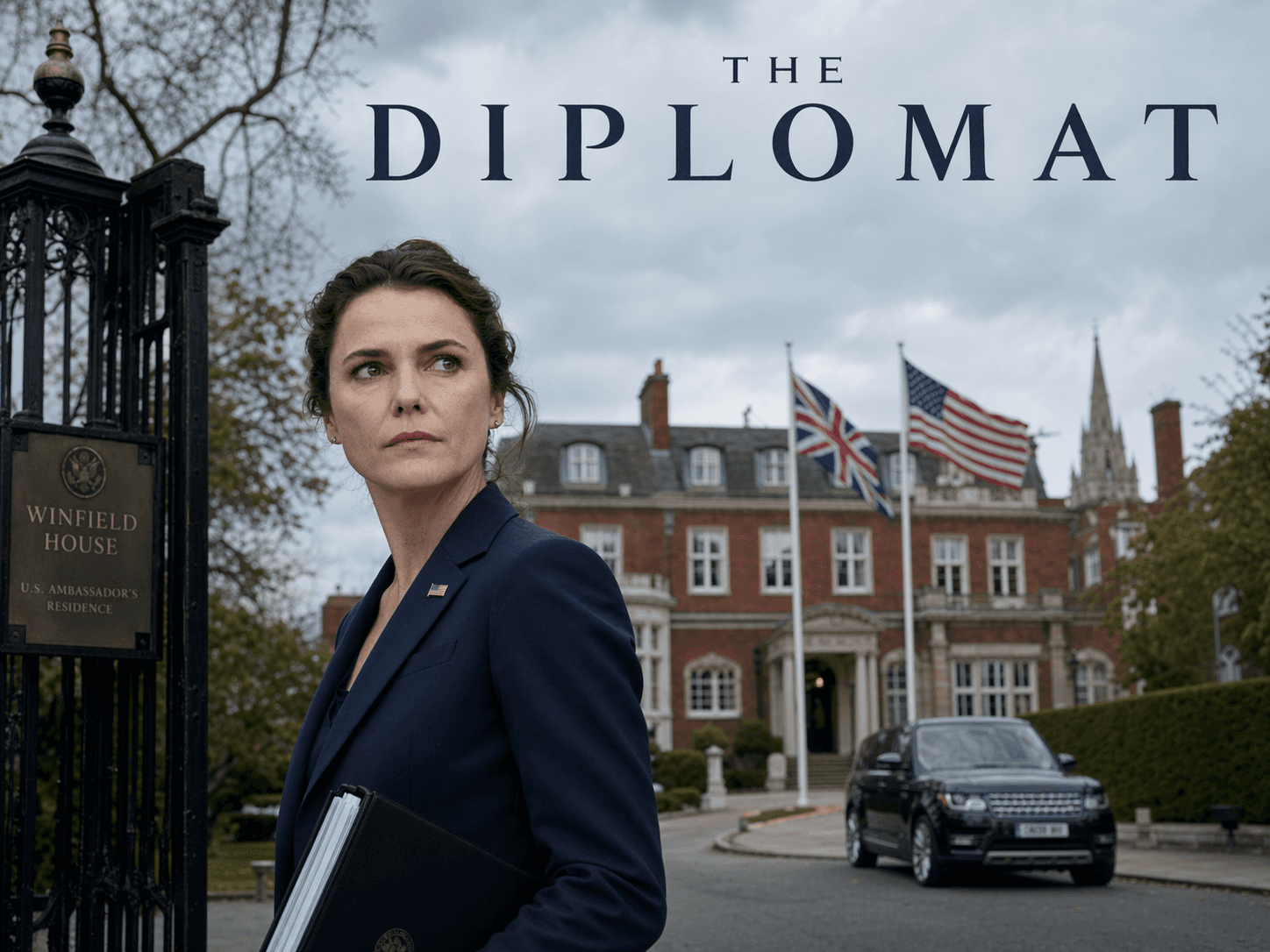
The streaming era has brought further prominence through Netflix's political thriller The Diplomat, created by Debora Cahn, in which he plays Stuart Hayford, the deputy chief of mission to Keri Russell's US ambassador in London. The series, which premiered in 2023 and has been renewed across subsequent seasons, has drawn particular praise for his work, with Hayford functioning as the show's operational and emotional spine: the professional who manages the ambassador's temperament while negotiating his own complicated romantic life with Ali Ahn's intelligence chief. The role has generated some of the strongest notices of his career and has elevated him to a leading-man standing that earlier showcases had hinted at without quite delivering.
Off screen, Essandoh has spoken warmly about his Ghanaian heritage and has visited the country for both personal and professional reasons, including documentary work. He has been an advocate for greater representation of African and African-American performers in mainstream science fiction and genre work, and he writes occasionally about the craft of acting. Married and based between New York and Los Angeles, he has cultivated a reputation within the industry as a consummate professional whose work ethic, classical theatre background, and generosity to scene partners have made him a favoured collaborator of showrunners seeking an actor capable of grounding heightened material. His career, slow to ignite by the standards of his generation, now stands as one of the more quietly rewarding in contemporary American screen acting.