Anne-Marie Duff
About Anne-Marie Duff
Anne-Marie Duff is a British actress whose career has spanned stage, television and film for more than three decades, marking her out as one of the most quietly versatile performers of her generation. Born on 8 October 1970 in Hammersmith, London, to Irish parents who had emigrated from County Donegal and County Meath, she grew up in working-class West London, an upbringing that would later inform the rough-edged, emotionally honest characters she has so often been drawn to play. Her father worked as a painter and decorator and her mother as a shop assistant, and Duff has spoken often about how her sense of being slightly outside the establishment shaped both her work ethic and her instinct for outsider roles. After leaving school she trained at the Drama Centre London, a famously rigorous conservatoire whose alumni include Pierce Brosnan and Michael Fassbender, and she emerged from it in the early 1990s ready for a career built on craft rather than glamour.
Duff's early years were spent in regional theatre and small television parts, but her breakthrough came in 2004 with Channel 4's Shameless, Paul Abbott's anarchic, semi-autobiographical drama about the Gallagher family of Chatsworth Estate. As Fiona Gallagher, the eldest sibling holding together a chaotic household under the shadow of her drunken father Frank, Duff anchored the first two series with a performance that balanced steel, exhaustion and surprising tenderness. Fiona became a defining role of mid-2000s British television, and Duff's chemistry with co-star James McAvoy, who played her boyfriend Steve, was as compelling off-screen as on; the pair married in 2006 after meeting on the show. Even as Shameless grew into a long-running hit, Duff chose to leave after the second series, a decision typical of a career in which she has consistently prioritised range over continuity.
That instinct paid off almost immediately. In 2005 she took the title role in the BBC's The Virgin Queen, a four-part dramatisation of the life of Elizabeth I, playing the monarch from her teenage years through to old age. The performance won her the Royal Television Society Award for Best Actress and a BAFTA nomination, and it announced Duff as a leading actress capable of carrying prestige period drama. She followed it with another acclaimed turn as the long-suffering wife of fellow saint and zealot in the BBC film Born Equal and a fearsome performance as the doomed waitress Margot in the gritty BBC drama Trial and Retribution. By the late 2000s she was a fixture of British screen drama, never quite a tabloid name but reliably present in the most ambitious projects of the moment.
Cinema has formed a smaller but distinguished part of her output. In Sam Taylor-Wood's Nowhere Boy (2009) she played Julia Lennon, the volatile, charismatic mother of the young John Lennon, opposite Aaron Taylor-Johnson. Her portrayal of a woman whose love for her son is as combustible as it is fierce earned her a BAFTA nomination for Best Supporting Actress and is often cited as the emotional engine of the film. She returned to historical drama with Sarah Gavron's Suffragette (2015), playing Violet Miller, a laundress radicalised into the women's suffrage movement alongside Carey Mulligan and Helena Bonham Carter. Other notable film work has included The Magdalene Sisters, Notes on a Scandal, Last Station and Stephen Frears' On a Clear Day, in which she played the wife of a redundant shipbuilder attempting to swim the English Channel.
Throughout her screen career Duff has remained committed to the stage, working repeatedly with the Royal National Theatre, the Royal Shakespeare Company and the Donmar Warehouse. She earned an Olivier Award nomination for her Saint Joan in the National Theatre's 2007 revival of George Bernard Shaw's play, directed by Marianne Elliott, and won wide acclaim for her Lady Macbeth opposite Rory Kinnear at the National in 2018. Her Berenice in Racine and her work in plays by Tennessee Williams, David Hare and Lucy Kirkwood have cemented her reputation as a stage actress of unusual emotional intelligence, capable of switching between classical verse and contemporary kitchen-sink realism without losing her distinctive intensity.
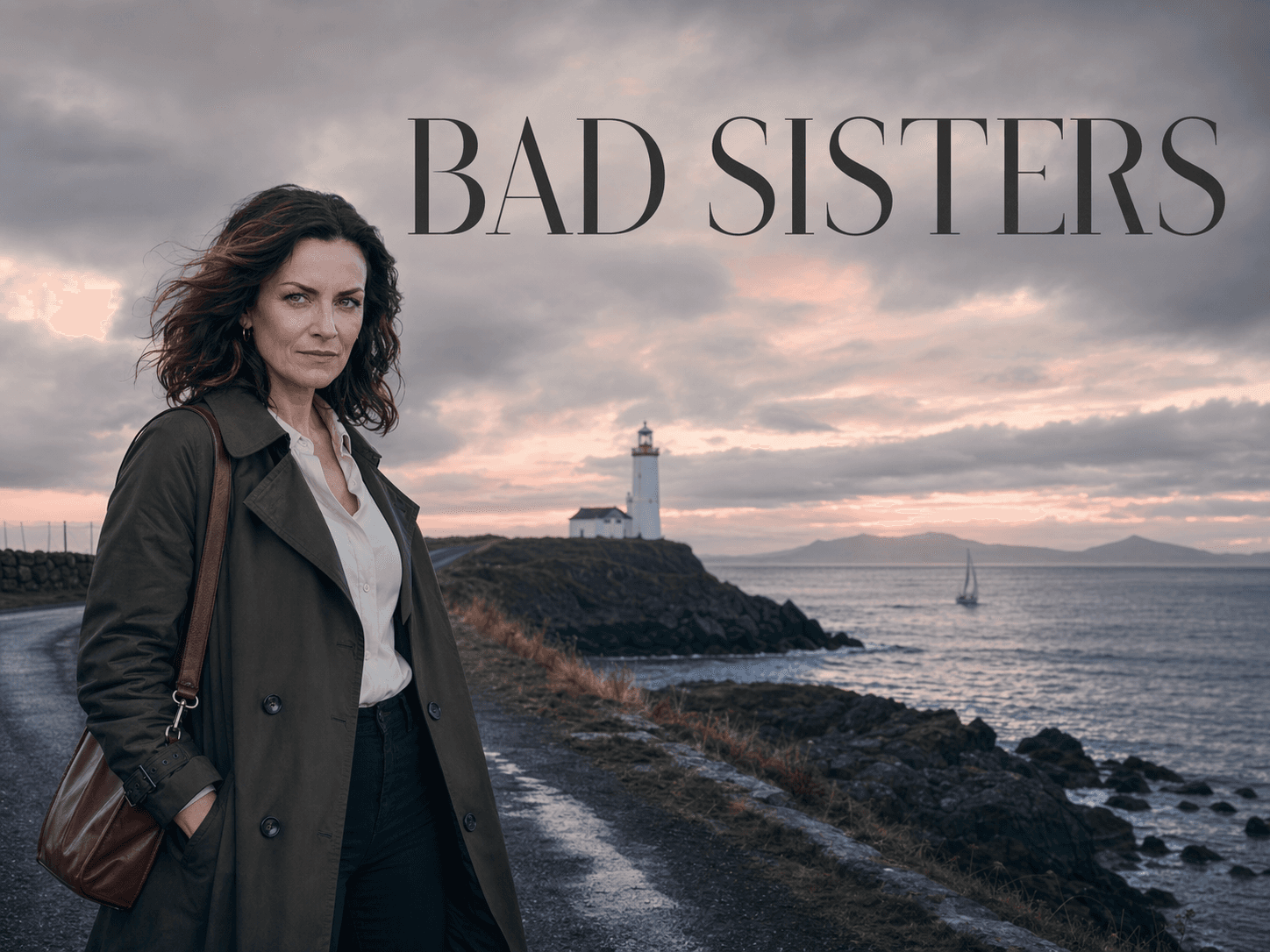
Television in the 2010s and 2020s has continued to provide some of her most striking work. She played Margaret McDonald in the BBC's The Salisbury Poisonings (2020), the public health director who fought to contain the Novichok crisis in Wiltshire, a calm, principled performance broadcast at the height of the Covid pandemic that drew comparisons to her best stage work. She joined the ensemble cast of Sharon Horgan's Apple TV+ dark comedy Bad Sisters (2022) as Grace Williams, the meek, abused wife at the centre of the Garvey sisters' murderous conspiracy. The role gave Duff one of her richest screen showcases, charting Grace's slow, painful awakening across two seasons, and earned her an Emmy nomination and a British Academy Television Award nomination for Best Supporting Actress. Other recent credits include the BBC's adaptation of His Dark Materials, in which she played Ma Costa, and Channel 4's Sex Education as Erin, the troubled mother of Emma Mackey's Maeve.
Her personal life has been the subject of intermittent press attention, largely because of her relationship with James McAvoy. The couple had a son together in 2010 and divorced in 2016, after which both publicly resisted the more salacious tabloid framings of their split. Duff has been characteristically private about her domestic life, channelling her energies instead into a steady stream of work and a quiet support for charities including the National Autistic Society. She holds dual British and Irish citizenship and has spoken with affection about her Donegal roots.
Now in her mid-fifties, Anne-Marie Duff occupies a particular and prized position in British acting: not a star in the celebrity sense, but a performer whose presence in a cast list signals seriousness, intelligence and emotional truth. From the council estates of Shameless to the laundries of Suffragette and the bourgeois Dublin of Bad Sisters, she has built a body of work defined by empathy for ordinary, often overlooked women, and by a refusal to do anything other than the role in front of her properly.