Andy Serkis
About Andy Serkis
Andy Serkis is a British actor, director, and producer whose career has redefined the relationship between performance and digital effects, transforming what was once dismissed as a technical novelty into a recognised craft. Born Andrew Clement Serkis on 20 April 1964 in Ruislip Manor, west London, he grew up between England and Iraq, where his father worked as a gynaecologist. That dual upbringing, split between Baghdad and the British suburbs, gave him an early sensitivity to outsider perspectives that would later inform a career largely spent inhabiting characters who exist on the edge of the human.
Serkis initially planned to study visual art at Lancaster University but became drawn to the theatre department, eventually graduating with a degree in drama. He spent the late 1980s and 1990s building a sturdy stage and television career in regional repertory and at venues including the Royal Exchange in Manchester and the Royal Court in London, taking on classical roles and contemporary work with equal appetite. Television viewers came to know him through appearances in series such as Streetwise, Finney, and the dark Channel 4 drama Touching Evil, while early film roles in Career Girls, Among Giants, and Topsy-Turvy showcased a wiry physicality and a willingness to disappear into character.
The role that changed everything arrived in 1999, when Peter Jackson cast him as Gollum in The Lord of the Rings trilogy. What had begun as a voice-over assignment expanded as Jackson and his team at Weta Digital realised that Serkis's full-body, on-set performance could be captured and translated into the digital character. The resulting work, glimpsed in The Fellowship of the Ring, fully unveiled in The Two Towers, and completed in The Return of the King, established performance capture as a legitimate acting discipline. Serkis's split-personality monologue between Smeagol and Gollum became one of the defining sequences of early twenty-first-century cinema and prompted years of debate about awards recognition for digitally rendered performances.
Jackson recruited him again for King Kong in 2005, this time asking him to embody the title ape while also playing the human cook Lumpy on screen. Serkis travelled to Rwanda to study mountain gorillas, an approach to research that became a hallmark of his process. The same year saw him appear opposite Naomi Watts and Jack Black, and he continued to alternate digital roles with conventional ones, taking parts in The Prestige, where he played Nikola Tesla's assistant Alley, and the Ian Dury biopic Sex and Drugs and Rock and Roll, in which he earned strong notices for his unguarded, in-the-flesh portrayal of the Blockheads frontman.
In 2011, Rise of the Planet of the Apes introduced Caesar, the chimpanzee whose growing consciousness anchors a rebooted franchise. Across that film and its sequels, Dawn of the Planet of the Apes and War for the Planet of the Apes, Serkis delivered what many critics described as the best work of his career, charting a wordless and then sparingly verbal arc from infant curiosity to weary leadership. The trilogy, directed first by Rupert Wyatt and then by Matt Reeves, leaned heavily on his ability to convey thought through eye line and breath, and renewed calls for the Academy to formally consider performance-capture acting alongside live-action work.
Around the same time, Serkis broadened his footprint inside major franchises. He played the Supreme Leader Snoke in Star Wars: The Force Awakens and The Last Jedi, lending a sepulchral menace to the new trilogy's chief antagonist, and joined the Marvel Cinematic Universe as the arms dealer Ulysses Klaue, first in Avengers: Age of Ultron and then more substantially in Black Panther, where his manic, bleach-blond turn became a fan favourite. He also took the Baloo role in Mowgli: Legend of the Jungle, his own darker take on Kipling's stories, while reprising Gollum briefly in The Hobbit: An Unexpected Journey.
His work behind the camera grew in parallel. In 2001 he co-founded The Imaginarium Studios with producer Jonathan Cavendish, building a London facility dedicated to performance capture and to advocating for the medium across film, television, and games. The Imaginarium provided the engine for his directorial debut, Breathe, in 2017, a tender biographical drama about Cavendish's father Robin, a polio patient turned disability rights advocate, with Andrew Garfield and Claire Foy in the leads. Serkis followed it with Mowgli: Legend of the Jungle, eventually released by Netflix in 2018 after a long development, and in 2021 directed Venom: Let There Be Carnage, a comic-book sequel that leaned into the screwball energy already present in the first film.
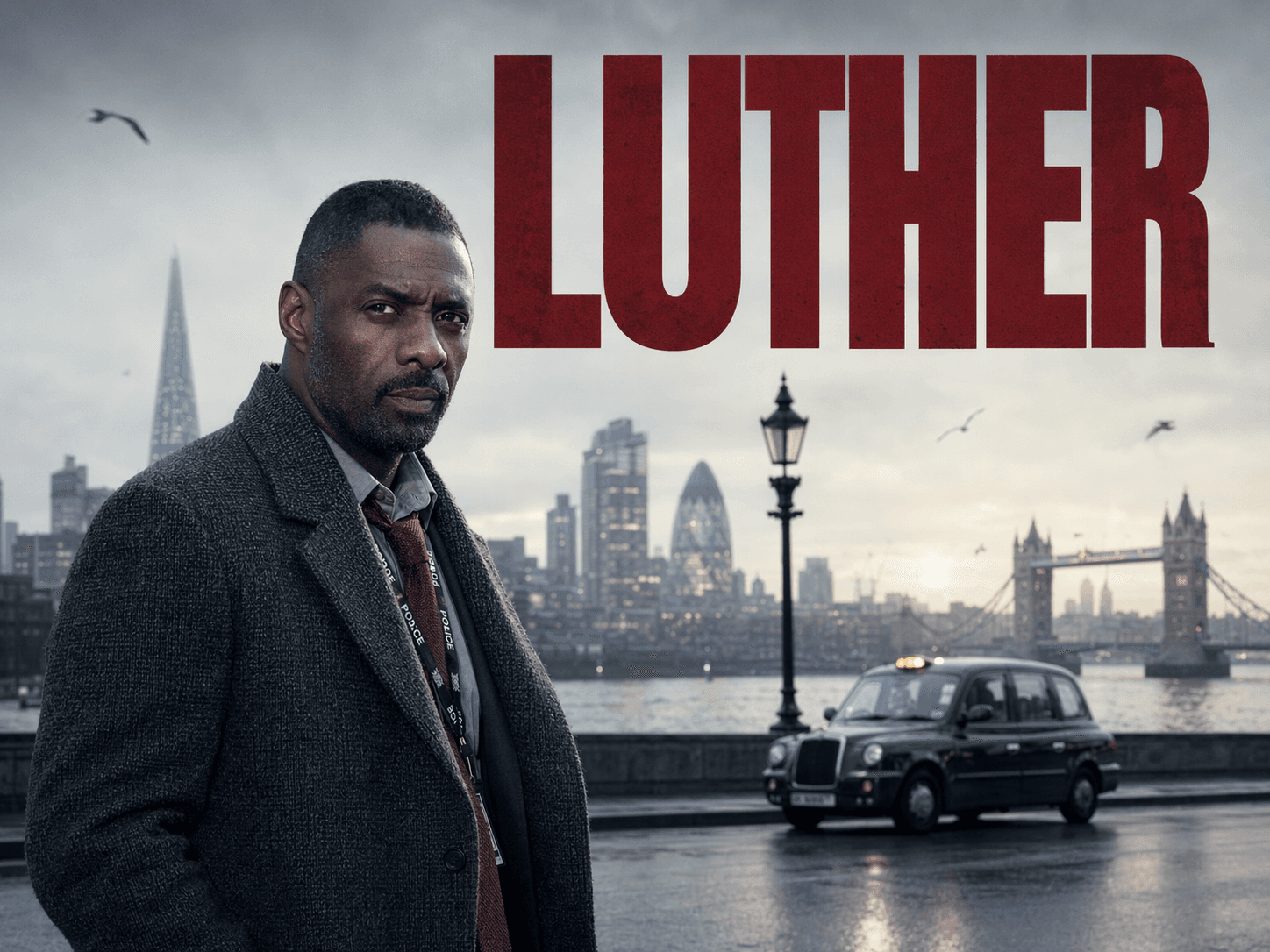
Television and voice work have continued to bracket his cinema career. He narrated audiobooks of The Hobbit and The Lord of the Rings, played Capricorn in Inkheart, and took the lead in the Netflix-and-BBC adaptation Luther: The Fallen Sun in 2023, where he made a memorable villain opposite Idris Elba's returning detective. He has also lent his voice and movement to video games, most notably as Captain Hook in Heavenly Sword and as part of the development of motion-capture pipelines for major studio releases.
Married to actress Lorraine Ashbourne since 2002, Serkis lives in north London and has three children, including the actress Ruby Serkis. He has used his profile to support causes connected to the work that shaped him, serving as an ambassador for the Hornbill House charity and speaking publicly about Robin Cavendish's legacy. Honoured with a CBE in 2020 for services to drama, he has spent the past two decades quietly insisting that the actor inside the digital suit is still an actor, and his body of work, from a corrupted hobbit on a Middle-earth riverbank to a leader of apes on a Californian hillside, has made that argument almost impossible to refuse.