Ali Suliman
About Ali Suliman
Ali Suliman is a Palestinian actor whose career has traced one of the more remarkable arcs in contemporary Middle Eastern cinema, moving fluidly between intimate, politically charged Arabic-language films and major Hollywood productions without ever surrendering the quiet intensity that has become his signature. Born on 10 October 1977 in Nazareth to a Palestinian-Muslim family, Suliman grew up carrying the weight of a particular inheritance: his family had been displaced from the village of Saffuriya in the Galilee during the Nakba of 1948, and that history of dislocation would later echo through many of the roles he chose. He holds Israeli citizenship but has consistently identified himself as Palestinian, a dual reality that has shaped both the stories he tells and the way he tells them.
Suliman trained at the Yoram Loewenstein Performing Arts Studio in Tel Aviv, graduating in 2000, and began his professional life in the theatre rather than on screen. Those early stage years, spent working through classical and contemporary texts including Waiting for Godot, A View from the Bridge and Salome, gave him the disciplined, interior style that would distinguish his screen performances from the more declamatory register common in the region's television dramas. His first film appearances came in small parts, including a role in The Barbecue People in 2003 and another in Eran Riklis's The Syrian Bride in 2004, both of which introduced him to audiences as a thoughtful, watchful presence.
The breakthrough arrived in 2005 with Hany Abu-Assad's Paradise Now, in which Suliman played Khaled, one of two childhood friends from a West Bank refugee camp recruited to carry out a suicide bombing in Tel Aviv. The film became a cultural event. It won the Golden Globe for Best Foreign Language Film, earned an Academy Award nomination in the same category, and forced international audiences to grapple with the interior lives of young men too often reduced to headlines. Suliman's performance, full of doubt, humour and moral hesitation, announced him as an actor of unusual subtlety. It also opened doors he had not imagined opening.
Hollywood came calling quickly. In 2007 he appeared opposite Jamie Foxx and Jennifer Garner in Peter Berg's action thriller The Kingdom, and the following year he worked with Ridley Scott on Body of Lies, playing the Jordanian architect Omar Sadiki caught up in a CIA sting operation alongside Leonardo DiCaprio and Russell Crowe. Between these bigger productions he returned to regional cinema, taking a fine supporting turn as a lawyer in Eran Riklis's Lemon Tree in 2008 and appearing in Elia Suleiman's autobiographical The Time That Remains in 2009. The pattern was already clear: a Hollywood paycheque followed by an Arabic-language film he believed in, and then back again.
Two projects in 2013 cemented his international reputation. In Ziad Doueiri's The Attack, adapted from Yasmina Khadra's novel, he delivered what many consider his finest performance as Dr Amin Jaafari, an Arab-Israeli surgeon whose life collapses when his wife is identified as the perpetrator of a suicide bombing. The role required him to carry the film almost entirely on his own, and he did so with a grief and bewilderment that critics found devastating. In the same year he reunited with Peter Berg for Lone Survivor, playing Gulab, the Pashtun villager who shelters the wounded Navy SEAL Marcus Luttrell, played by Mark Wahlberg, and whose decision to invoke the ancient code of Pashtunwali saves his life. It was a role based on a real person, and Suliman gave it a stoic dignity that grounded the film's more bombastic sequences.
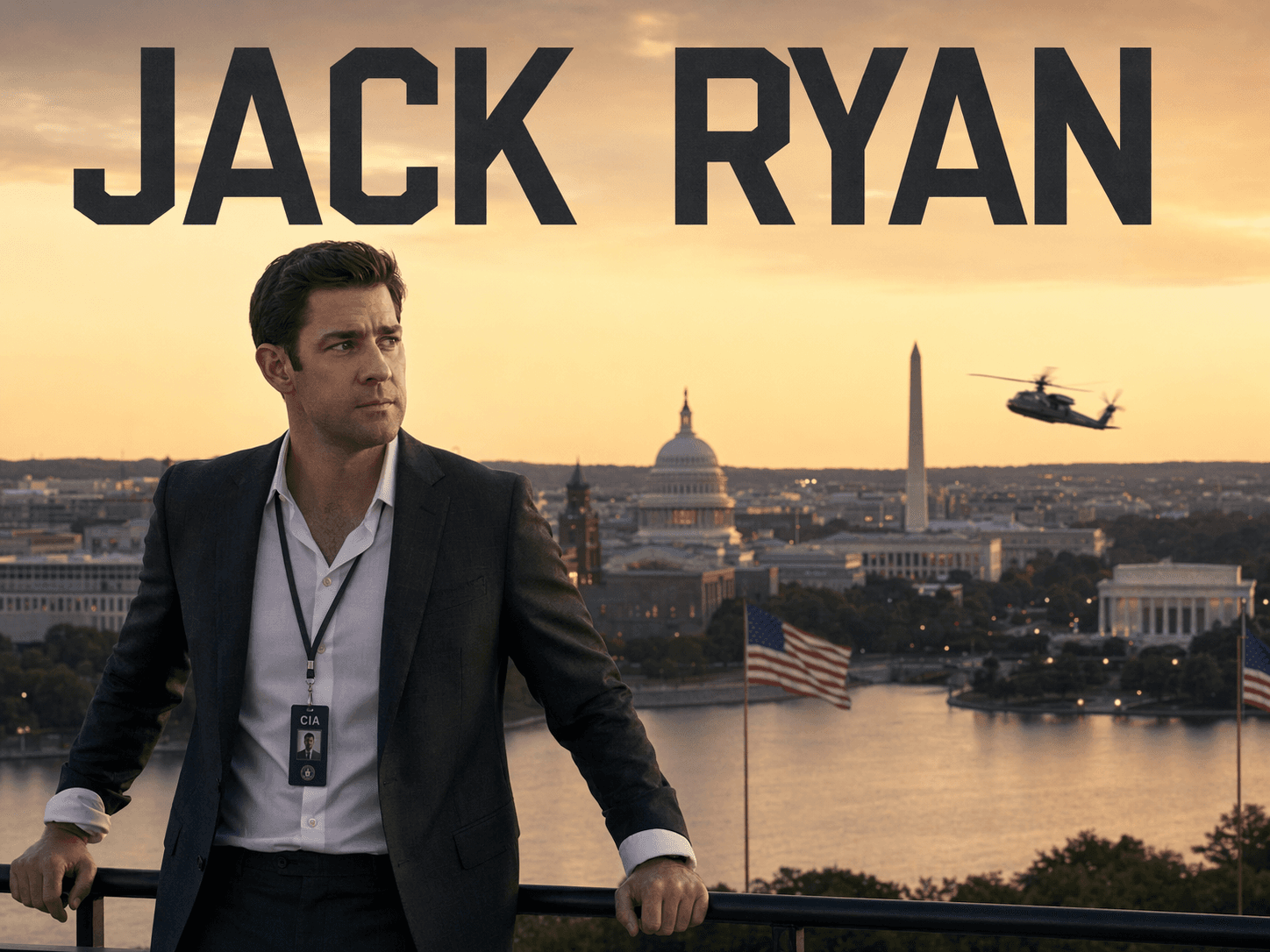
Television followed. He appeared in Showtime's Homeland as Warzer Zafir, and in 2017 took a central role in Channel 4 and National Geographic's miniseries The State, about British recruits to the so-called Islamic State. In 2018 he played the charismatic, sorrow-laced terrorist leader Mousa Bin Suleiman in the first season of Amazon's Tom Clancy's Jack Ryan, one of the year's most talked-about performances in prestige streaming, and in the same year appeared as General Qamish in Hulu's Peabody-winning limited series The Looming Tower. The sequence of projects demonstrated how, in an industry finally beginning to move beyond its narrowest stereotypes, Suliman had become one of the very few Arab actors trusted with leading and antagonist roles of genuine complexity.
Regional cinema, however, remained his spiritual home. In Ameen Nayfeh's 200 Meters in 2020, a quietly furious road film about a Palestinian father trying to reach his injured son on the other side of the separation wall, Suliman gave a performance many consider the equal of his work in The Attack. It won him the Best Actor prize at the El Gouna Film Festival and the Golden Orange at Antalya, adding to earlier honours he had received at the Dubai International Film Festival for The Last Friday in 2011, at Carthage in 2012, and at Alexandria in 2015 for Mars at Sunrise.
Since then his range has continued to expand. He played the refugee smuggler Ezzat Mardini in Netflix's The Swimmers in 2022, worked on the Mark Wahlberg vehicle Arthur the King in 2024, and took a role in Prime Video's biblical epic House of David in 2025. Off screen he is a father of three and speaks often about his ambition to move behind the camera as a filmmaker, driven partly by a desire to tell Palestinian stories on his own terms and partly, as he has put it, by the search for greater self-understanding.
What unites his work, from the refugee camps of Nablus to the sound stages of Los Angeles, is a refusal to flatten his characters into symbols. Suliman is an actor who listens, who lets silence do heavy lifting, and who has insisted, with a career built one careful choice at a time, that Palestinian and Arab lives are worth rendering in their full, contradictory human scale.