Aimee-Ffion Edwards
About Aimee-Ffion Edwards
Aimee-Ffion Edwards is a Welsh actress whose quietly distinctive screen presence, bilingual range and willingness to move freely between prestige television, stage and video-game voice work have made her one of the more versatile British performers of her generation. Born on 21 November 1987 in Newport, Wales, she grew up speaking both Welsh and English, attending Welsh-medium schools Ysgol Gymraeg Casnewydd and Ysgol Gyfun Gwynllyw. That bilingual upbringing would later provide a useful professional edge, allowing her to take roles in Welsh-language productions as comfortably as in English-language ones. Her childhood, by her own accounts in interviews, was not obviously pointed at a performing career. She played rugby for a local youth team, reportedly as the only girl on the squad until she was fourteen, and trained in ballet, developing the physical discipline and confidence that would later feed into her stage work.
Edwards came to acting via an unusual route. Before she committed to drama she was training as a classical singer, and in 2006 she appeared on the Welsh-language television talent show Wawffactor, where she finished as runner-up. The exposure helped confirm her instinct that performance, rather than a career as a singer alone, was where she wanted to be. She took A-level drama and joined the National Youth Theatre of Wales, which functioned as her practical apprenticeship. Rather than pursuing a conservatoire conservatory path, she moved into professional work quickly, learning on the job in rehearsal rooms and on television sets; her grounding came from youth-theatre work and mentorship rather than a RADA-style traditional training.
Her screen breakthrough arrived in 2008 when she was cast as Sketch in the E4 teen drama Skins. The role, a fragile and unsettling fan who becomes dangerously obsessed with a fellow student, was one of the show's most uncomfortable characters to watch, and Edwards played her with a skittish intensity that suggested a performer already capable of holding the camera without resorting to histrionics. That same year she made her stage debut in the sketch revue Sht-Mx at London's Trafalgar Theatre, and in 2009 she took one of the pivotal supporting roles in Jez Butterworth's Jerusalem at the Royal Court, playing Phaedra, the missing fairy-queen figure whose offstage presence haunts the play's mythic landscape. When Jerusalem transferred to Broadway's Music Box Theatre in 2011, Edwards went with it, making her New York stage debut alongside Mark Rylance in what became one of the most celebrated theatrical transfers of the decade.
Between stage commitments she built a steady television CV. In 2010 she had a small role in the BBC supernatural drama Being Human, and in 2011 she appeared in the second series of Luther as Jenny Jones, a young woman rescued from an exploitative situation by Idris Elba's detective. The role gave her a chance to work in darker, more psychologically loaded territory, and critics took note of her ability to hold her own in scenes built around much larger personalities. In 2012 she was back at the Donmar Warehouse in Josie Rourke's production of The Recruiting Officer, and at the Young Vic in Marius von Mayenburg's Fireface. She returned to the Donmar in 2013 to play Avonia Bunn in Trelawny of the Wells, confirming a reputation as a theatre actress directors trusted with character parts well beyond her years.
The role that brought Edwards to a mass audience was Esme Shelby in the BBC's Peaky Blinders. Introduced in the first series in 2013 as the Romani bride of John Shelby, she appeared across the show's first four series between 2013 and 2017 and returned for its final run in 2022. Esme was a comparatively small but memorable presence in a show dominated by louder personalities, and Edwards gave the character a wry, watchful quality, often the person in the room most aware of what was actually going on. In parallel she took one of the central supporting roles in Mackenzie Crook's gentle BBC Four comedy Detectorists, playing Sophie across the first two series in 2014 and 2015. The show won a BAFTA for Best Scripted Comedy and introduced her to a very different audience, one that appreciated the series' understated warmth and her easy comic timing opposite Crook and Toby Jones.
Her film work has been more sporadic but well chosen, including John Boorman's Queen and Country in 2014, the Dylan Thomas film Set Fire to the Stars and the 2020 version of Blithe Spirit. Television films such as A Poet in New York, in which she appeared alongside Tom Hollander's Dylan Thomas, and a 2014 adaptation of Under Milk Wood allowed her to return to Welsh material. She has also had recurring and guest roles in Casualty, Death in Paradise and the Welsh-language drama Keeping Faith.
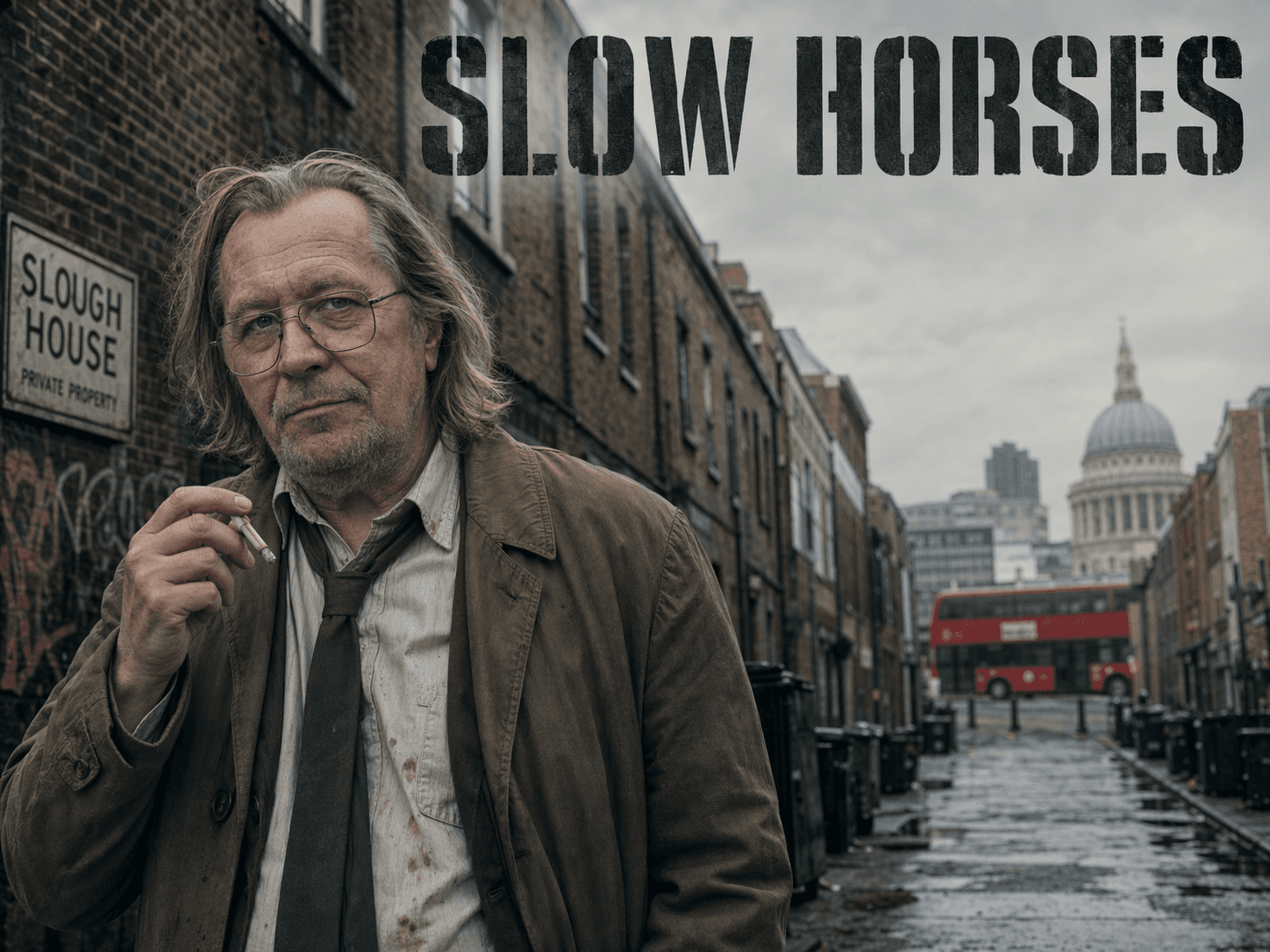
In 2022 she began a new defining television role as Shirley Dander in the Apple TV+ spy series Slow Horses, joining from the second season as one of the dysfunctional analysts of Slough House. The character, abrasive, foul-mouthed and unexpectedly competent, has allowed Edwards to play broader comic energy than much of her earlier work while holding on to the precision that has always marked her performances. The role has continued across subsequent seasons and turned her into a fixture of one of the most critically admired series of the current streaming era.
Alongside her live-action work Edwards has built an unusually strong voice-acting portfolio. She voiced Rachel Baker in the 2015 adventure game Everybody's Gone to the Rapture, played Mio in Xenoblade Chronicles 3 in 2022, and most famously provided the voice of Ranni the Witch in FromSoftware's Elden Ring, a performance that became a touchstone of the game's devoted fandom. She has also contributed to Assassin's Creed Valhalla and to animated series including Thunderbirds Are Go and 101 Dalmatian Street. Across stage, screen and studio, Edwards has maintained a career built less on conventional star-making than on careful, character-driven choices, the mark of an actress whose profile has grown steadily because the work itself has been consistently good.