2020 - 2020

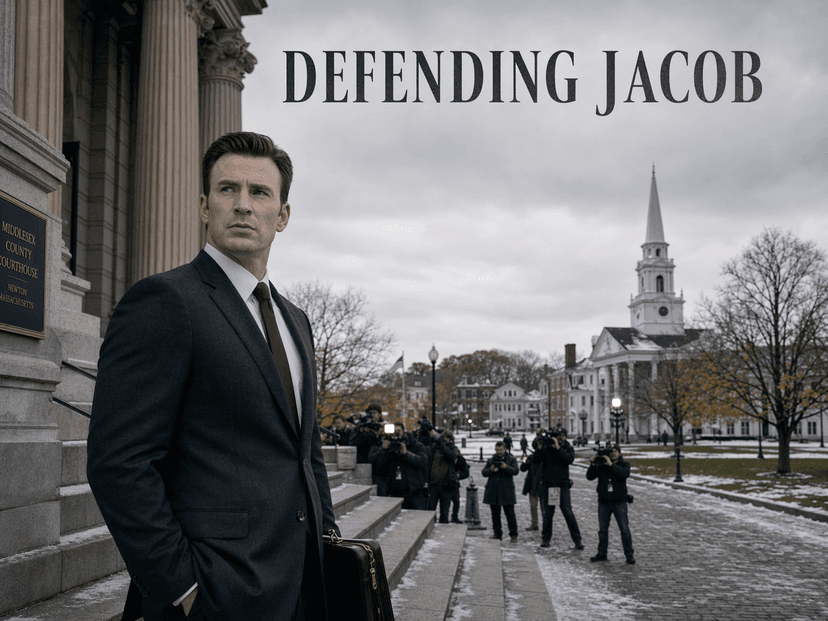
Defending Jacob is an eight-episode Apple TV+ limited series that ran from April to May 2020. It is one of the platform's earliest prestige-drama bets, adapted from William Landay's 2012 courtroom bestseller of the same name. Mark Bomback wrote the scripts. Morten Tyldum, of The Imitation Game, directed every single episode, which is unusual for a modern miniseries and gives the show a visual and tonal consistency that a revolving director chair rarely achieves.
The premise is a gut-punch. Andy Barber is an Assistant District Attorney in Newton, Massachusetts, a wealthy, placid suburb where nothing terrible is supposed to happen. When a 14-year-old boy named Ben Rifkin is stabbed to death in a local park, Andy catches the case. Days later, his own 14-year-old son, Jacob, becomes the prime suspect. Andy is pulled off the investigation. The family is swallowed by suspicion, media attention, and the quiet horror of wondering whether the child they raised is capable of murder.
The story is told on two tracks. A present-day grand jury hearing, with Andy on the stand being interrogated by a hostile prosecutor, intercut with the unfolding of the crime, the investigation, and the trial itself. That framing device is the show's spine. You are always a half-step behind, piecing together what happened to get Andy into that witness chair.
Chris Evans took the lead role as his first major television part after finishing his run as Captain America. The casting was a statement of intent from Apple TV+ at a moment when the platform was trying to announce itself as a home for A-list drama. Evans plays Andy as a man used to running a room, slowly losing every lever of control he has ever had, and the physical compression of that performance, the jaw clench, the held breath, does most of the heavy lifting.
Michelle Dockery, four years out of Downton Abbey, plays Laurie. The role is the emotional engine of the show. Dockery is given the harder job of the two leads, because Laurie is the one who actually asks the question Andy refuses to entertain, and her performance is the thing that will linger after the credits. Jaeden Martell, the kid from It and Knives Out, is Jacob. He holds an impossible middle, readable as either a frightened wrongly accused teenager or something colder, depending on which scene you are in and which direction the edit is nudging you.
The supporting bench is deep:
Chris Evans
Andy Barber
Jaeden Martell
Jacob Barber
Morten Tyldum
Director
Betty Gabriel
Neal Logiudice
Pablo Schreiber
Detective Pete Duffy
J.K. Simmons
Billy Barber
Michelle Dockery
Laurie Barber
William Landay
Novelist (source material)
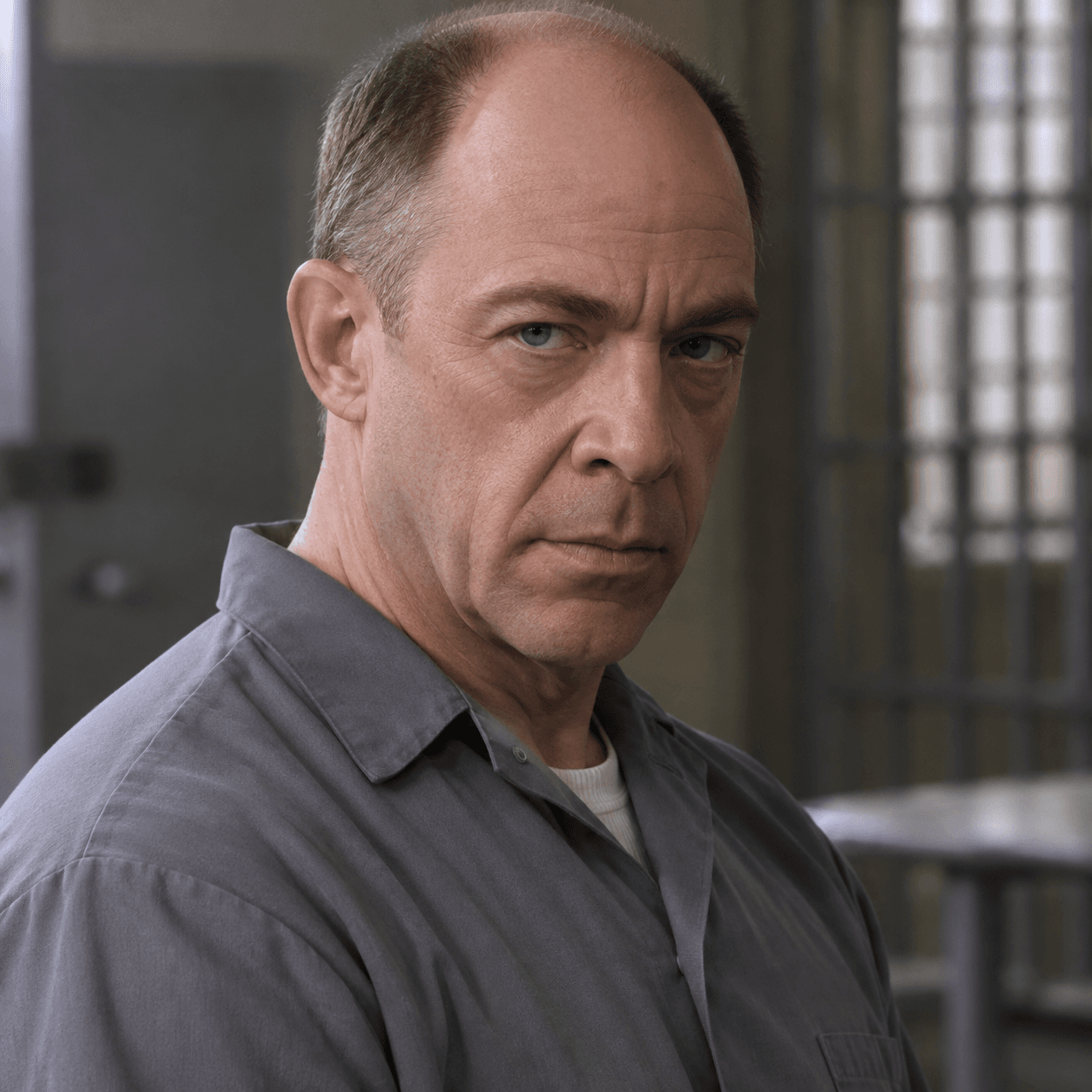
The murder plot is the vehicle. The real subject is the question Andy and Laurie cannot stop circling. Is violence inherited? Billy Barber, Andy's estranged father serving life for a killing decades earlier, is introduced as a genetic time bomb in the family tree. The show calls it the "murder gene". The prosecution calls it motive. Andy calls it superstition and junk science. Laurie looks at her son over the breakfast table and is no longer sure.
This is what separates Defending Jacob from a standard legal thriller. The courtroom mechanics are almost incidental. What the show actually cares about is a marriage under a pressure no marriage should ever have to face, and the slow, awful negotiation of what you will believe about your own child in order to keep loving them. It is a domestic drama wearing the clothes of a procedural.
The "bad seed" question has been shorthand in fiction for a century. Few shows have been this patient about sitting with it.
Tyldum shoots Newton like a country club with the light turned down. Everything is tastefully grey. Hardwood floors, museum-quiet kitchens, New England autumn through expensive windows, the visual vocabulary of people who have done everything right and cannot understand why something this wrong is happening to them. The cinematography leans cold. Interiors are framed with long, motionless takes that let performers sit in silence, which is where Evans and Dockery both do their best work.
The score, from Atli Orvarsson, is sparse and tonal, more dread than melody. Episodes end on held silences and slow fades rather than big cliffhanger stings. It is a show that trusts its audience to be uncomfortable without being told to be.
Critics were split. Some found the pacing glacial. Others, myself included, thought the patience was the point, and that the eight-hour runtime earned the emotional devastation of the back half in a way a tight two-hour film adaptation of the novel never could have.
Audiences were emphatic. The finale became the most-watched Apple TV+ episode at the time of its release, a milestone for a platform still finding its footing. Chris Evans won critical praise for proving he could carry a long-form drama without the shield. Michelle Dockery was widely tipped for awards attention and delivers the show's most quietly devastating scene.
The series has since become a reference point for a particular kind of Apple prestige mini, alongside The Patient and the 2024 Jake Gyllenhaal-led Presumed Innocent. If you want comparisons within our ratings, the obvious ones are The Night Of for its slow-burn accused-kid DNA, Mare of Easttown for the small-community-rocked-by-murder domestic texture, and Your Honor for the parent-protecting-a-child-at-any-cost moral engine.
Three things. A novel with real thematic teeth, adapted by a writer who understood that the book's power was in its ambiguity and refused to resolve what the book refused to resolve. A single director across all eight hours, keeping the tone lethally consistent. And three central performances, all pitched at a register of suppressed panic, from actors who trusted the material enough not to overplay it.
The ending is the thing people will argue about. It is deliberately, ruthlessly ambiguous. Landay wrote it that way in 2012 and the show holds the line. You will have an opinion when the credits roll on episode eight. The person you watched it with will have a different one. That is the show doing exactly what it set out to do.
Grim, grown-up, and built to be watched with someone you can talk to afterwards.
Mark Bomback
Creator / Writer
Cherry Jones
Joanna Klein
Sakina Jaffrey
Judge French